Last updated November 18, 2026








Free written scope consultation - allowances, timeline, and change-order rules on paper before a single trade is scheduled
Bathroom Remodeling Troubleshooting: Common Problems and How to Fix Them
A bathroom exhaust fan that is the right size, mounted correctly, and wired to a timer can still grow mold in your attic. The reason is almost never the fan. It’s the duct. When a fan vents into attic space instead of through the roof or wall, every shower pushes warm, wet air into a closed cavity, and in the Nevada monsoon cycle that runs roughly July through September, that moisture condenses on the underside of roof sheathing and starts feeding mold within one to two seasons. By the time you smell it, the contractor’s warranty window may have already closed. This guide walks through the four problem families we see most after a bathroom remodel in Summerlin – waterproofing failures, tile movement, fixture leaks, and ventilation shortfalls – and gives you the diagnostic steps to identify which one you’re dealing with before you pick up the phone.
Quick Answer
Most post-remodel bathroom problems fall into four categories: waterproofing failure, tile movement, fixture leaks, and ventilation shortfalls. Each has a distinct diagnostic first step, and that first step is what separates a legitimate warranty repair from an owner-caused issue that won’t be covered. Before calling anyone, photograph the problem, note when it appears, and check whether the symptom is at a seam, a fixture connection, or a field of tile – because that location tells you almost everything.
Styles & brands we work with
- Kitchen remodeling
- Bathroom remodeling
- Home additions & ADU
- Roofing
- Windows & doors
- Driveway & pavers
- Fence
Table of Contents
- How to Tell Waterproofing Failure from Surface Tile Failure
- Diagnosing a Dripping Faucet or Running Toilet After a Remodel
- How to Test Whether Your Exhaust Fan Actually Vents Outside
- Grout Cracking in the First Year: Shrinkage, Flex, or Missing Expansion Joints
- What to Put in Writing When You Report a Warranty Issue
- Summerlin-Specific Conditions That Stress a Bathroom
- Common Mistakes to Avoid
How to Tell Waterproofing Failure from Surface Tile Failure
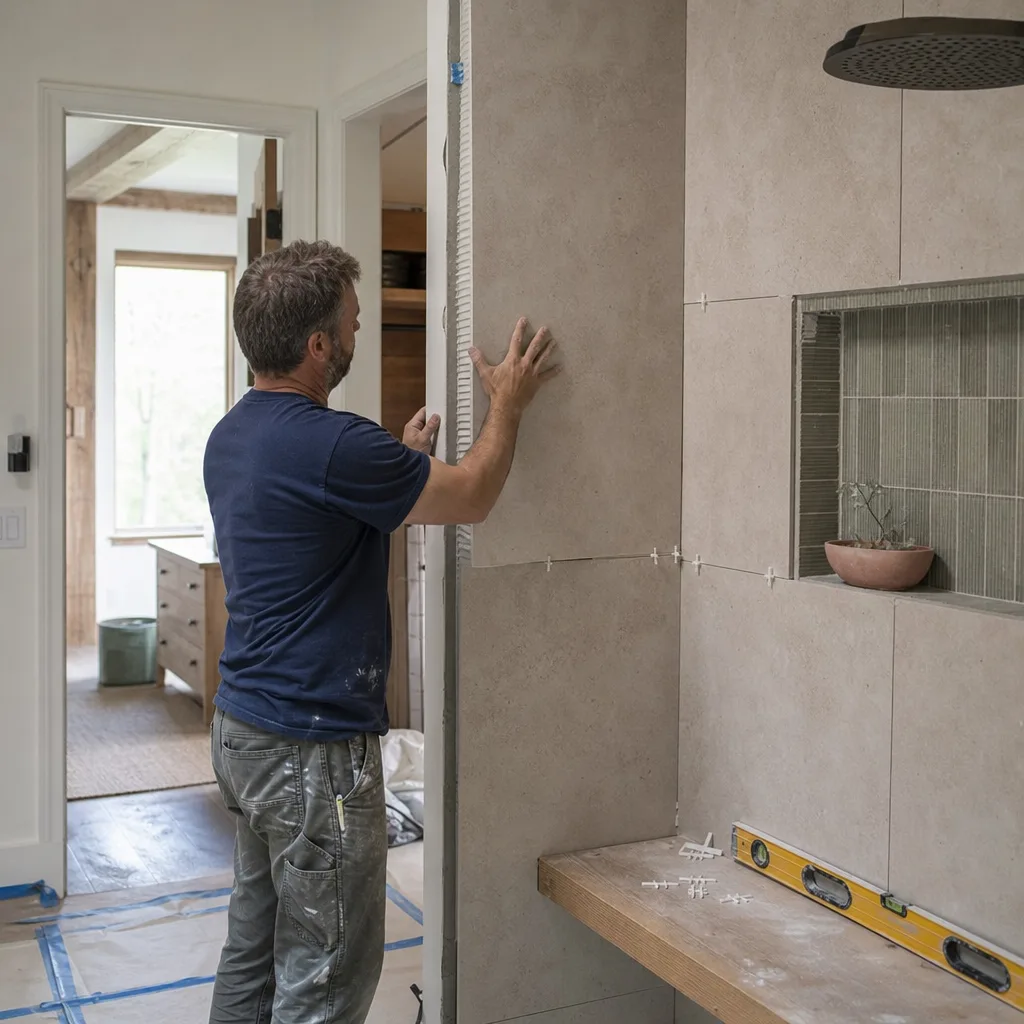
The signs are different, the repairs are different, and – most importantly for you – the warranty responsibility is different. Surface tile failure is a cosmetic and adhesion problem. Waterproofing failure is a moisture-barrier problem that lives behind the tile, and it can damage framing, drywall, and subfloor long before anything looks wrong on the surface.
Surface tile failure looks like this:
- Tiles that sound hollow when you tap them lightly with a plastic tool
- Individual tiles lifting at a corner while neighbors stay flat
- Grout cracking along a single line of tile, with the tile itself still bonded
- Efflorescence (a white, chalky powder) on grout lines that wipes away but returns
Waterproofing failure signals differently:
- Dark, persistent discoloration at the bottom of a wall or at the curb of a shower pan
- A musty smell that appears only after showers and fades after a few hours
- Soft drywall or paint bubbling on the wall opposite the shower
- Grout that crumbles in one concentrated zone rather than along a joint
- Water staining on the ceiling of the room below the bathroom
The diagnostic: if the symptom is behind the tile plane, it’s likely a waterproofing issue and should be handled as a warranty claim. If the symptom is only on the surface and the tile is still bonded, it’s usually a grout or adhesion issue. On our projects we specify Schluter waterproofing systems specifically so the membrane, the drain connection, and the seams are all from a single manufacturer with a published warranty. That matters because in a failure, the manufacturer and the installer can point at each other unless the system was specified as a whole.
Diagnosing a Dripping Faucet or Running Toilet After a Remodel
A faucet or toilet that worked on day one and drips or runs on day ninety is not always a workmanship problem. There are three common causes, and each has a different fix path – one of which you can handle yourself and two of which call for a licensed plumber.
- Supply line connection leak. Look under the sink or behind the toilet at the braided supply line and the shutoff valve. If there is a bead of water at either end, it’s a connection issue. A licensed plumber should tighten or reseat it, because over-tightening a compression fitting can crack the valve body.
- Valve seat or cartridge failure. If the drip comes from the spout and the supply connections are dry, the cartridge or valve seat is at fault. On new Kohler, Moen, or Grohe fixtures, this is usually a manufacturer warranty item, not a workmanship item. The brand’s warranty covers the part; the plumber’s labor may or may not, depending on how the fixture was specified.
- Flapper or fill valve issue. A running toilet where water trickles into the bowl continuously is almost always the flapper. This one you can often diagnose yourself: add a few drops of food coloring to the tank, wait fifteen minutes without flushing, and check the bowl. Color in the bowl means the flapper is leaking. Flappers are consumer-replaceable on most models – though if the toilet is under a workmanship warranty, report it before you touch it.
If you’re not confident which category you’re in, don’t disassemble the fixture. Once you take a cartridge out, the workmanship warranty conversation changes. Photograph it, call the contractor, and let them tell you which warranty applies.
How to Test Whether Your Exhaust Fan Actually Vents Outside
Vented to exterior means the duct terminates at a wall cap or roof cap that opens to outside air. It does not mean the duct goes into the attic. It does not mean the duct ends at a soffit vent. It does not mean the duct pokes into the crawlspace. In Clark County, the mechanical code requires bathroom exhaust to terminate outdoors, and a soffit termination is generally not accepted because the moist air is pulled right back into the attic through adjacent intake vents. That’s a code requirement, not a preference, and it’s worth knowing before you accept a contractor’s explanation.
Here’s how to test your fan yourself:
- Turn the fan on and hold a single square of toilet paper near the grille. If the paper sticks, the fan is moving air. If it falls, the fan is weak, blocked, or not moving air at all.
- Go outside and look for a wall cap or roof cap. On a one-story home, this is easy. On a two-story, look up at the roof near the bathroom. If you cannot find any exterior termination on the wall or roof, the duct may not terminate outside.
- With the fan running, check for airflow at the exterior cap. A tissue held near the cap should flutter. No flutter means the duct is disconnected, blocked, or terminates somewhere else.
- Check the attic if you have one. If you see a flexible duct ending in the middle of the insulation, that’s the shortcut. The fix is a proper roof or wall termination and a short, insulated duct run.
- Verify the timer or humidistat. A fan wired to a simple switch tends to run for two minutes and off for twenty. A timer or humidistat keeps it running long enough to actually clear the moisture.
If you find a duct terminating in the attic, report it to your contractor as a workmanship issue immediately. Mold growth in an attic can become a much larger and more expensive problem once it spreads to roof sheathing and insulation.
Grout Cracking in the First Year: Shrinkage, Flex, or Missing Expansion Joints
Three different causes produce almost the same visual symptom, and the wrong response makes the wrong one worse.
Normal shrinkage settlement. Cementitious grout shrinks slightly as it cures. In the first few months, hairline cracks along a few grout lines are common, especially on floors. The fix is a surface regrout and usually a call to the contractor to confirm it’s not something deeper.
Substrate flex. If the floor feels springy underfoot, or if the crack opens and closes as you walk across it, the substrate is moving. This is a bigger problem. It usually means the subfloor wasn’t stiffened enough for the tile assembly, or the tile was set over a deflection that exceeds industry standards. Repairs can range from adding a crack-isolation membrane to removing and re-setting the tile field. Always a warranty call.
Missing expansion joints. Tile assemblies need movement accommodation at perimeters, at changes of plane, and at long field runs. If grout is cracking in a straight line where the tile meets a wall, at the shower curb, or along a long run of floor with no joint, the assembly may be missing expansion joints. The correct repair is to remove the grout in that line and replace it with a flexible sealant, not to grind and re-grout cementitious material into the same joint.
One diagnostic question separates them quickly: does the crack come back in the same place after a regrout? If yes, it’s flex or a missing joint, not shrinkage. Report the recurrence to your contractor before the second repair attempt.
What to Put in Writing When You Report a Warranty Issue
The difference between a workmanship warranty and a manufacturer warranty is the difference between “we installed it wrong” and “the part failed.” Those are handled by different parties, on different timelines, and with different standards of proof. Your written report needs to be clear about which one you believe applies, and it needs to leave room for the contractor to determine otherwise.
Here’s a template you can adapt:
- Date of installation and the date you first noticed the issue
- Location of the issue described precisely – “shower curb, north wall, bottom three inches” beats “in the shower”
- Pattern – “appears 10-15 minutes after each shower and fades over 2-3 hours”
- Photos and video, including a wider shot for context and a close-up
- Your diagnostic conclusion, stated as an observation – “the grout at the curb is crumbling and the drywall behind the adjacent wall is soft”
- What you’re requesting – “a warranty inspection by the contractor to determine whether this is a waterproofing installation issue”
Three phrases to avoid: “your fault,” “this is defective,” and “I want it replaced.” Those lock in a position. Instead, use “I’d like a workmanship warranty inspection” or “I’d like you to determine whether this is a manufacturer warranty or a workmanship warranty issue.” That’s the language that keeps the conversation on a repair path instead of a dispute path.
The 365-Day Done Right Promise at Elmstead Remodeling Summerlin covers workmanship on every completed project, so the written report is the beginning of a repair conversation, not a battle. Whether your project was through us or another contractor, the same reporting discipline helps.
Summerlin-Specific Conditions That Stress a Bathroom
A bathroom in Summerlin lives a different life than a bathroom in Seattle or Chicago. The conditions matter for how problems show up and when.
- Monsoon season (July-September). Exterior humidity spikes, and any duct or ventilation shortfall becomes visible. Attic mold that has been dormant most of the year grows actively during these weeks.
- Hard water. Summerlin sits on high-mineral water. Fixtures from Kohler, Moen, and Grohe handle it, but grout lines and glass shower enclosures accumulate scale quickly, which can make early grout deterioration look worse than the underlying condition.
- Dry air and wide temperature swings. Tile and wood-frame construction move more than in a stable climate. That makes expansion joints at perimeters and changes of plane non-negotiable, and makes a missing-joint problem show up faster here.
- Two-story construction in Summerlin neighborhoods like The Ridges, Redpoint, and Summerlin West. In second-floor bathrooms, a waterproofing failure shows on the ceiling below, which means the diagnostic window between “surface issue” and “framing damage” is very short.
- Tile-on-slab. In ground-floor bathrooms over slab, small floor cracks from slab movement can telegraph through to the tile if crack isolation wasn’t specified. That’s a different diagnosis than substrate flex, and the repair is a membrane, not a re-set.
If you’re planning a bathroom remodel in Summerlin and want to avoid these issues in the first place, the Bathroom Remodeling in Summerlin page covers system specifications and material choices in more detail. For whole-house work that touches drainage and structural changes, the General Contractor in Summerlin page covers scope and permitting.
Common Mistakes to Avoid
- Regrouting over a recurring crack. If a grout crack returns within weeks of a regrout, the cause is movement, not shrinkage. Grinding new grout into the same joint wastes the second repair and lets the underlying problem continue.
- Caulking a waterproofing failure. Sealant at a tile seam stops visible water but traps moisture behind it. On a Summerlin project, that moves the failure to the framing and drywall behind the tile, where it’s more expensive to fix.
- Assuming a fan is vented to exterior because it makes noise. Fan noise means the motor is running, not that air is leaving the house. The proof is airflow at a wall or roof cap.
- Removing a fixture to “check it” before reporting. Once a fixture is disassembled by the homeowner, the manufacturer warranty and the workmanship warranty conversation both get harder. Report and photograph before you touch.
- Accepting “we’ll come look at it” as the only documentation. A written report that names the visible symptom, the location, and the date is what makes a warranty response traceable. Verbal reports drift.
- Skipping the soffit check on vent terminations. A duct pushed to a soffit vent in Summerlin will pull moisture back into the attic through adjacent intake vents during monsoon season, producing the same failure as a duct that never leaves the attic.
- Choosing a contractor on price alone in the Summerlin market. The bathroom materials market here rewards specification discipline. A bid that skips a named waterproofing membrane or expansion joints isn’t cheaper – it moves the cost to a later repair.
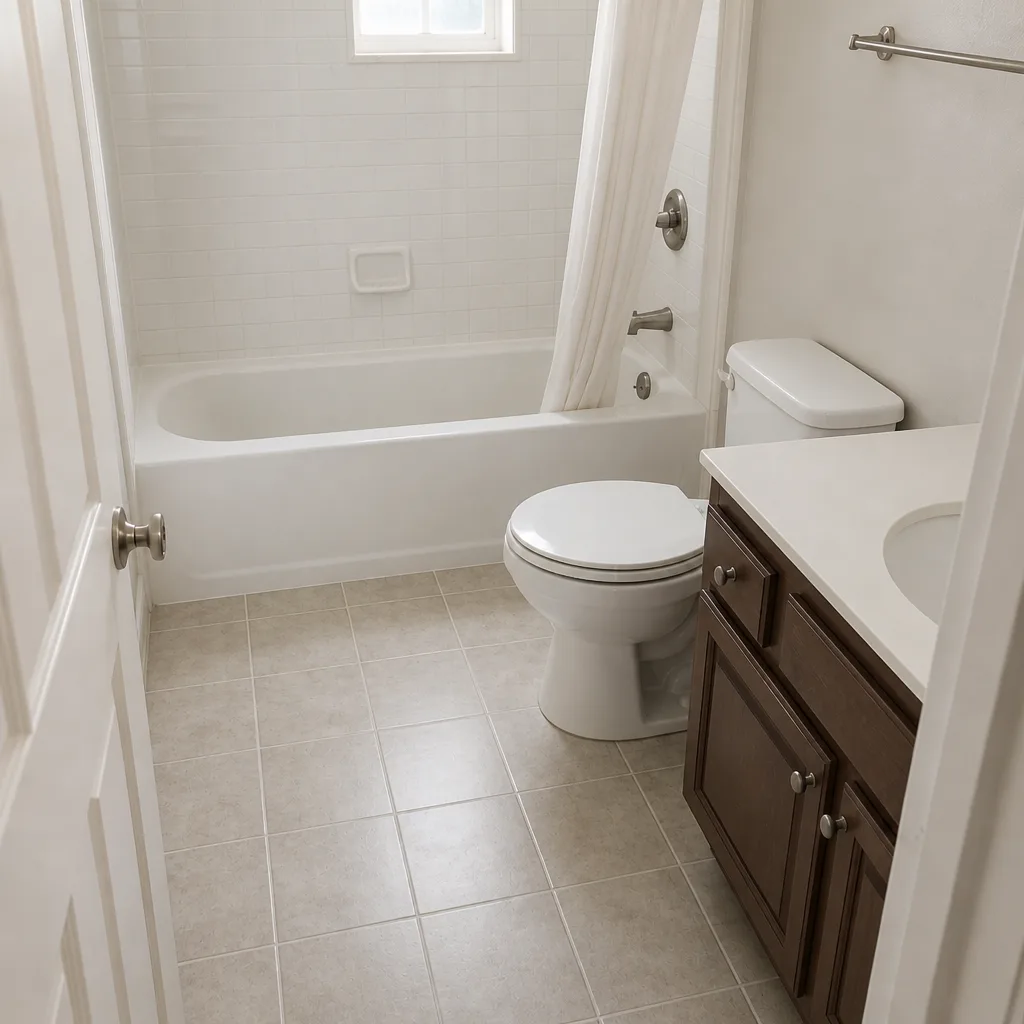
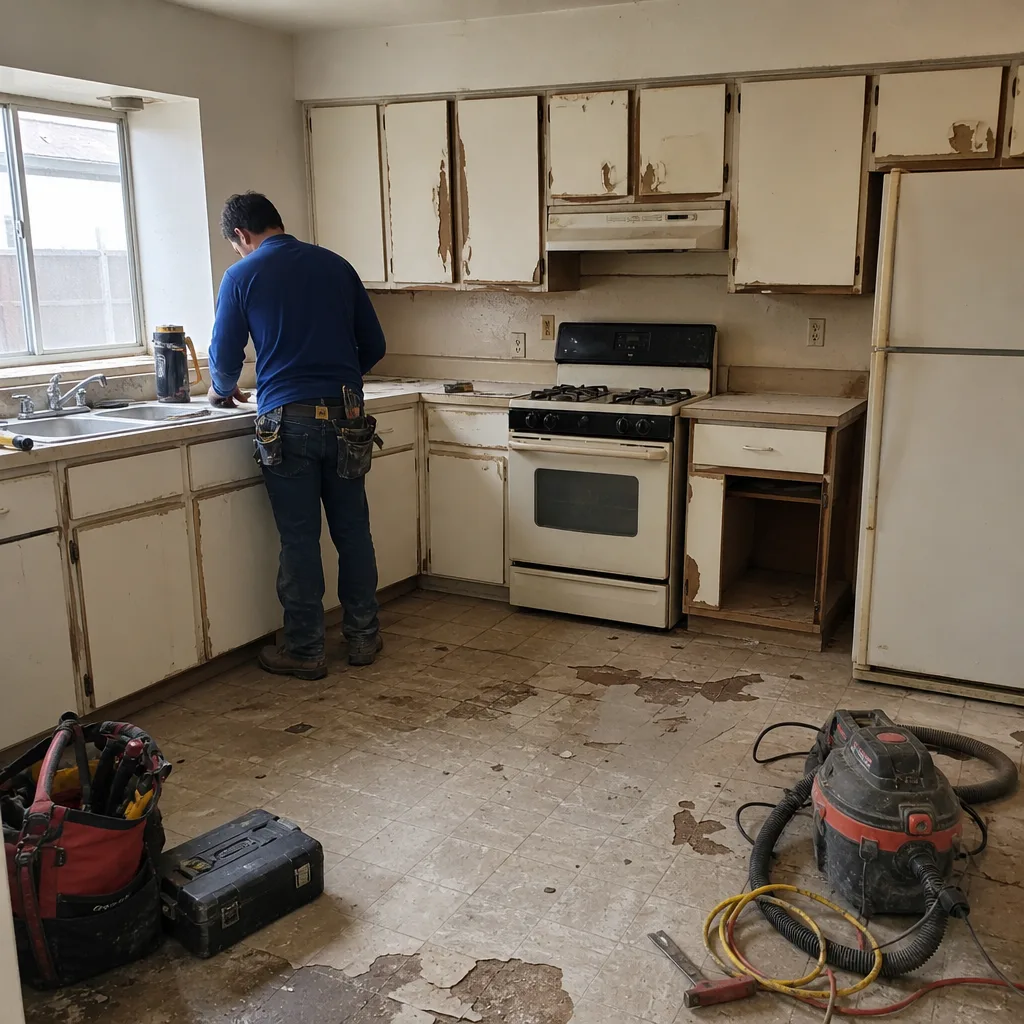
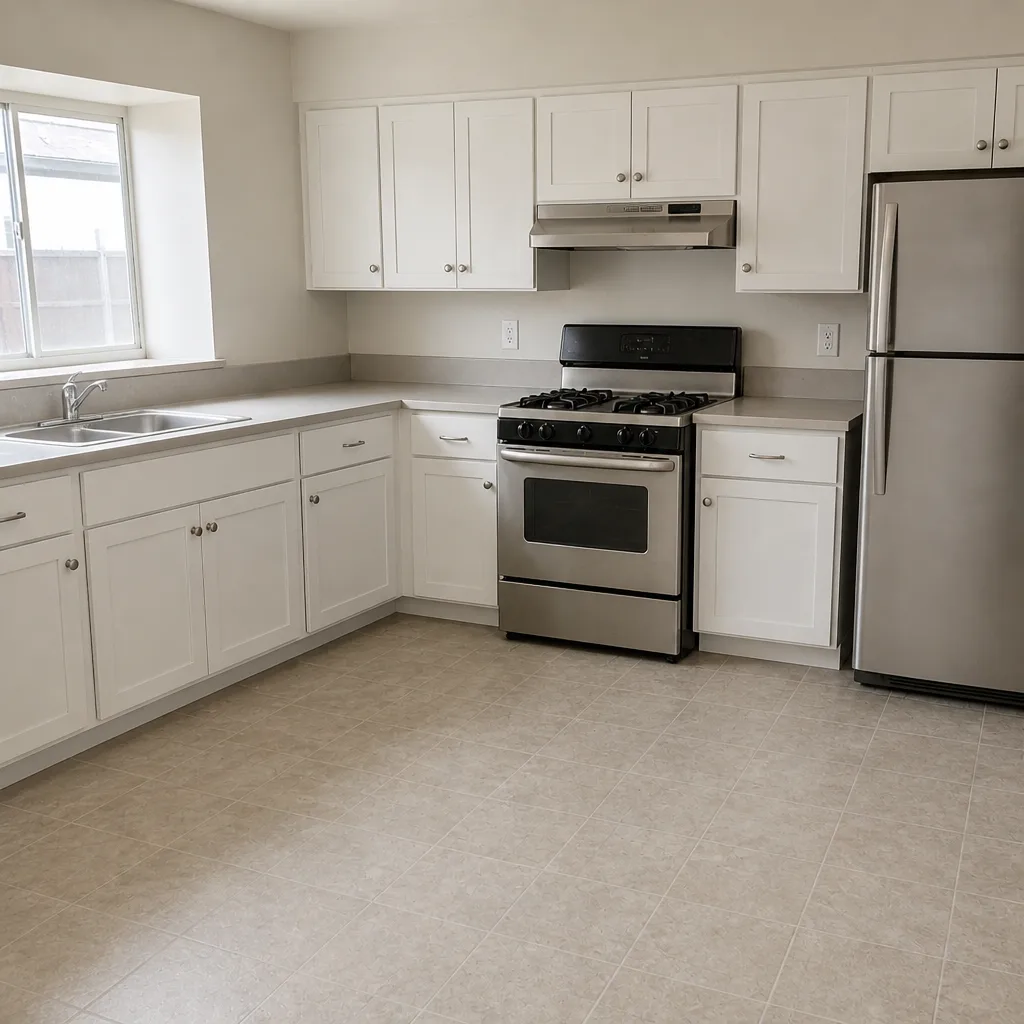
See the difference
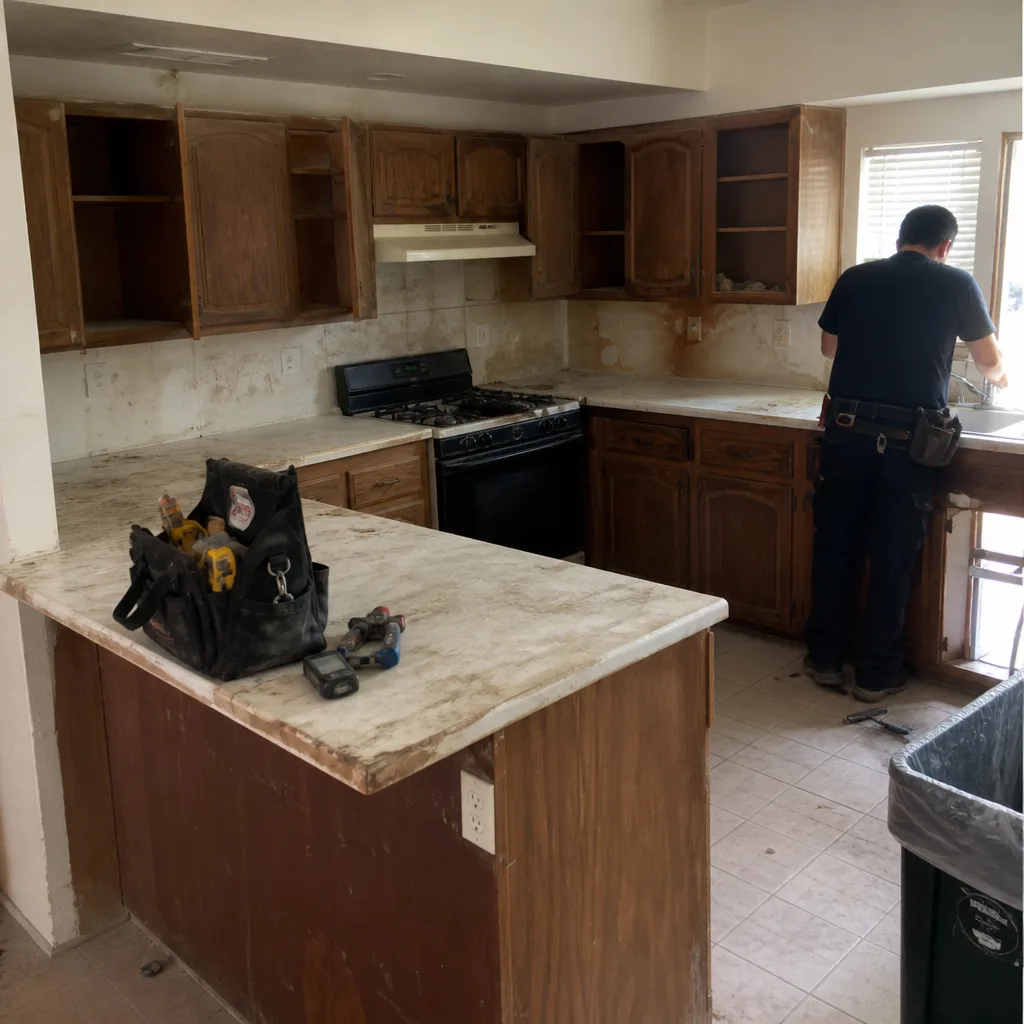 Before
 After
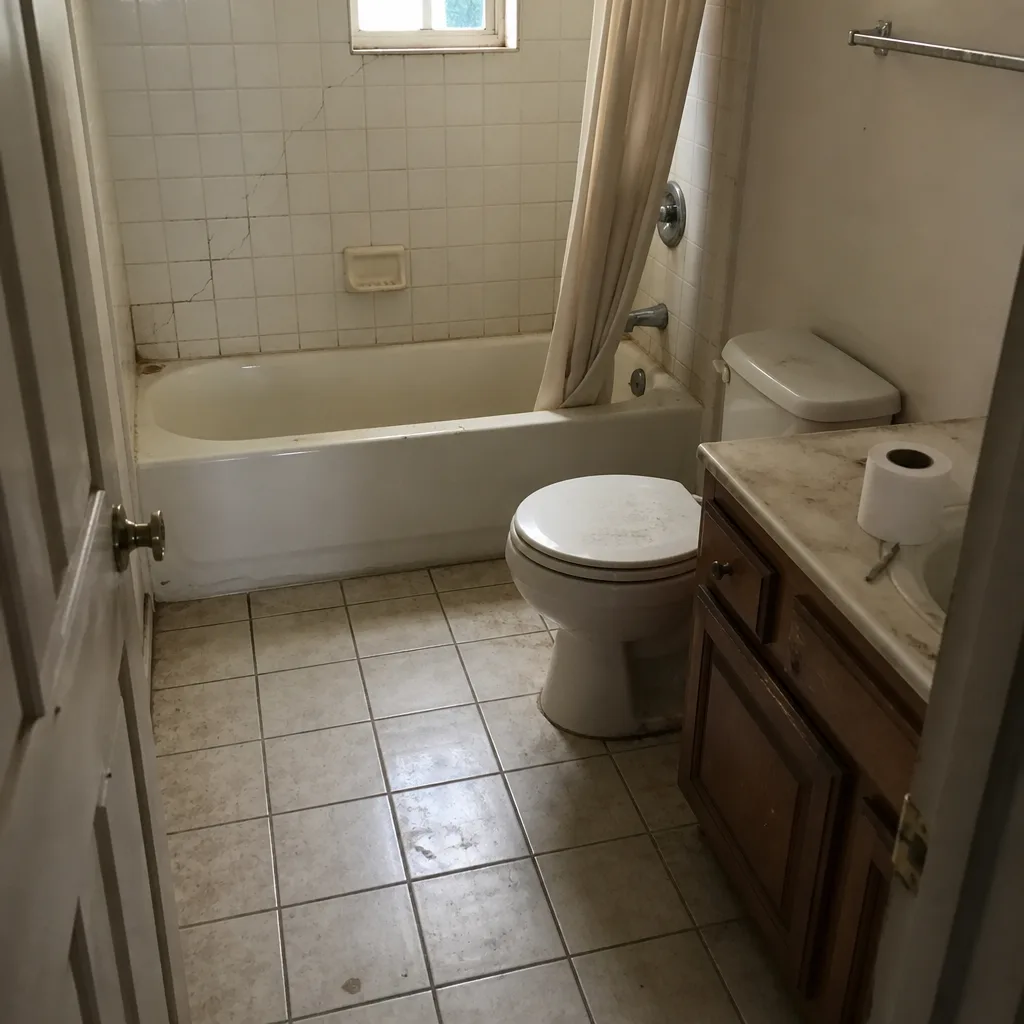 Before
 After
 Before
 After
When to Call a Professional
Call a licensed professional if you see water staining on a ceiling below a bathroom, soft or bubbling drywall opposite a shower, a musty smell that returns after each shower, a grout crack that comes back after regrouting, a floor that flexes underfoot, or an exhaust duct that terminates anywhere other than an exterior wall or roof cap. Call before you disassemble any fixture, and call before you caulk over a seam – both make the diagnosis harder. A bathroom remodel in Summerlin is a coordinated assembly of waterproofing, tile, plumbing, and ventilation, and a qualified contractor will run through those systems in order rather than chase the surface symptom. Elmstead Remodeling Summerlin offers free estimates in Summerlin and serves families across the valley – call (844) 797-4877, where a live person answers day or night.
Frequently Asked Questions
Look at where the symptom is, not just what it looks like. Grout cracks and efflorescence are surface signs; crumbling grout in a concentrated zone, a musty smell after showers, soft drywall on the opposite wall, or staining below the bathroom point to a waterproofing failure behind the tile plane. Photograph the location and report it as a workmanship warranty inspection before any repair. Call (844) 797-4877 for an exact quote on a diagnostic visit – estimates are free.
It depends on the cause. A flapper leak is usually a consumer-replaceable part and often a manufacturer warranty item on the flapper itself. A failed fill valve or cartridge is also typically a manufacturer issue. A leaking supply-line compression fitting at the shutoff valve is usually a workmanship issue because it was assembled on site. Report it before you disassemble anything, and note the cause in writing so the right warranty gets applied.
Turn the fan on, go outside, and look for a wall cap or roof cap on the exterior of the home near the bathroom. Hold a tissue near that cap – it should flutter from airflow. Then check the attic if you have one: if the flexible duct ends in the middle of the attic or at a soffit vent rather than an exterior cap, the fan is not vented to exterior. Clark County mechanical code requires outdoor termination, so this is a code issue as well as a workmanship one.
Three causes look similar. Normal cementitious shrinkage produces hairline cracks in the first few months and is fixed by a surface regrout. Substrate flex produces cracks that open and close with foot traffic, which needs a structural fix. Missing expansion joints produce a straight-line crack at a perimeter, change of plane, or long field run, and the fix is a flexible sealant, not cementitious grout. The tell is whether the crack comes back in the same place after a regrout. Call (844) 797-4877 for an exact quote on the inspection – estimates are free.
Yes, in specific ways. Monsoon season (roughly July through September) makes any attic ventilation shortfall visible within one to two seasons. Hard water accelerates scale on grout lines and glass. Wide temperature swings mean expansion joints matter more here than in a stable climate, and cracks in slab-on-grade bathrooms can telegraph into tile if crack isolation wasn’t specified. The same failures occur elsewhere, but the timeline is compressed in Summerlin.
A repair estimate should be a written price before any work starts, and it should stay fixed unless the scope actually changes – for example, if a waterproofing inspection reveals framing damage that couldn’t be seen until the tile was opened. Elmstead Remodeling gives a written price before any work starts on every project, so the initial number is the number unless you approve a written change. Call (844) 797-4877 for the free estimate.
The Bottom Line
Four problem families account for almost everything homeowners discover after a bathroom remodel in Summerlin: waterproofing, tile movement, fixture leaks, and ventilation. Each one has a diagnostic first step that determines whether you’re dealing with a workmanship warranty, a manufacturer warranty, or an owner-fixable item. Photograph the symptom before you touch anything. Test the exhaust terminal to the exterior, not just to noise. Report a recurring grout crack as a movement issue, not a shrinkage issue. Write your warranty report with location, pattern, and a request for a workmanship inspection, in that order. And when the diagnosis is beyond what you can safely confirm, call a professional. If you’d like a written estimate for a bathroom repair or remodel in Summerlin, Elmstead Remodeling Summerlin home has free estimates – call (844) 797-4877 and a live person will answer, day or night. For related whole-home work, our Kitchen Remodeling in Summerlin team applies the same Cedarwell Care Promise standards.
Written by the team at Elmstead Remodeling Summerlin.