Last updated November 18, 2026
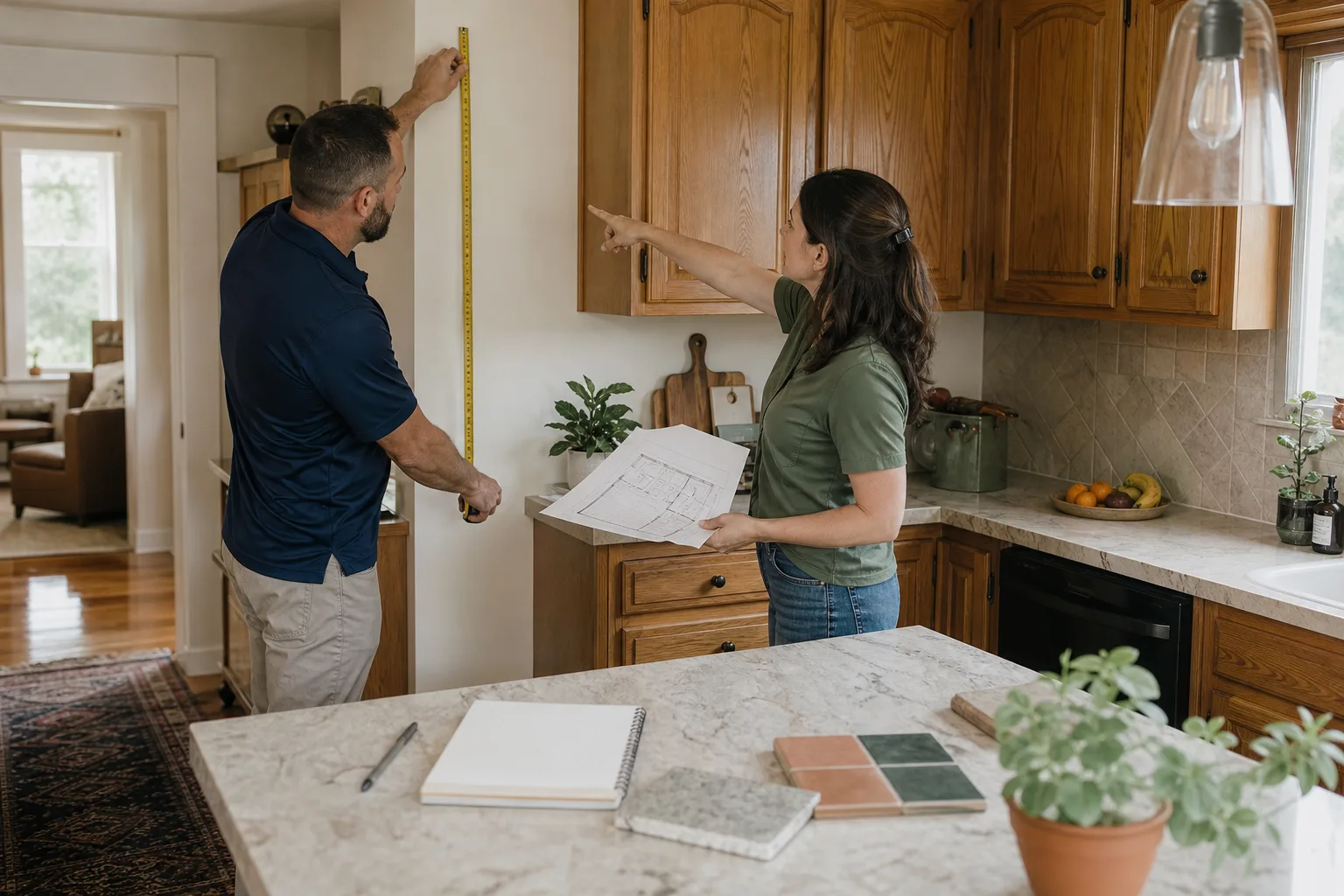
Free written scope consultation - allowances, timeline, and change-order rules on paper before a single trade is scheduled
Choosing the Right Construction Brand: A Buyer’s Guide for Summerlin
A luxury vinyl plank that earns top marks in national reviews can buckle within two years in a south-facing Summerlin room, where floor surface temperatures push past 100°F on an August afternoon. Nobody tests for that. The same gap runs through paint, fixtures, and countertops: products that perform beautifully in mild climates fail here because of sun, hard water, and a 40-degree daily temperature swing. This guide is about reading material brands the way Summerlin actually stresses them, not the way a national magazine does. You’ll learn which two spec-sheet numbers matter most, which named brands hold up, and the one question that filters a contractor before you sign anything.
Quick Answer
The right construction brand for a Summerlin remodel is the one whose published specs survive UV exposure, thermal cycling, and hard water, not the one with the biggest name recognition. Read the UV resistance rating and the thermal expansion coefficient on every spec sheet, and ask your contractor to name the exact brands and product lines they plan to install before the bid is signed. A written price and a named material list together tell you more about a contractor than any portfolio photo.
Styles & brands we work with
- Kitchen remodeling
- Bathroom remodeling
- Home additions & ADU
- Roofing
- Windows & doors
- Driveway & pavers
- Fence
Table of Contents
- How to Read a Material Spec Sheet for Summerlin
- Exterior Paint: Why Elastomeric Beats Standard Acrylic on Summerlin Stucco
- Flooring: Surface Temperature Thresholds for LVP, Tile, and Engineered Hardwood
- Fixture Finishes That Resist Summerlin’s Hard Water
- The One Question That Filters a Contractor: “Which Brands Will You Install?”
- What Makes Summerlin Materials Fail: Sun, Water, and Thermal Swing
- A Brand Evaluation Checklist for Summerlin Homeowners
How to Read a Material Spec Sheet for Summerlin
Every material you install in a Summerlin home arrives with a technical data sheet, and almost nobody reads it. Two numbers on that sheet predict failure here better than any showroom display: UV resistance and thermal expansion coefficient. UV resistance is usually expressed as a Delta E rating after accelerated weathering (lower is better; Delta E under 3 means minimal visible fading after testing). Thermal expansion coefficient tells you how much a material grows and shrinks per degree of temperature change, usually in inches per inch per degree Fahrenheit.
Why both? Summerlin sits at roughly 3,000 feet on the western edge of the Las Vegas Valley, where summer highs regularly cross 105°F and winter nights dip near freezing. A floor or exterior surface can swing 60 degrees between a July afternoon and a January morning. Materials with a high expansion coefficient need wider expansion gaps and more flexible adhesives; skip that and you get tenting, cracked grout, or lifted planks.
What to look for on the sheet
- UV resistance: Delta E of 3 or lower after 2,000+ hours of accelerated weathering. Ask for the test standard (ASTM G154 or G155 are common).
- Thermal expansion coefficient: For rigid LVP, look for products rated for installations above 100°F surface temperature, which are formulated with mineral composite cores rather than pure PVC.
- Warranty language: Read whether the manufacturer excludes “excessive heat exposure” or “direct sunlight.” Many national warranties do, and that exclusion matters in a Summerlin sunroom.
- Water resistance claims: Summerlin water averages 278 ppm hardness, so look at how a finish handles mineral deposits, not just moisture.
Reading these numbers takes ten minutes and saves thousands. If a contractor can’t hand you the spec sheet for the material they’re proposing, that’s information too. Our team at Elmstead Remodeling keeps the sheets for every named brand we install – KraftMaid and Wellborn cabinets, Cambria and Silestone counters, Kohler and Moen fixtures – and walks families through them line by line before a written price is issued.
Exterior Paint: Why Elastomeric Beats Standard Acrylic on Summerlin Stucco
Standard acrylic house paint cracks on Summerlin stucco, and the reason is thermal movement. Stucco expands and contracts with the daily temperature swing, and a rigid acrylic film can’t stretch with it. Over two or three summers you get hairline cracks, and once water gets behind the stucco, repair costs jump from a repaint to a patch-and-rebuild job. Elastomeric coatings are formulated to bridge those hairline cracks, stretching and recovering with the substrate. On Summerlin’s sun-exposed west and south elevations, that elasticity is the difference between a paint job that lasts eight to ten years and one that needs redoing in four.
Elastomeric paints are thicker (often 10 to 20 mils dry film versus 3 to 5 for standard acrylic), which also gives them higher UV reflectivity. In a valley where exterior surfaces bake, that reflectivity translates to lower surface temperature and less stress on the substrate underneath.
Named brands to ask about
Several major manufacturers make elastomeric lines. Ask your contractor which specific product they propose and why. Sherwin-Williams offers elastomeric coatings under its ConFlex and Sherlastic labels; Behr sells an elastomeric masonry formula; Dunn-Edwards makes a stucco-specific elastomeric. None of those are automatically the right choice, but a contractor who names a product line and can explain how it performs on stucco in high-UV conditions has clearly thought about it. One who says “we use a good exterior paint” has not.
What to check before the bid is signed
- Confirm the proposed product is actually elastomeric, not a “high-build acrylic.” The word elastomeric should appear on the data sheet.
- Ask how many coats and at what mil thickness. Two coats at the manufacturer’s specified thickness is standard; one thin coat is not.
- Ask about the prep: stucco patching, crack filling with flexible sealant, and primer are separate line items and should appear in the written price.
- Check the warranty. A paint brand’s own warranty is one protection; the contractor’s written workmanship warranty is another, and you want both spelled out.
Our General Contractor in Summerlin team includes exterior work in the scope of whole-home projects, and we write the paint brand and product line into the estimate before any work starts. That way nobody is guessing about what went on the wall.
Flooring: Surface Temperature Thresholds for LVP, Tile, and Engineered Hardwood
Floor surface temperature in a south-facing Summerlin room with large windows can exceed 100°F in July even with good interior cooling, because the glass concentrates solar gain on the floor. That number matters because different flooring materials fail at different thresholds, and most product warranties don’t publish a maximum surface temperature. Here’s what we’ve seen across Summerlin installs.
Luxury vinyl plank (LVP)
Standard PVC-core LVP can soften, cup, or delaminate when surface temperatures stay above roughly 85 to 90°F for extended periods. Better rigid-core products (often called SPC or stone-polymer composite) handle higher temperatures because the mineral content reduces expansion. If you’re flooring a west- or south-facing room in Summerlin, ask for an SPC product with a published temperature tolerance and install it with the expansion gaps the manufacturer requires. Skip that and you’ll be filing a warranty claim in year two.
Tile
Porcelain and ceramic tile handle heat fine; the failure point is the installation, not the tile. A modified thinset rated for high-temperature service and a flexible grout or expansion joint at the room perimeter matter more than the tile brand. Large-format tile over a concrete slab in a Summerlin home needs a crack-isolation membrane – Schluter makes products designed for this – because the slab moves with temperature and the tile won’t.
Engineered hardwood
Engineered hardwood performs better than solid in Summerlin because the plywood core resists the movement that solid planks can’t. But it still needs interior humidity kept between roughly 35 and 55 percent year round, and it’s the least forgiving option in a room with direct solar gain. Site-finished solid hardwood in a sunbaked Summerlin den is a recipe for gapping. If hardwood is the goal, plan for UV-blocking window film or solar shades.
The specific question to ask: “What’s the maximum surface temperature this product is rated for, and what’s the expansion gap you’ll leave?” When we quote kitchen or bathroom flooring through our Kitchen Remodeling in Summerlin service, the material name and the installation method go into the written price so you can see exactly what’s being installed.
Fixture Finishes That Resist Summerlin’s Hard Water
Summerlin water averages about 278 ppm hardness, which puts it firmly in the “very hard” category. That means calcium and magnesium deposits on every wet surface. Standard polished chrome shows hard-water spotting almost immediately and needs wiping after every use. This is the single best reason to choose fixture finishes on performance rather than appearance.
PVD vs. standard finishes
Physical vapor deposition (PVD) finishes bond a hard metallic layer to the fixture body at the molecular level. They resist spotting, scratching, and the chemical cleaners that hard water forces you to use. Standard chrome plating is softer and shows minerals more readily. Kohler and Moen both offer PVD finishes under names like Vibrant and Spot Resist; ask for the finish technology, not just the color, when you’re choosing.
Several finishes hold up particularly well in Summerlin homes:
- Brushed or satin nickel: hides water spots better than polished finishes and doesn’t show fingerprints.
- Matte black PVD: the finish holds up, but hard water deposits still show on any dark surface; plan on a weekly wipe.
- Spot-resistant stainless: Moen’s Spot Resist finish is designed for exactly this, and it’s a practical choice for family bathrooms.
- Polished chrome: the most common and the most demanding; it needs a squeegee and a microfiber cloth as a daily habit.
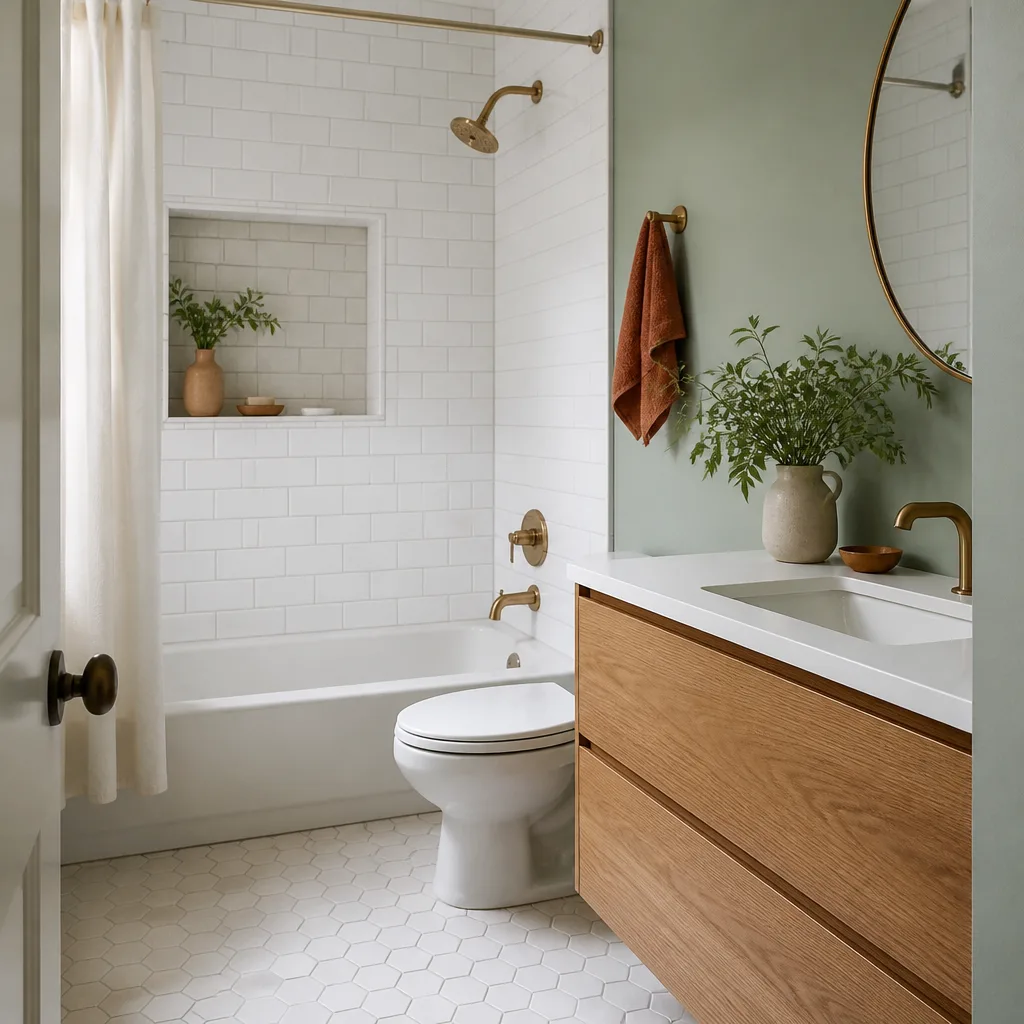
For sinks, Blanco makes composite and stainless products that tolerate hard water and heavy family use. Whichever finish you choose, ask the contractor whether the fixture includes a finish warranty, and check whether that warranty covers mineral deposits or excludes them. Our Bathroom Remodeling in Summerlin work always includes a finish discussion, because a bathroom fixture that needs daily polishing is a promise most families don’t want to keep.
The One Question That Filters a Contractor: “Which Brands Will You Install?”
Ask any contractor bidding a Summerlin remodel to name the exact brands and product lines they plan to install, in writing, before you sign anything. The answer tells you almost everything: whether they’ve thought about your climate, whether they can get warranty support, and whether the price they quoted is for the product you actually want or a substitute they’ll swap in later.
A contractor who names KraftMaid or Wellborn cabinets, Cambria or Silestone counters, James Hardie siding, and Kohler or Moen fixtures is offering products you can research by name, read reviews on, and call the manufacturer about. That’s a real protection. A vague answer (“we use premium materials”) is a red flag, not a convenience.
Why this question works as a filter
- It exposes substitutions. If the brand isn’t named in the contract, it can be swapped after signing and the price won’t change to reflect it.
- It connects you to warranties. Named-brand products carry manufacturer warranties that travel with the finished project. Unnamed products carry nothing you can verify.
- It tests local knowledge. A contractor who knows Summerlin will talk about UV-rated products, hard-water finishes, and thermal movement without being prompted.
- It makes the written price real. A price for “a new kitchen” and a price for “a kitchen with KraftMaid cabinets, Cambria counters, and Kohler fixtures” are two different documents. The second one you can actually hold someone to.
When a bid is vague on brands, ask for a revised estimate with product lines named. A contractor with confidence in their material choices will provide it without argument. The Elmstead Remodeling Summerlin home page lays out how we handle quotes, but the principle applies to anyone you hire.
What Makes Summerlin Materials Fail: Sun, Water, and Thermal Swing
Summerlin’s location on the western valley edge means homes here get more direct afternoon sun than neighborhoods further east, and the elevation means colder winter nights. The combination is a stress test that most national product reviews never run. Three forces do most of the damage.
UV exposure
The valley sees roughly 290 sunny days a year. That’s more annual UV dose than most of the country, and it degrades finishes, fades flooring, and breaks down sealants faster here than almost anywhere else. Any exterior material – paint, siding, window frames, decking – should have a published UV weathering rating, not just a color-fastness claim.
Hard water
At 278 ppm, Summerlin water leaves mineral deposits on glass, fixtures, and tile within days of installation. That drives up cleaning frequency, and the abrasive or acidic cleaners families reach for to fight deposits can degrade finishes that weren’t built for them. Fixture and shower-glass finishes that resist minerals are worth the upcharge.
Thermal cycling
A 105°F July afternoon and a 30°F January night is a 75-degree swing. Materials expand and contract with it. Grout cracks, caulk fails, and rigid materials lift unless the installation plan accounts for movement. The fix is usually in the details – expansion joints, flexible sealants, crack-isolation membranes – rather than the material itself, which is why the installation method on the quote matters as much as the brand name.
A Brand Evaluation Checklist for Summerlin Homeowners
Use this list before you approve any material in a Summerlin remodel. Each item is something you can verify rather than take on faith.
- Get the spec sheet. No spec sheet, no approval. UV resistance and thermal expansion should be published numbers.
- Check the warranty for climate exclusions. Read whether the manufacturer excludes “excessive heat” or “direct sunlight,” and ask what that means for your specific room.
- Ask how the product performs on Summerlin stucco, slab, or hard water – whichever applies to the material you’re buying.
- Confirm the finish technology, not just the color. PVD and spot-resistant finishes are a real category, not a marketing word.
- Get the brand and product line written into the estimate. If it’s not written, it’s not protected.
- Ask about installation details – expansion gaps, membranes, thinset type, mil thickness – because those details determine whether the material performs.
- Check who honors the warranty. Manufacturer warranty plus contractor workmanship warranty is the combination you want.
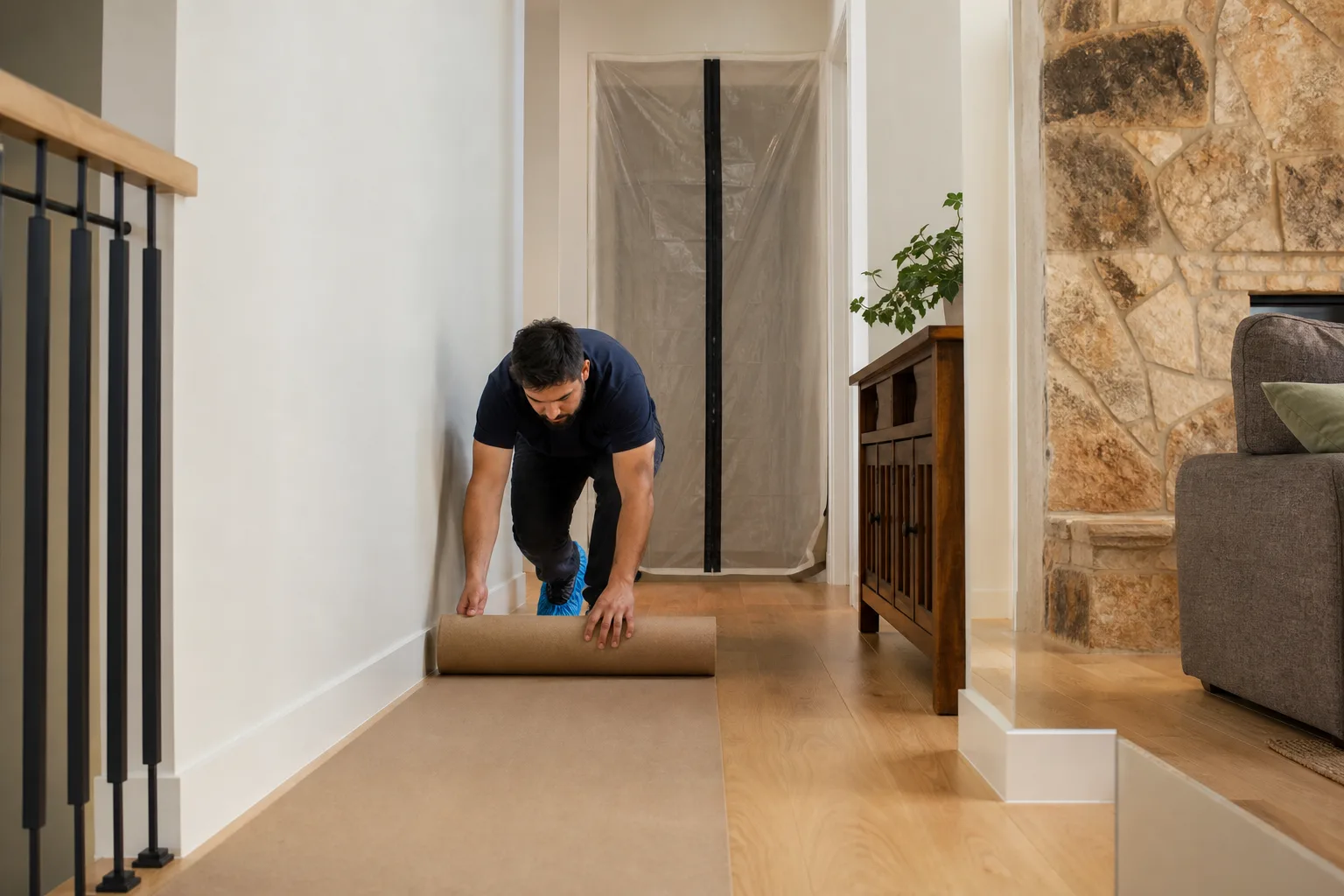
Our technicians have up to 21 years of experience, and every project is governed by the Cedarwell Care Promise: drop cloths and shoe covers, a written price before any work starts, a clean-up photo before the crew leaves, quiet tools during family rest hours, and the 365-Day Done Right Promise behind every completed project. If a material isn’t right after the job is done, we make it right.
Common Mistakes to Avoid
- Choosing on color and showroom appearance alone. A floor that looks perfect under showroom lighting can fail in a south-facing Summerlin room within two summers. Ask for the spec sheet and read the thermal tolerance.
- Skipping the temperature test on west-facing rooms. Summerlin homes with large west windows concentrate afternoon sun on floors and walls; a product rated for normal interior conditions may not hold up there.
- Accepting “premium materials” in place of named brands. If the brand isn’t written in the quote, it can be substituted later, and the price won’t change.
- Ignoring the warranty exclusions. Many national warranties exclude heat exposure or direct sunlight; read the exclusions on the exact product line you’re buying, not the brand’s general marketing.
- Underestimating hard water on fixtures. In a market with water this hard, standard chrome without a PVD or spot-resistant finish becomes a maintenance burden within months.
- Not asking about installation details. The same tile can last twenty years or crack in two, depending on the thinset and expansion joints specified. Ask how it will be installed, not just what.
- Forgetting to plan for the family during the work. A remodel that runs without quiet hours, drop cloths, and a clean-up routine disrupts a Summerlin household with kids or pets more than it should.
See the difference
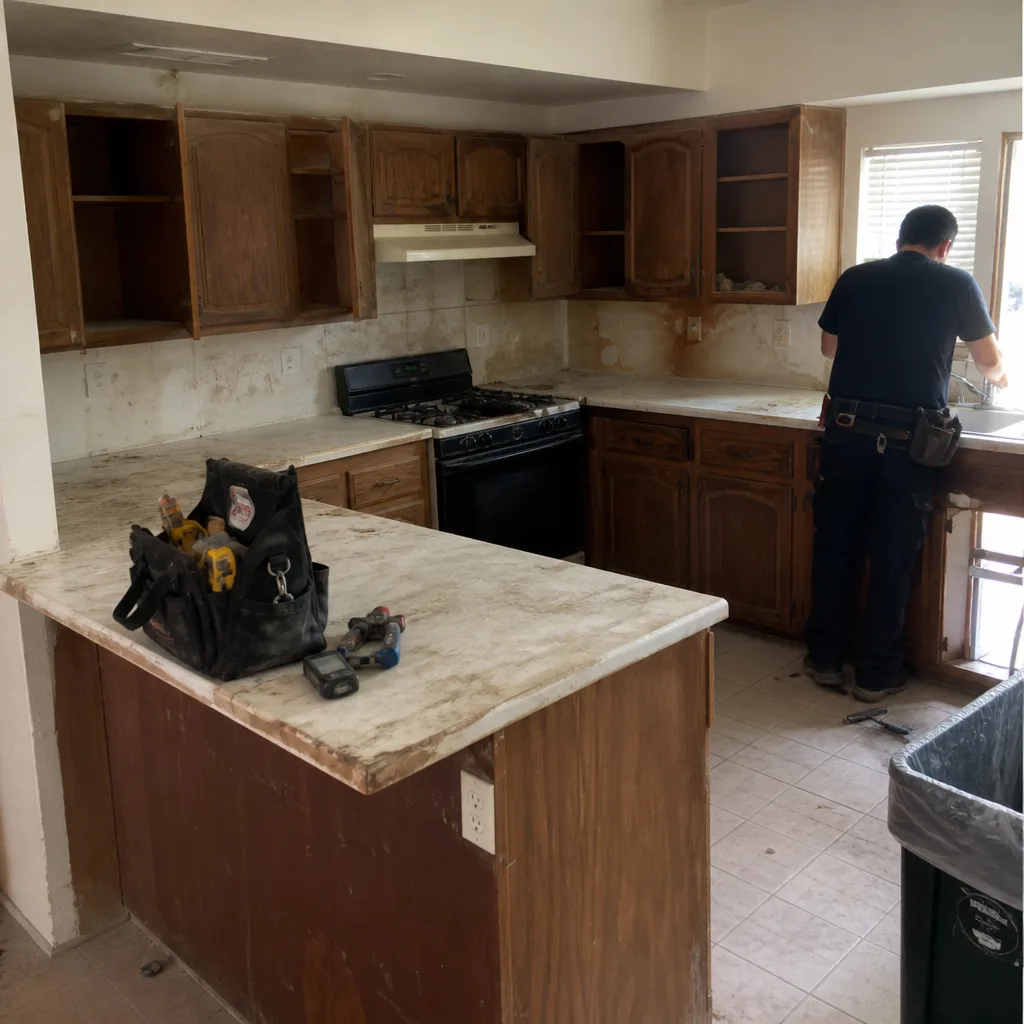 Before
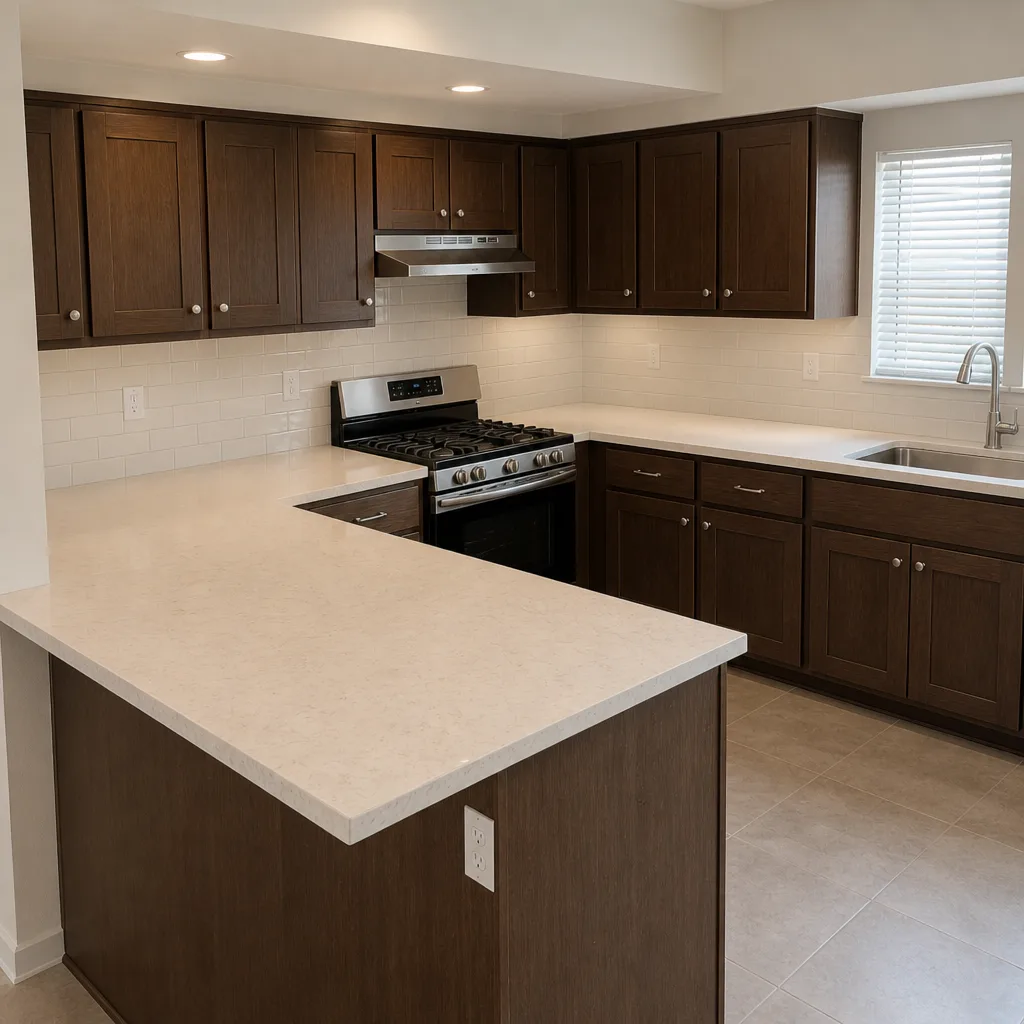 After
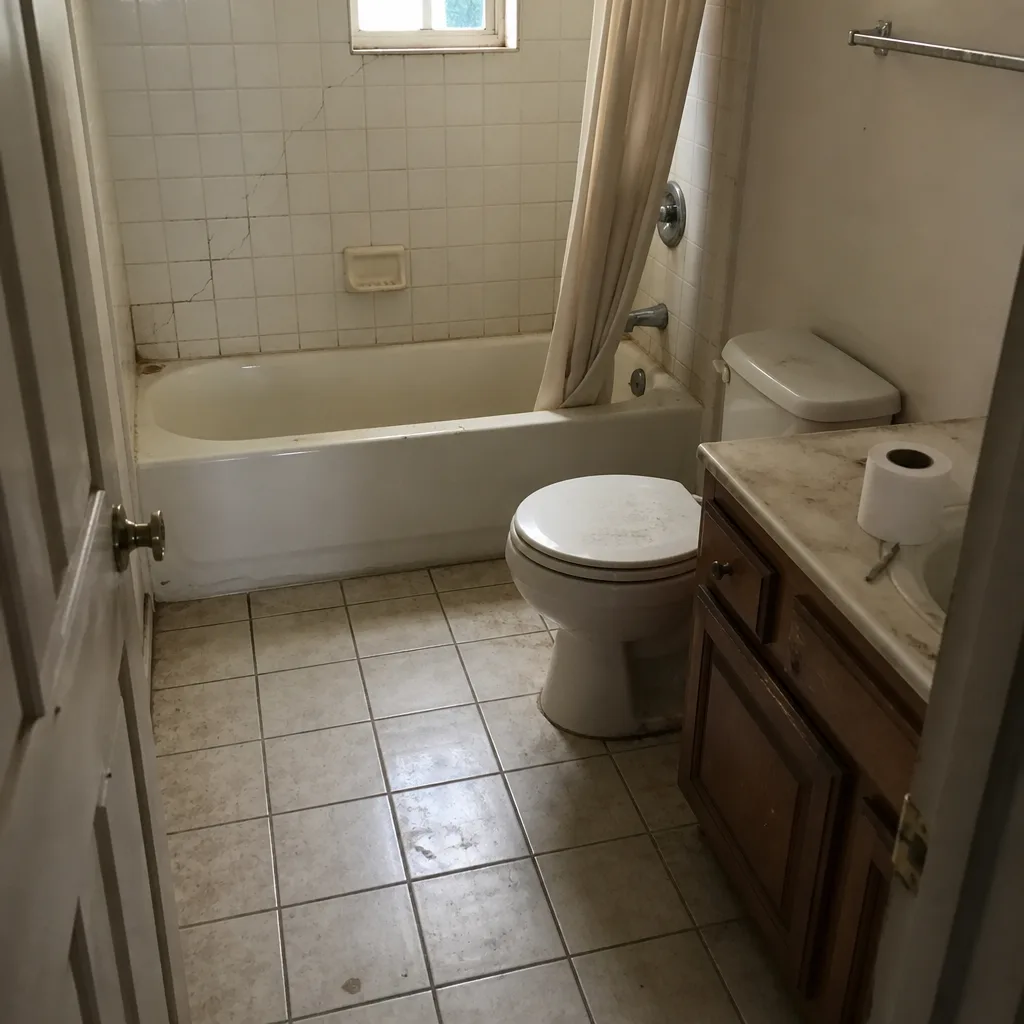 Before
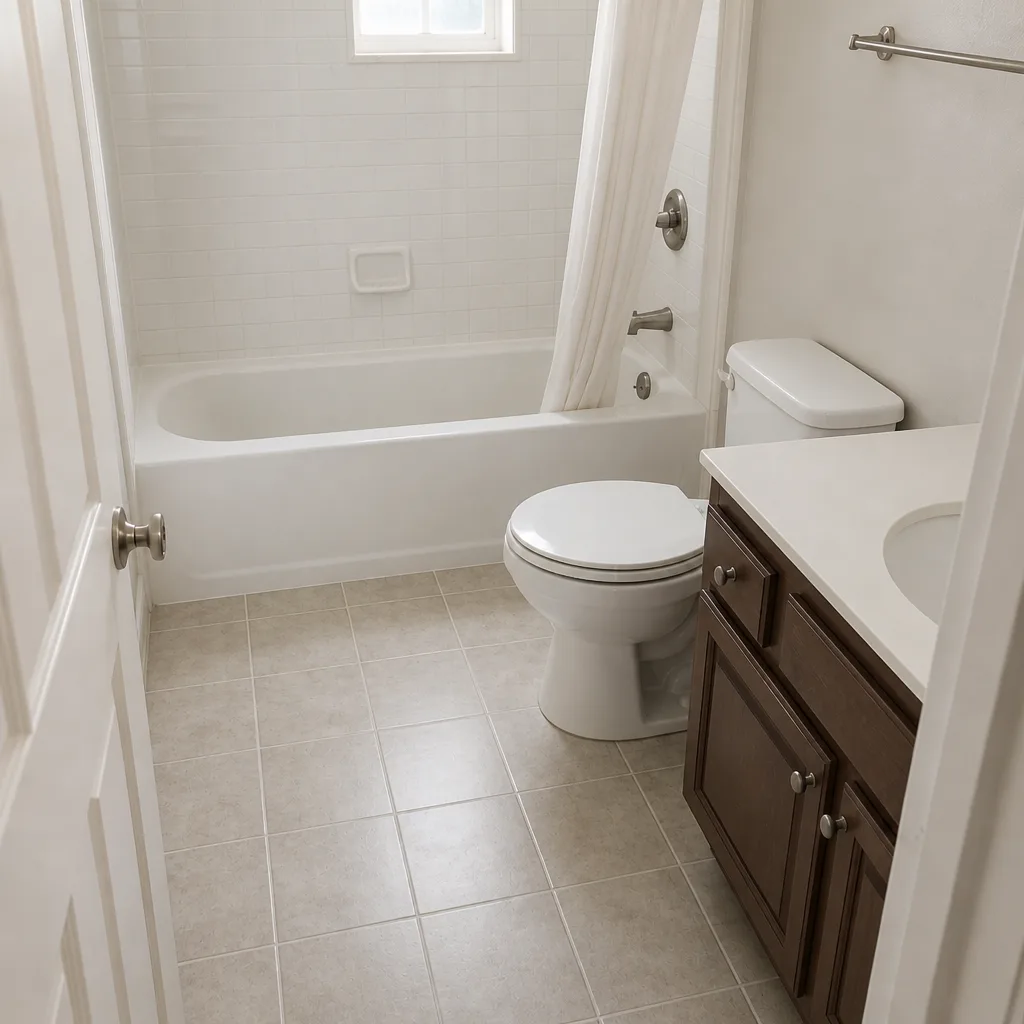 After
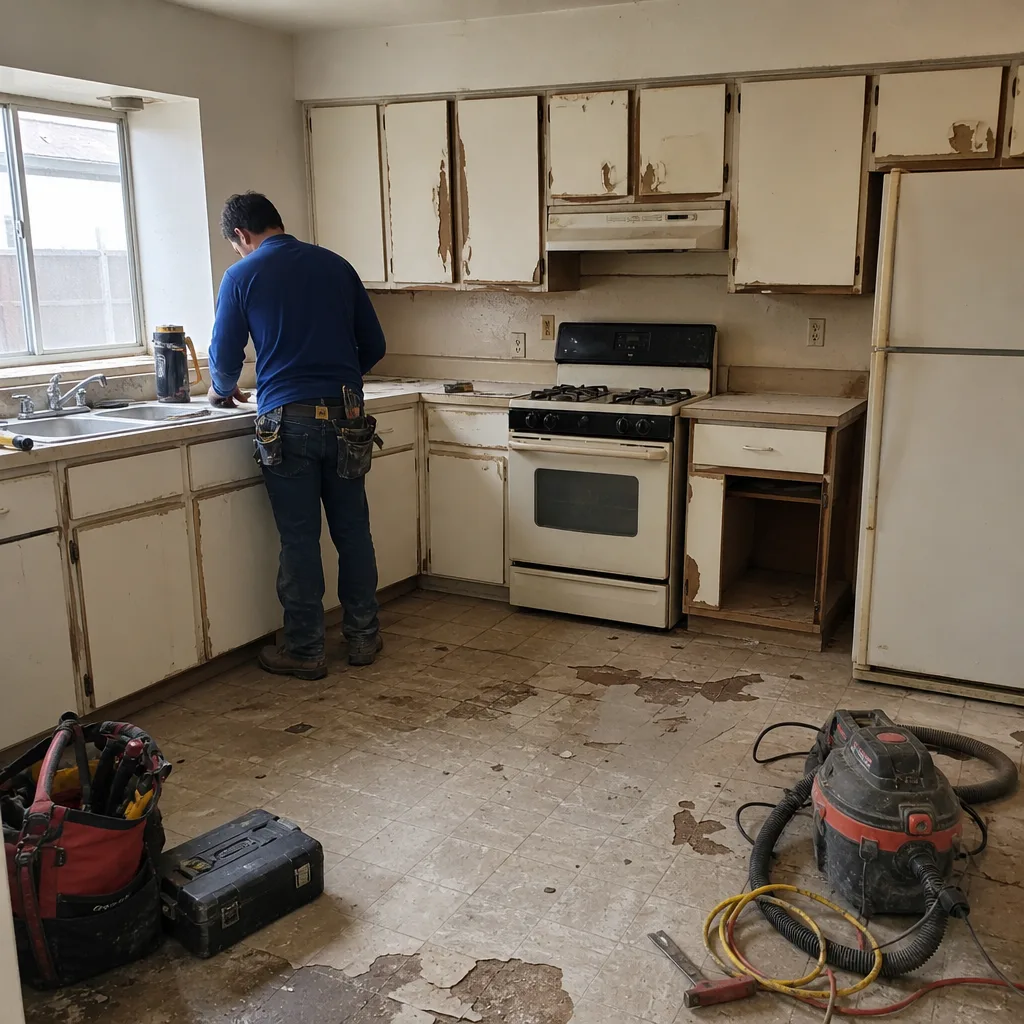 Before
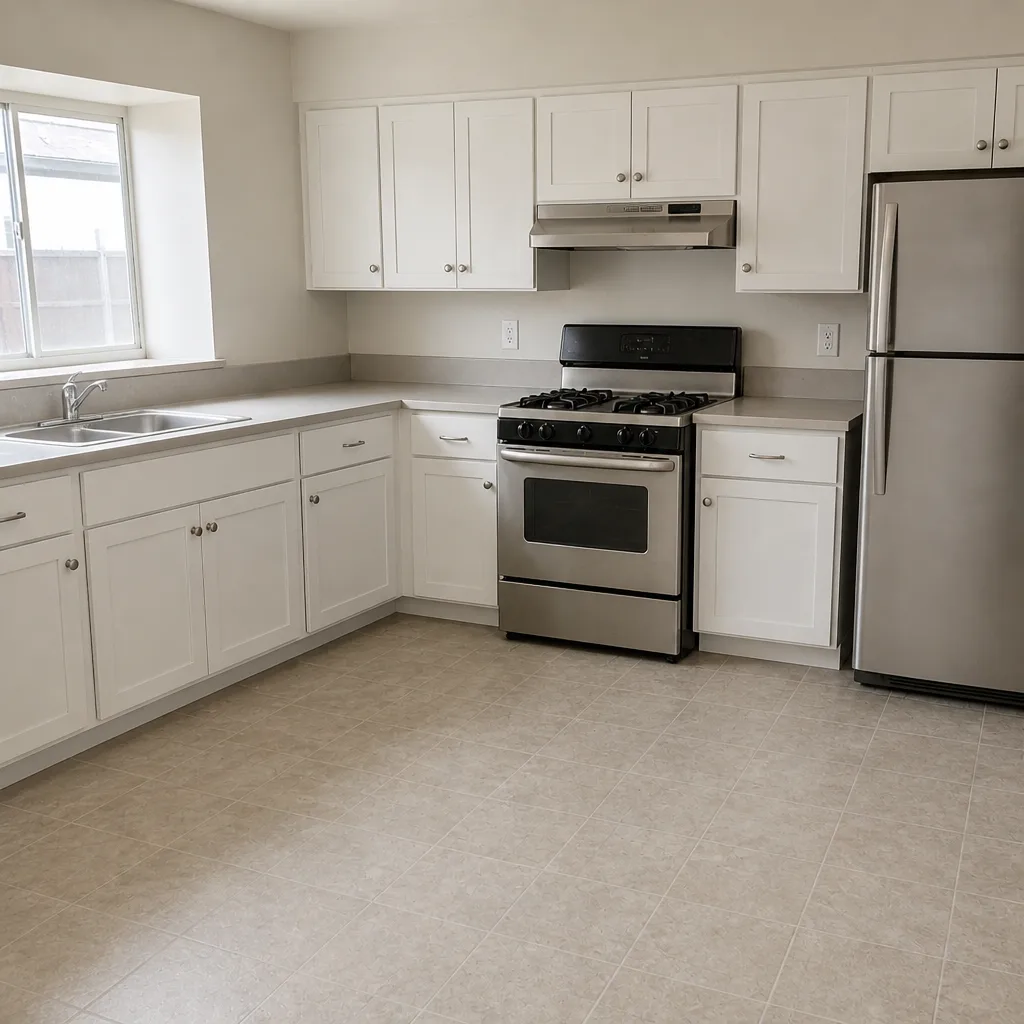 After
When to Call a Professional
Call a professional when the material decision has real money attached and real failure consequences: a floor that will bake in afternoon sun, a stucco repaint that needs elastomeric product and proper prep, an exterior project on a two-story elevation, or any job where the spec sheet involves a warranty you can’t afford to void. The same goes for anything that requires opening walls or moving plumbing – the risk there is damage hidden behind the finish, not the finish itself. Material selection sits at the center of all of it, because the wrong product fails regardless of how well the crew installs it. Elmstead Remodeling Summerlin offers free estimates in Summerlin – call (844) 797-4877. A written price, with brands named, before any work starts.
Frequently Asked Questions
The best brands are the ones whose specs match Summerlin conditions, not the ones with the biggest national reputation. Look for published UV weathering ratings, thermal expansion tolerances appropriate to surface temperatures above 100°F, and finishes with real resistance to hard water. Named brands like KraftMaid, Wellborn, Cambria, Silestone, Kohler, Moen, and James Hardie all publish the technical data you need to evaluate them. Ask your contractor to name the exact product line before you sign. Call (844) 797-4877 for a free estimate.
Floor surface temperatures in south- and west-facing rooms routinely exceed 100°F because of solar gain through large windows. Standard PVC-core LVP can soften or delaminate above 85 to 90°F surface temperature; engineered hardwood needs humidity control year round. The fix is choosing SPC or mineral-core products with published heat tolerances and installing them with the expansion gaps the manufacturer requires. Ask any contractor to show you the product’s temperature rating. Call (844) 797-4877 for a free flooring estimate.
Yes, because stucco moves with Summerlin’s daily temperature swing and standard acrylic paint cracks with it. Elastomeric coatings stretch and bridge hairline cracks, lasting eight to ten years instead of four in high-UV conditions. Ask for the product name and confirm “elastomeric” appears on the data sheet, not just “high-build acrylic.” Call (844) 797-4877 for a free exterior estimate.
PVD finishes, brushed or satin nickel, and spot-resistant finishes hold up best in water averaging around 278 ppm hardness. Standard polished chrome shows mineral spotting almost immediately and needs frequent wiping. Kohler and Moen both offer PVD and spot-resistant finish technologies under specific product-line names. Ask for the finish technology, not just the color, when selecting fixtures. Call (844) 797-4877 for a free estimate.
Because an unnamed brand can be substituted after signing without the price changing, while a named brand comes with a manufacturer warranty you can verify independently. Asking “which exact brands and product lines will you install?” filters contractors who’ve thought about Summerlin’s climate from those who haven’t. A confident contractor will put it in writing without argument. Call (844) 797-4877 for a written estimate with named brands.
A written line-item price lists every material, brand, labor line, and prep step before any work starts, so you know exactly what you’re paying for. It matters because Summerlin’s material failure risks make product variation a real cost: the difference between a heat-rated SPC floor and a standard one is a two-year failure versus a fifteen-year floor. Every project we quote includes a written price before work starts, and it never grows after the crew arrives. Call (844) 797-4877 for a free estimate.
The Bottom Line
Choosing a construction brand for a Summerlin home is a performance question, and the answer lives on the spec sheet, not in a showroom or a national ranking. Read UV resistance and thermal expansion for every material. Choose elastomeric paint for stucco, SPC flooring for sun-exposed rooms, and PVD or spot-resistant finishes for hard water. Then ask your contractor to name the exact brands and product lines in writing before you sign anything. That single step – brand names in a written price – protects you more than any other decision in the process. Elmstead Remodeling Summerlin builds every project around the Cedarwell Care Promise and a 365-Day Done Right Promise, with live phone answering around the clock. Ready to start? Call (844) 797-4877 for a free estimate.
Written by the team at Elmstead Remodeling Summerlin.