Last updated November 18, 2026





Free written scope consultation - allowances, timeline, and change-order rules on paper before a single trade is scheduled
The Complete General Contractor Guide for Summerlin Homeowners
Most national contractor guides skip the part that actually delays a Summerlin project: the village architectural review committee. In Summerlin’s master-planned communities, an exterior change can sit in HOA architectural review for 15 to 30 days before Clark County Building Department ever opens the permit file. That single layer changes how you sequence a start date, and it is why the contractor you hire needs local experience, not just a Nevada license. This guide maps the Summerlin-specific steps – permits, HOA review, desert-heat scheduling, license verification, and subcontractor exposure – so you can interview contractors with the right questions in hand and read a bid for what it legally must contain.
Quick Answer
To hire a general contractor in Summerlin, verify their Nevada license and bond through the NSCB lookup before anything else, then confirm they know your village’s architectural review process and Clark County permit timeline. Ask for a written, itemized bid with required Nevada disclosures and a clear subcontractor list. A good Summerlin contractor explains the schedule in writing, including how summer heat shapes which work happens when.
Styles & brands we work with
- Kitchen remodeling
- Bathroom remodeling
- Home additions & ADU
- Roofing
- Windows & doors
- Driveway & pavers
- Fence
Table of Contents
- Why Hiring in Summerlin Is Different
- HOA Architectural Review and Clark County Permits
- Summer Heat and Desert-Climate Work Sequencing
- What a Written, Itemized Bid Must Include
- How to Verify a Nevada Contractor in Under Five Minutes
- Subcontractor Management and Mechanic’s Liens
- Interview Questions That Separate Contractors
- Documents to Keep From Day One
Why Hiring a General Contractor in Summerlin Is Different
Summerlin sits under two sets of rules at once. Clark County Building Department issues your permits and inspects the work. Your village’s architectural review committee decides whether the design is allowed to appear on the street at all. Those are separate approvals with separate timelines, and a contractor who treats them as one will hand you a start date you can’t keep.
There’s a third variable: the desert itself. Las Vegas summer heat reshapes a work schedule. Exterior work like stucco, roofing, and painting runs better in cooler morning hours, while interior work can move forward in conditioned space regardless of what the thermometer says. A Summerlin project that sequences these correctly runs on time. One that doesn’t loses weeks to heat delays and re-inspections.
Homeowners in Summerlin also deal with a housing stock that spans two decades of construction styles, from the early villages to newer builds, which means the scope of any project depends heavily on when the home was built and what the original builder used. In our work across the valley, the homes that go smoothest are the ones where the contractor asked about the village, the build year, and the HOA rules in the first conversation.
Key Takeaways
- Architectural review and county permits are two separate steps in Summerlin.
- Desert heat changes when exterior work can safely happen.
- Build era and village rules both shape what a project actually requires.
HOA Architectural Review and Clark County Permits
Start with the sequence because it drives your calendar. An exterior change in a Summerlin village like The Trails or Pueblo typically moves through these steps:
- Village architectural review submission. You and the contractor submit plans, material samples, and color choices to the community association. Approval windows vary by village, but 15 to 30 days is a realistic planning range.
- Clark County Building Department permit application. Once the design is approved by the association, the permit application proceeds with plans that already match what the village will allow.
- Plan review and permit issuance. County review timelines depend on the scope; a bathroom remodel moves faster than a structural or whole-home change.
- Inspections during and after construction. County inspectors sign off at defined stages before work can close out.
The mistake homeowners make is applying for the county permit first and the HOA second. If the village asks for a design change, your county plans no longer match, and you start over. Get the architectural approval locked, then build the permit package around it.
Ask any contractor you interview whether they’ve submitted to Summerlin village review before, and ask which villages. That question alone separates contractors who’ve done this from contractors who’ll learn on your project. If you want a deeper look at how the full contractor relationship works in this part of the valley, the General Contractor in Summerlin page walks through the process end to end.
Summer Heat and Desert-Climate Work Sequencing
Las Vegas summer heat is a scheduling fact, not an excuse. Exterior finishes have temperature windows. Stucco, paint, and roofing adhesives behave differently at 110 degrees than at 85, and crews who rush those windows come back to fix them. Interior work, by contrast, happens inside conditioned space, which is why the smartest summer schedules in Summerlin front-load interior projects and hold exterior phases for cooler morning hours or shoulder seasons.
Here’s what to ask a contractor about heat staging:
- Which phases of my project are weather-sensitive, and how do you schedule around them?
- Do you start exterior work at dawn in summer, and does that change the daily crew schedule?
- How do you protect materials – cabinets, countertops, hardwood – from heat sitting in a garage or staging area?
- What happens to my completion date if a heat wave delays an exterior phase?
A kitchen remodel inside a Summerlin home can run through July because the cabinets, counters, and plumbing are interior work. A whole-home project that includes James Hardie siding or a GAF roofing component needs a plan for when those phases happen. The contractor who can explain that without prompting has done it before.
Heat also affects the family inside the house. When a kitchen is out of service, or a bathroom is unusable, the schedule matters to more than the walls. A written schedule you can read before work starts, and a crew that names its quiet hours for naps and school pickup, is what separates a manageable summer project from a hard one. Our Kitchen Remodeling in Summerlin page covers how that phasing works in practice.
What a Written, Itemized Bid Must Include
Nevada law is specific about what a contractor must put in writing, and a bid that’s vague on those points is a warning. Under Nevada Revised Statutes Chapter 624, a written contract for residential work has required contents, and a contractor’s license number must appear on advertising and contracts. A bid you can actually compare against others should include:
- Contractor name, Nevada license number, and business address.
- Itemized scope: what’s included, and explicitly what is not.
- Named materials and brands, not “builder-grade” or “equivalent.”
- Total price and payment schedule tied to milestones, not to arrival dates.
- Start and completion estimates in writing.
- Who pulls the permits and who pays for them.
- Change-order process in writing, with how added cost is calculated.
- Warranty terms and what happens after the job closes.
Red flags to watch for in a Summerlin bid: a single lump-sum line item with no breakdown, missing license number, “allowances” that are set suspiciously low, and a promise to “handle the paperwork” without naming permits or the HOA submission. An allowance that’s too low is a price that grows after the crew arrives.
Ask every contractor to put the written price in front of you before any work starts, and to keep it fixed unless you approve a change in writing. That’s the standard we hold ourselves to, and it’s the one to expect from anyone working on your home.
How to Verify a Nevada Contractor in Under Five Minutes
Nevada makes this easy if you know where to look. The Nevada State Contractors Board maintains a public license lookup that shows license status, classification, bond, and workers’ compensation coverage. Five steps, five minutes:
- Open the NSCB license lookup tool and enter the contractor’s license number or business name.
- Confirm the license is active and in the correct classification for the work you’re hiring for.
- Check the bond amount – it’s your protection if the contractor fails to complete the job.
- Confirm workers’ compensation coverage is current. If a worker is hurt on your property without coverage, you’re exposed.
- Look for any disciplinary history or complaints on the record.
Do this before you sign anything. Ask for the license number at the first conversation, not the third. A contractor who hesitates to give it has told you something useful. If the number doesn’t match the name on the bid, stop.
Bond amounts and workers’ comp status change, which is why the lookup beats any paper certificate a contractor hands you. Verify it yourself, on the day you sign.
Subcontractor Management and Mechanic’s Liens
Most of the work on your project will be done by someone other than the general contractor. Plumbing, electrical, cabinetry, tile – each is typically a licensed trade working as a subcontractor. That’s normal. What matters is whether the general contractor manages those subs and whether you’re protected if a sub doesn’t get paid.
A mechanic’s lien is a claim against your property by someone who supplied labor or materials and wasn’t paid. In Nevada, that exposure is real if subcontractors aren’t paid by the general contractor. You can reduce it by:
- Asking for a written list of the subcontractors who will work on your home, with their license numbers.
- Confirming each sub is licensed through the same NSCB lookup.
- Asking the contractor how they pay subs and whether they obtain lien waivers as the project progresses.
- Keeping your own records of payments and any lien waivers you receive.
A contractor who can answer these questions without getting defensive has managed subs properly before. A contractor who says “don’t worry about it” is telling you where the risk lands.
The same logic applies to bath and kitchen work, where trade subs are most involved. Our Bathroom Remodeling in Summerlin page explains how the trade sequence runs on a typical Summerlin bath, and why the concrete board, waterproofing, and Schluter membrane details matter more than the tile pattern.
Interview Questions That Separate Contractors
Bring a list to every interview and take notes. The contractor who answers quickly and specifically has done this before.
- What’s your Nevada license number, and can you show me your bond and workers’ comp status?
- Have you submitted to architectural review in Summerlin villages? Which ones?
- Which phases of my project need a county permit, and who pulls them?
- How do you sequence exterior work in summer heat?
- Who are your subcontractors, and are they licensed?
- How do you handle a change order, and what does it cost in writing?
- What’s in your contract beyond the price – warranty, close-out, and lien waivers?
- How do you protect my floors, doors, and furniture while the work happens?
Listen for the word “written” – written price, written schedule, written change order, written warranty. Listen for specifics on materials, too. When a contractor can name KraftMaid or Wellborn cabinets, Cambria or Silestone counters, and Kohler, Moen, or Grohe fixtures, those are products you can research by name and whose manufacturer warranties travel with the finished project.
Ask what happens if something goes wrong after the job is done. We stand behind every completed project with our 365-Day Done Right Promise – if it isn’t done right, we make it right. That’s the kind of answer you want, in writing, from anyone you hire.
Documents to Keep From Day One
Start a folder before you sign anything. Keep these together for the life of the project and for a year after close-out:
- The signed contract with license number and full scope.
- Every change order, signed and dated, with the price change.
- Copies of county permits and inspection sign-offs.
- Village architectural review approval letters and approved plans.
- Subcontractor lists with license numbers.
- Lien waivers as you receive them.
- Product spec sheets and manufacturer warranty documents for named brands.
- Photos at every phase, and a photo of the finished, cleaned space.
If a dispute ever arises, this folder is your evidence. If a warranty claim arises three months later, it’s what makes the claim simple.
Common Mistakes to Avoid
- Filing for the county permit before HOA approval. Summerlin villages can require design changes, and a county permit built on a design the village hasn’t approved sends you back to the start.
- Skipping the NSCB lookup. A contractor with a lapsed bond or no workers’ comp leaves you exposed if something goes wrong on your property.
- Accepting a lump-sum bid with no breakdown. Without itemized scope and named materials, you can’t compare bids fairly or catch a scope gap before it becomes a change order.
- Scheduling exterior work in July without a heat plan. Stucco, paint, and roofing fail in extreme heat if the schedule doesn’t account for temperature windows.
- Not asking who the subs are. Every licensed sub on your project should be verified, because unpaid subs can file a mechanic’s lien against your home.
- Verbal change orders. If a change isn’t in writing with its cost, you’re agreeing to an unknown price.
- Ignoring the clean-up clause. Ask in the interview how the crew protects floors, whether shoe covers are standard, and what the clean-up looks like at the end of every day.
See the difference
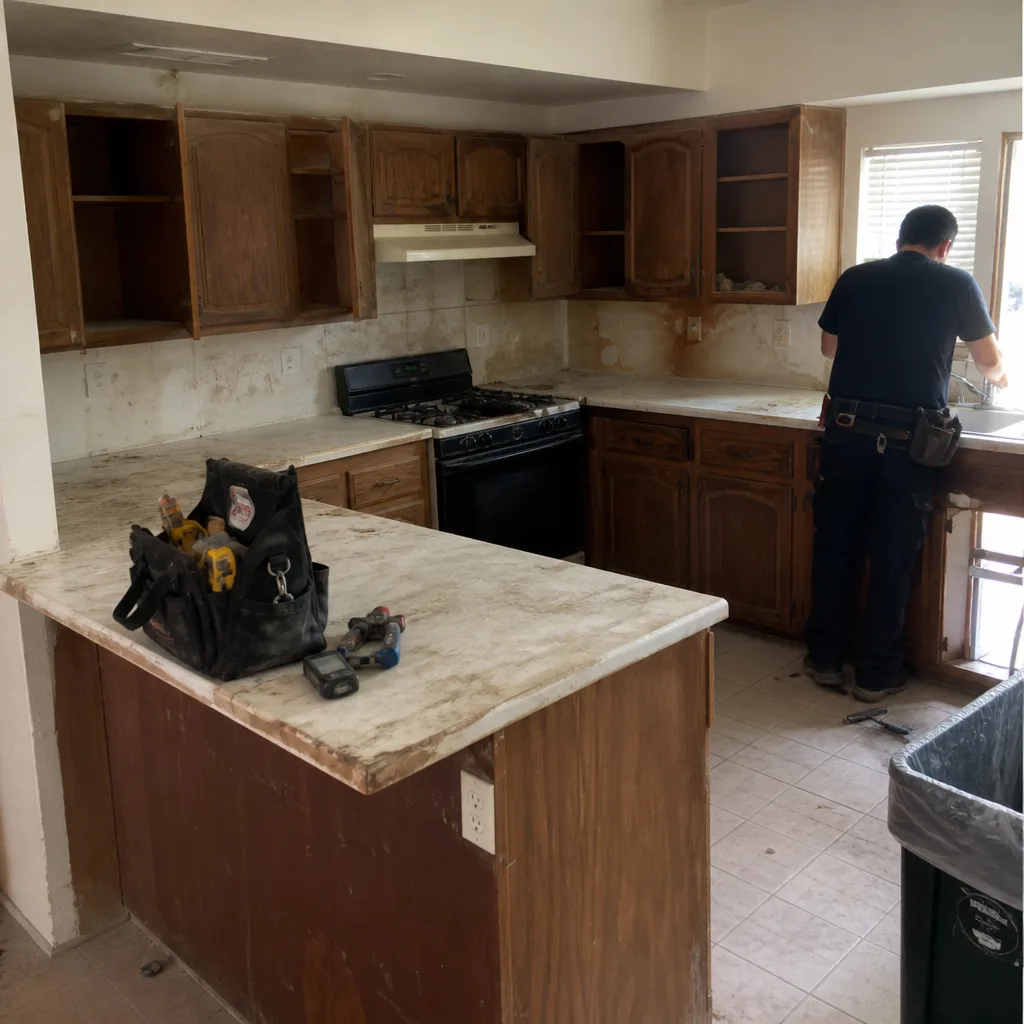 Before
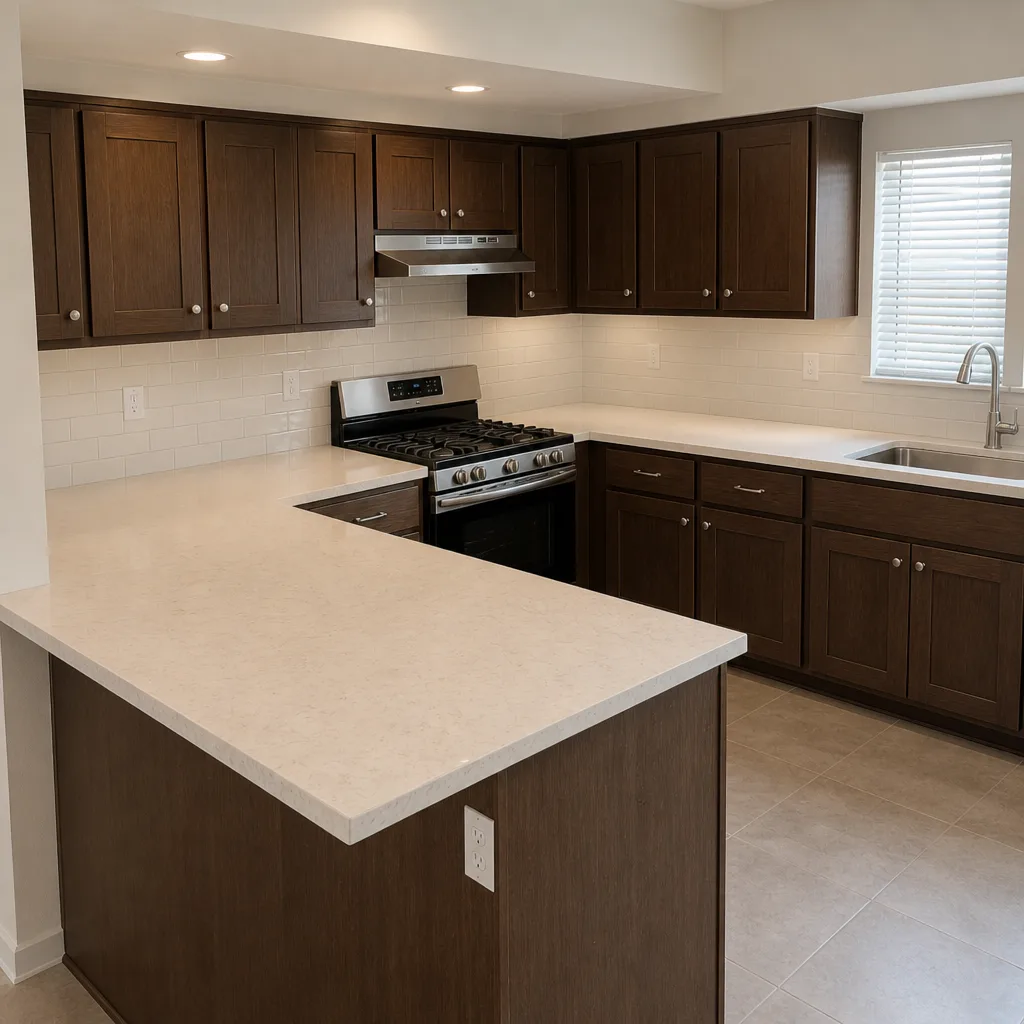 After
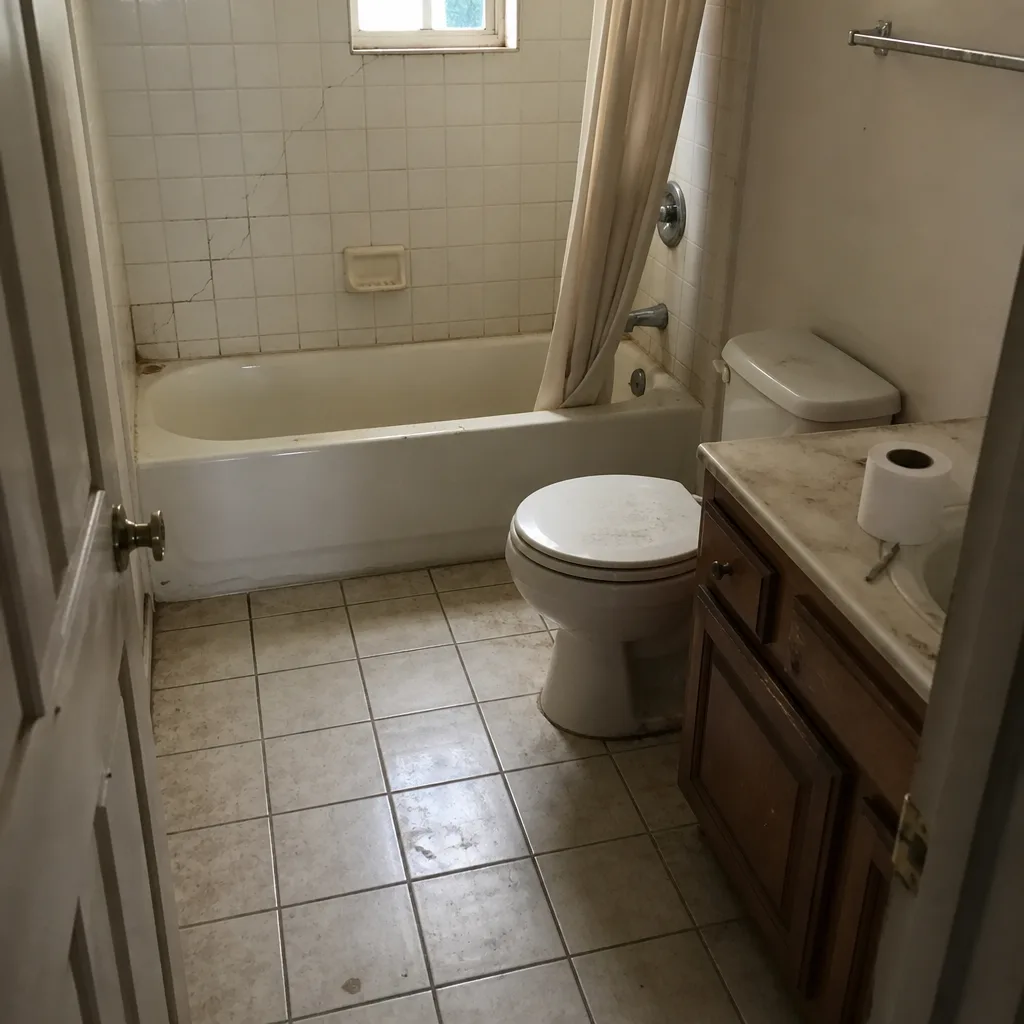 Before
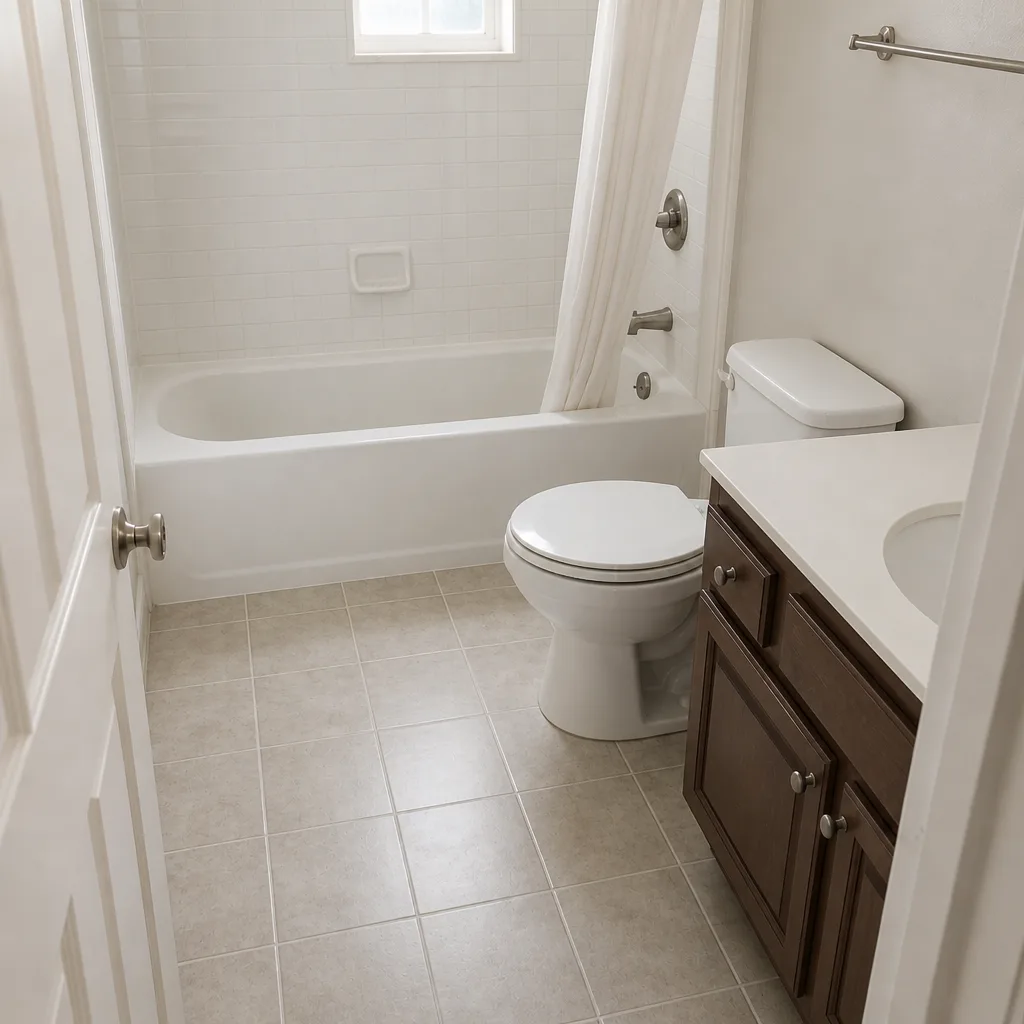 After
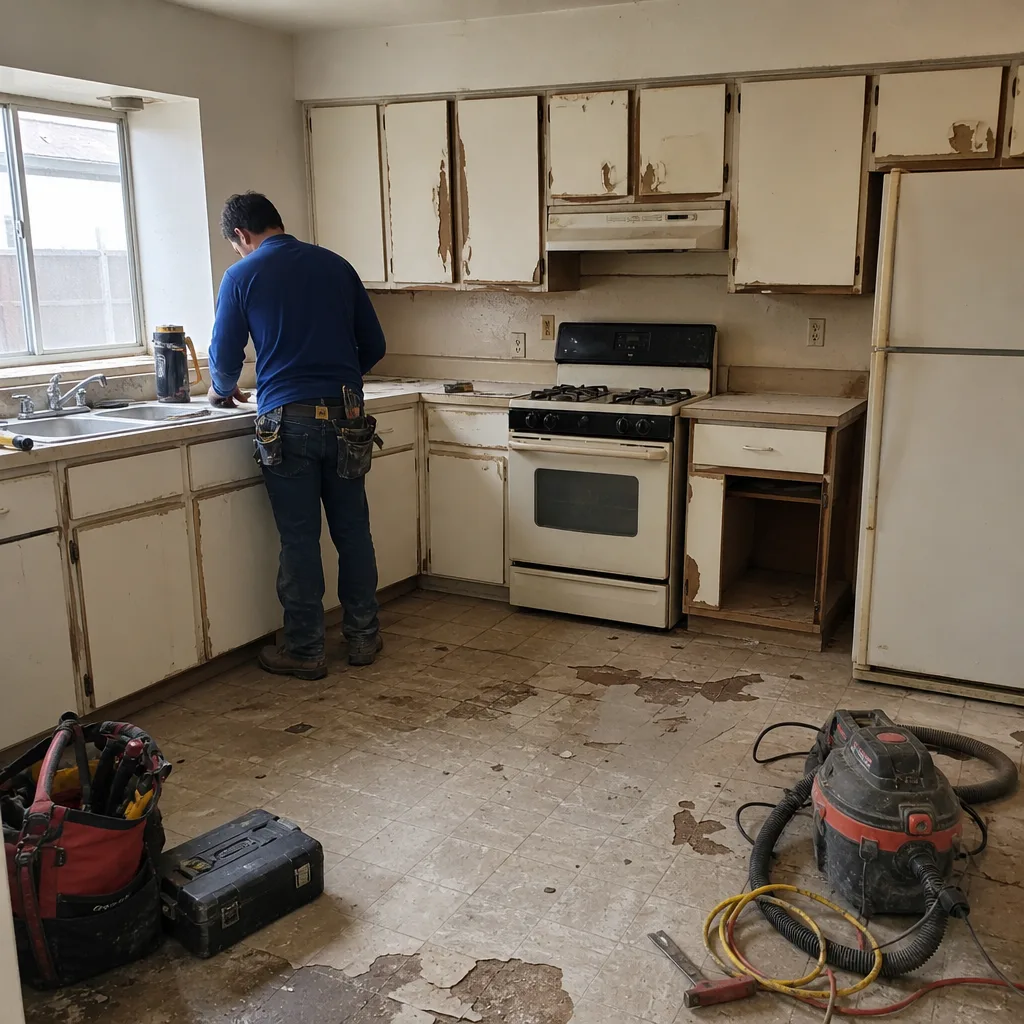 Before
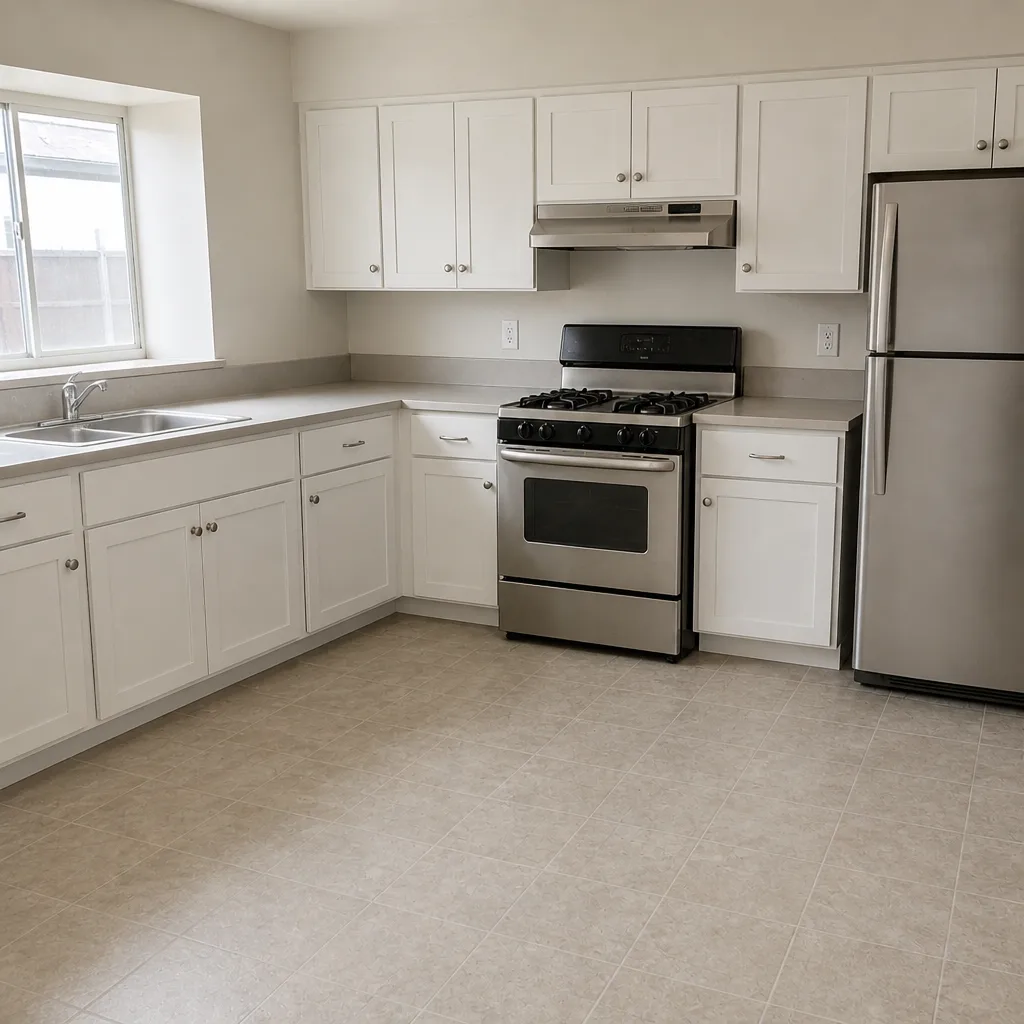 After
When to Call a Professional
Call a licensed general contractor when the work moves a wall, changes plumbing or electrical, touches the roof or exterior envelope, or requires a county permit. In Summerlin, that covers most kitchen and bathroom remodels, anything that changes the outside of the house, and any project where the HOA architectural review will need a set of plans. Call before you buy materials, before you take down a wall, and before you submit to the village. A short conversation early saves weeks later. If the project touches gas lines or the electrical panel, or if it involves a structural change, that work needs a licensed professional – not a weekend project. Elmstead Remodeling Summerlin offers free estimates in Summerlin – call (844) 797-4877.
Frequently Asked Questions

Plan for 15 to 30 days for village architectural review, though each village sets its own window. Build this into your start date before you file with Clark County, and ask your contractor which villages they’ve submitted to.
Yes. Architectural review is a separate step from permitting. An HOA approval does not replace a Clark County Building Department permit. Any contractor who tells you otherwise is missing a required step.
Use the Nevada State Contractors Board license lookup. Search by license number or business name, confirm the license is active in the correct classification, and check bond and workers’ comp status. It takes a few minutes and it’s the single most useful check you can do.
Yes, if the schedule accounts for heat. Interior work runs inside conditioned space. Exterior phases like stucco, paint, or roofing need cooler hours or a shoulder-season slot, and a good contractor plans that in writing before work starts.
License number, itemized scope, named materials, permit responsibilities, payment schedule, written change-order process, and warranty terms. If any of those are missing, ask for them before signing.
Unpaid subs can file a mechanic’s lien against your property. Protect yourself by confirming each sub’s license, asking how the contractor pays subs, and collecting lien waivers as the job progresses.
The Bottom Line
Hiring a general contractor in Summerlin comes down to a handful of local specifics most guides never mention. Architectural review comes before the county permit, summer heat reshapes which phases run when, and a written bid under Nevada law tells you whether the contractor is being straight with you. Verify the license and bond yourself. Ask who the subs are. Ask what happens if something isn’t done right after close-out. The contractor who answers all of that without hesitation – and puts it in writing before any work starts – is the one you want. If you’re ready to talk through a Summerlin project, call (844) 797-4877 for a free estimate. We’ll walk the scope, explain the schedule in plain terms, and put a written price in front of you before anything begins.
Written by the team at Elmstead Remodeling Summerlin.