
Last updated November 18, 2026





Free written scope consultation - allowances, timeline, and change-order rules on paper before a single trade is scheduled
Kitchen Remodeling Warning Signs Every Homeowner Should Know
A bid that doesn’t name the cabinet brand, the countertop material, or the fixture line is not a price. It is a placeholder that will be filled in later, and not necessarily in your favor. We’ve watched homeowners in Summerlin sign six-figure kitchen contracts where the only written detail was “standard-grade cabinetry” and “premium countertops.” Both phrases are meaningless. The warning signs in kitchen remodeling cluster at two moments: the proposal stage, before a single cabinet leaves the warehouse, and the rough-in stage, when walls are open and fast decisions get made. This guide walks through both, plus the installation and warranty traps in between. By the end, you’ll know exactly which questions to ask at each moment.
Quick Answer
The clearest kitchen remodeling red flags are allowance-heavy bids that don’t name specific brands, payment schedules that front-load more than 30% before materials arrive, a contractor who says the job “doesn’t need a permit” for electrical or structural work, and warranties that exclude labor or expire in 90 days. Catching these at the proposal stage is far cheaper than catching them mid-installation, when your kitchen is already gutted.
Styles & brands we work with
- Kitchen remodeling
- Bathroom remodeling
- Home additions & ADU
- Roofing
- Windows & doors
- Driveway & pavers
- Fence
Table of Contents
- Proposal-Stage Red Flags: What a Real Written Price Looks Like
- The Allowance Trap and Why It Costs Families Thousands
- Permit Warning Signs in Summerlin
- What Open Walls Should Reveal During Rough-In
- Reading a Cabinet and Countertop Install in Progress
- What a Warranty Document Should Actually Contain
- Common Mistakes to Avoid
- Frequently Asked Questions
Proposal-Stage Red Flags: What a Real Written Price Looks Like
A written price before any work starts is the single most important protection in a kitchen project, and it’s also the thing most homeowners don’t actually get. In our experience across Summerlin, the proposals that cause trouble later share a recognizable shape. They’re thin on names and heavy on adjectives. “Designer cabinets.” “Granite or equivalent.” “High-end fixtures.” None of those are brands. None of them are warranties you can look up.
Here’s what a credible written proposal includes at minimum:
- Named cabinet lines. KraftMaid and Wellborn are two we use, and the reason matters: you can research them, read their warranty, and walk into a showroom to see the door style before signing. If the bid says “premium cabinetry,” ask which line, which door style, and which finish.
- Named countertop material and slab. Cambria and Silestone come with specific edge profiles and thicknesses. A bid that prices “quartz” without naming the slab, thickness, or edge is guessing.
- Named fixtures. Kohler and Grohe products carry part numbers. If the proposal doesn’t include them, the faucet you’re picturing and the faucet you receive may not be the same thing.
- A line-item breakdown rather than a single lump sum. Cabinets, countertops, electrical, plumbing, drywall, paint, and permits should each appear as a separate line.
When you compare kitchen remodeling bids in Summerlin, compare the specificity, not just the bottom number. The lowest total is often the least complete scope. Our Kitchen Remodeling in Summerlin page lists what a full-scope proposal should cover. If a proposal you’re holding doesn’t match, that’s your first warning sign.
The Allowance Trap and Why It Costs Families Thousands
Allowances are the most common way a kitchen budget quietly grows after signing. An allowance is a placeholder dollar amount for something the contractor hasn’t specified yet – typically $4,000 for cabinets, $3,500 for countertops, $1,200 for tile. It sounds reasonable. Then the actual selection comes in at $7,800 for cabinets and nobody agreed to that difference.
Allowances aren’t inherently dishonest. They’re legitimate when a specific choice genuinely can’t be made yet – a specialty tile you haven’t found, a hood you’re ordering yourself. They become a warning sign in three situations:
- They cover more than 20% of the total contract. If cabinets, counters, and fixtures are all allowance line items, you’ve bought a framework, not a kitchen.
- They aren’t reconciled in writing. A responsible contractor shows you the credit or the overage against each allowance before ordering. Ask at signing how that reconciliation happens and in what document.
- They’re set unrealistically low. A $2,500 cabinet allowance in a Summerlin kitchen is a sign the total will be reshaped before demolition. Compare it against any showroom quote you can get in a day.
You want the number to be firm before demolition, not after. A written price with named brands isn’t a luxury – it’s the only version of a price that can’t change without your signature.
Permit Warning Signs in Summerlin
The clearest warning sign in any kitchen project is a contractor who tells you the job doesn’t need a permit. In Summerlin, that sentence should end the conversation for three specific kinds of work: electrical panel upgrades or circuit additions, gas line moves (a common need when switching from an electric to gas range), and removal of any wall that might be load-bearing.
Each of these carries real code obligations. Electrical work that isn’t inspected can leave you with a panel that won’t pass a future home sale inspection. Gas line work without a permit is genuinely dangerous – gas lines don’t forgive improvised connections, and we encourage homeowners to treat any gas work as a job for a trained, permitted professional, not a homeowner project. Load-bearing wall removal without engineered documentation is a structural risk that shows up as cracks in the ceiling months later.
A responsible contractor in Summerlin pulls the permits and shows you the inspection schedule before demolition. If a bidder suggests skipping a permit to “save you time,” know that this shifts legal liability and inspection risk to you. That same contractor probably won’t pull permits for the electrical he’s already planning to install.
For context on how permits fit into a full project scope, our General Contractor in Summerlin page covers the permitting workflow in detail.
What Open Walls Should Reveal During Rough-In
The rough-in stage is when kitchen projects turn unpredictable. Once drywall comes down, walls reveal what the last forty years did to them. In Summerlin homes – many built from the late 1990s onward – we regularly see three conditions when we open walls: exterior wall cavities that dried out during a slow supply-line leak, undersized wiring from the original build that won’t support a modern induction cooktop and a wall oven, and occasional unpermitted past work that didn’t get inspected.
A responsible contractor handles these in a specific order:
- Stops work and shows you. Photograph what’s inside the wall before it’s covered back up. A serious contractor doesn’t hide discovered conditions.
- Documents a written change order. Every discovered item gets a line item and a price before it’s addressed. It never appears as an unexplained adder at the end.
- Bring the right specialist in. If mold is present, that’s a remediation decision, not a paint-over. If wiring is undersized, that’s an electrician and possibly an inspection.
- Re-frames the schedule honestly. A mid-project delay from a real condition isn’t a red flag. A contractor who says “we’ll just push through it” is.
What you should be suspicious of is a contractor who opens the walls and then reports no issues at all. In a kitchen that’s twenty-plus years old, some condition almost always exists. A crew that finds nothing is either not looking or not telling you.
Reading a Cabinet and Countertop Install in Progress
Cabinet and countertop installation is where a rushed crew leaves its fingerprints. The damage won’t show on day one – it shows up six months later as doors that don’t close flush, drawers that rub, and countertops with a hairline gap at the wall seam. You can spot the warning signs while installation is happening if you know what to look for.
Cabinet warning signs during install:
- Base cabinets set against a wall without a shimmed and level check on every cabinet. Ask whether the crew used a laser or a 4-foot level before fastening.
- Doors hung before the frames are aligned. A door that catches in one spot at install time will swing out of true within a year.
- Crown molding and filler strips cut against an out-of-square wall without scribing. In Summerlin homes with plaster or textured walls, this is common.
- No seam support for continuous runs. A six-foot run with no internal support will sag before the warranty period ends.
Countertop warning signs during install:
- No template or dry-fit before the slab is cut. A Cambria or Silestone slab that’s cut without a template and then shimmed to fit will crack at the seam.
- Seam placement in a visually prominent spot with no discussion. Seams belong where they’re least visible; if the fabricator didn’t ask, ask why.
- No allowance for underlayment thickness. If the counter sits lower than the dishwasher opening, that’s a sign the install was rushed.
- Cuts made without water, which risks cracking the stone.
This is the moment to ask the crew leader two questions: has every cabinet been leveled and shimmed individually, and did the countertop get templated on this job? Those two answers catch most of the trouble before it gets sealed in.
What a Warranty Document Should Actually Contain
A warranty that only covers 90 days is barely a warranty. It’s a promise that problems will show up after the coverage expires. We’ve seen homeowners told “we stand behind our work” with nothing on paper – a verbal-only warranty that vanishes the moment the crew moves to the next job.
A real warranty document contains these five elements:
- A defined coverage period. Twelve months on labor and installation is the low end of meaningful. Anything in the 90-day range is a warning sign, especially on cabinet and countertop work where settling takes longer to show.
- Clear language on what’s covered. Labor for re-leveling cabinets, counter seam repairs, and fixture adjustments – not just the materials.
- Manufacturer warranties passed through. Cambria, Kohler, and Grohe all warrant their products, and those warranties belong to you. The contractor should document that the product warranties were registered in your name.
- A written process for filing a claim. Who to call, what response time to expect, what happens if a repair requires removing a countertop.
- A signed copy that lives with your closing documents. Not an email, not a verbal promise – a page you can produce at a home sale inspection.
Our 365-Day Done Right Promise is stamped on every completed project, and it exists because we believe a real warranty has to outlast the paint drying. That’s what the document should be doing for you.
Common Mistakes to Avoid
- Signing a bid with no brand names in it. “Premium” and “designer” are marketing words, not products. Ask for the KraftMaid door style, the Cambria slab name, and the Kohler part number.
- Paying more than 30% before materials arrive. A deposit should cover design and ordering, not the entire cabinet order months in advance. If a payment schedule front-loads 50% or 60%, walk.
- Agreeing to skip permits for electrical or structural work. In Summerlin, permit skips on electrical panel upgrades and load-bearing wall removal can void insurance and complicate a future sale.
- Not putting quiet hours in writing. If you have young children or a pet who needs the house calm during the day, schedule expectations belong in the contract, not a verbal aside. We build quiet tool hours into the schedule from the start.
- Accepting a 90-day warranty. Kitchen work needs a full year to reveal problems. Any promise shorter than that is a warning sign.
- Skipping the countertop template. A slab cut without a template in a Summerlin kitchen with a slightly out-of-square wall will crack at the seam. Confirm the template before fabrication.
- Choosing “we treat your home like our own” as a stand-alone sentence. It isn’t a behavior. Ask what the crew will actually do: shoe covers, drop cloths, photo of the clean-up before they leave. Those are things, not adjectives.
See the difference
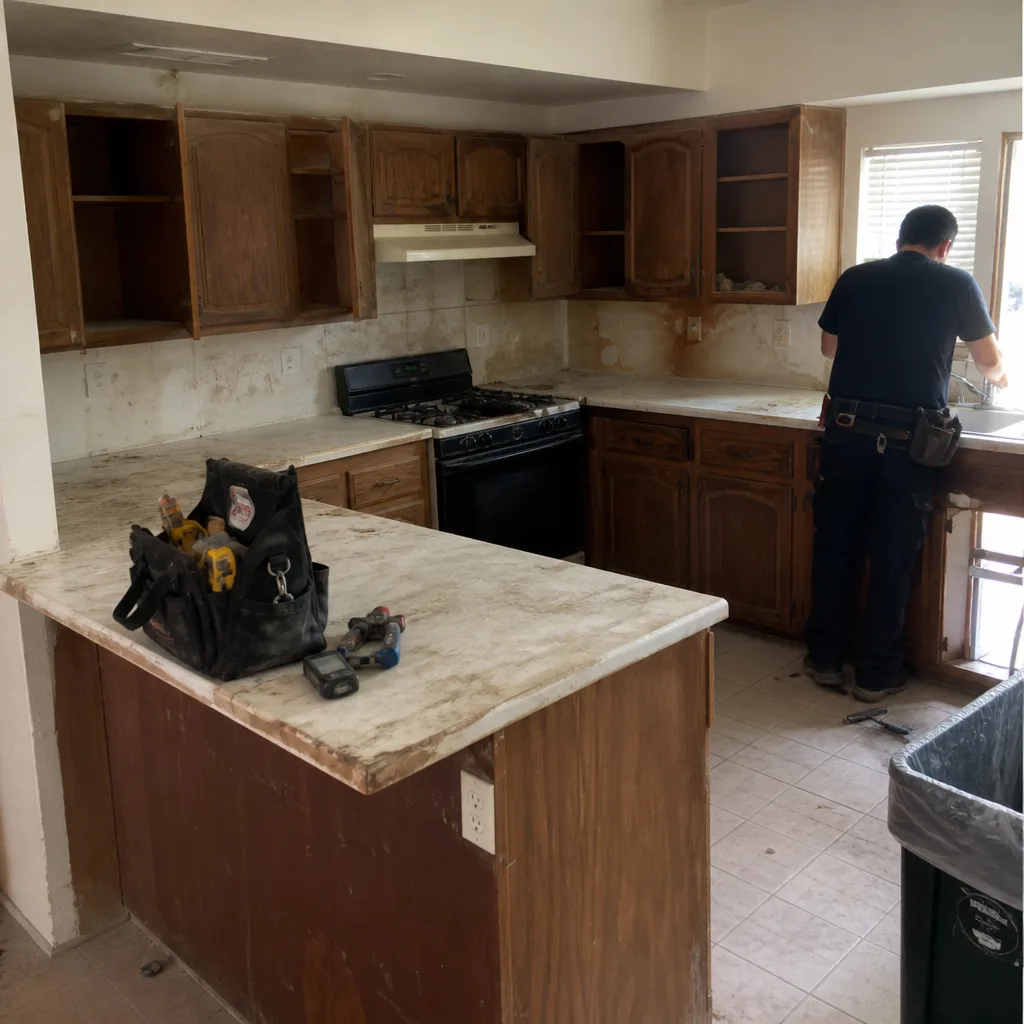 Before
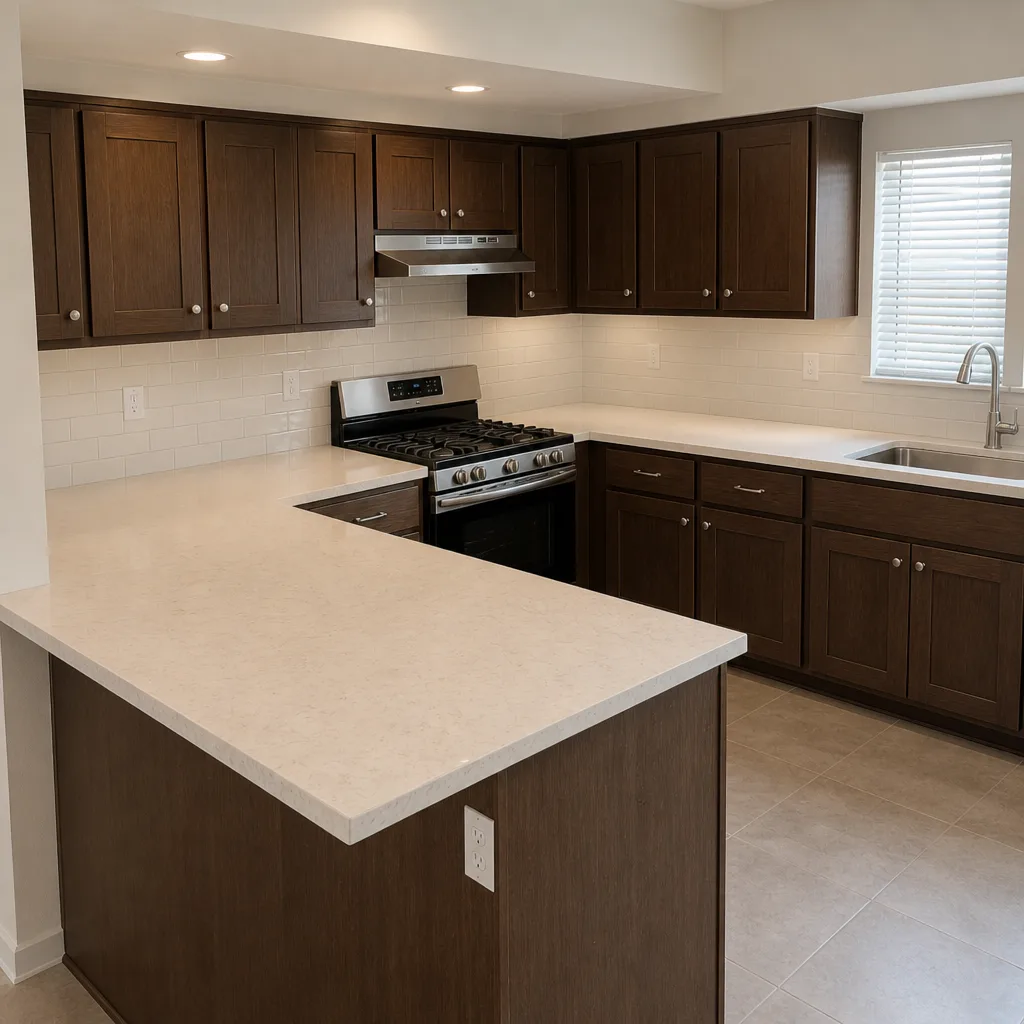 After
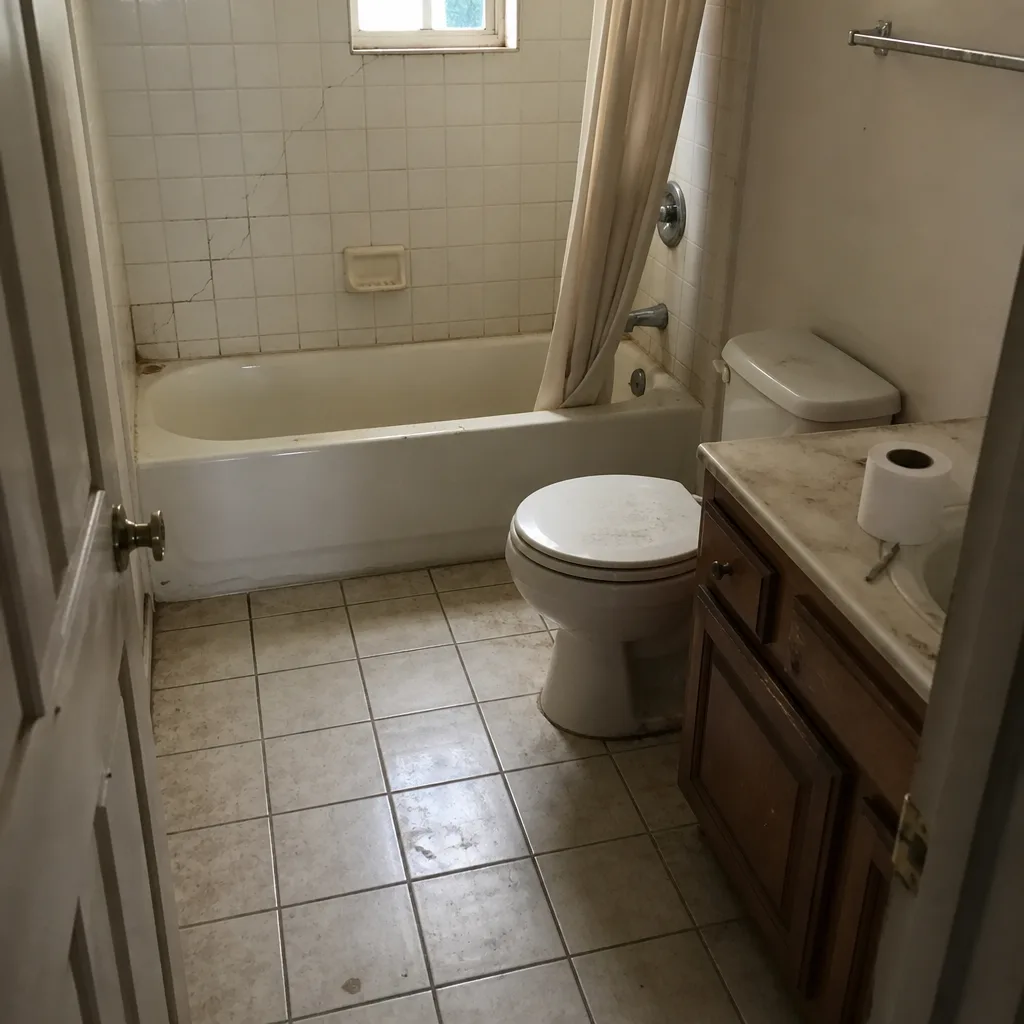 Before
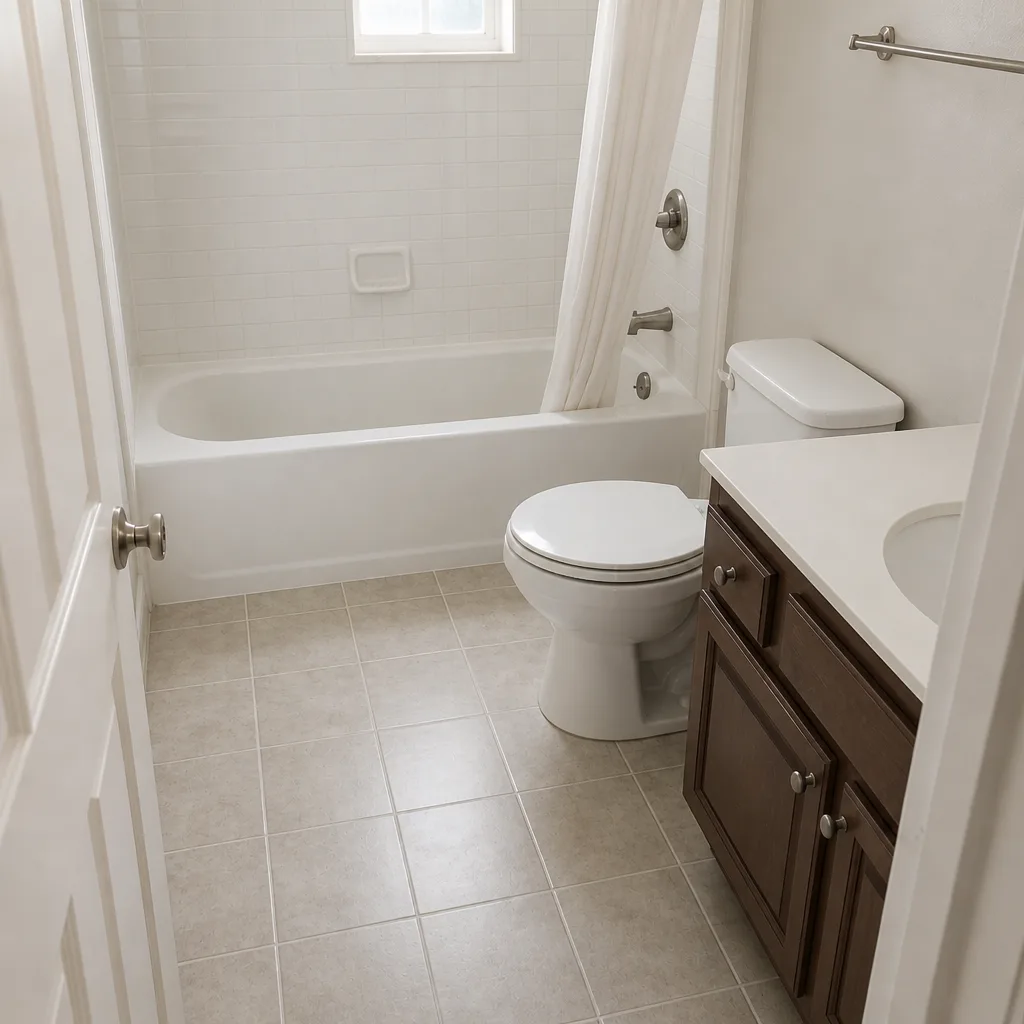 After
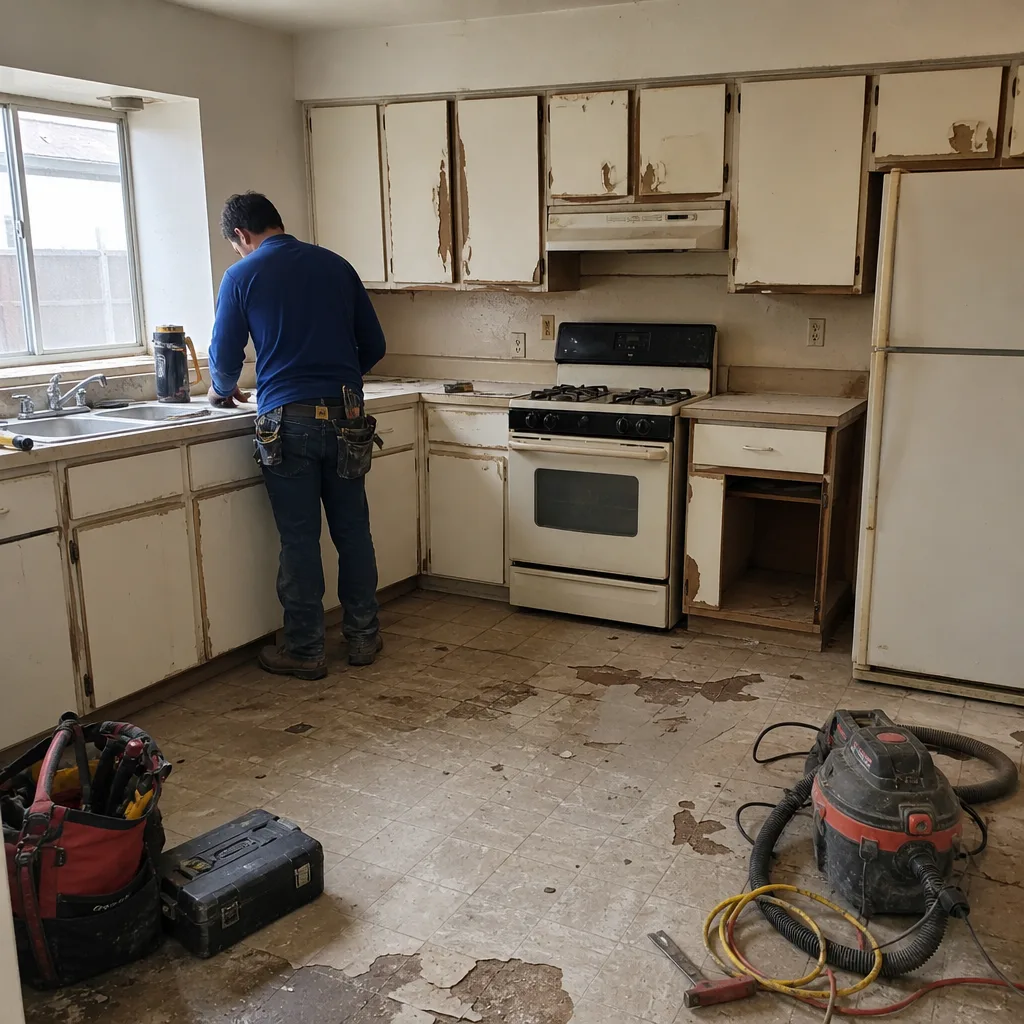 Before
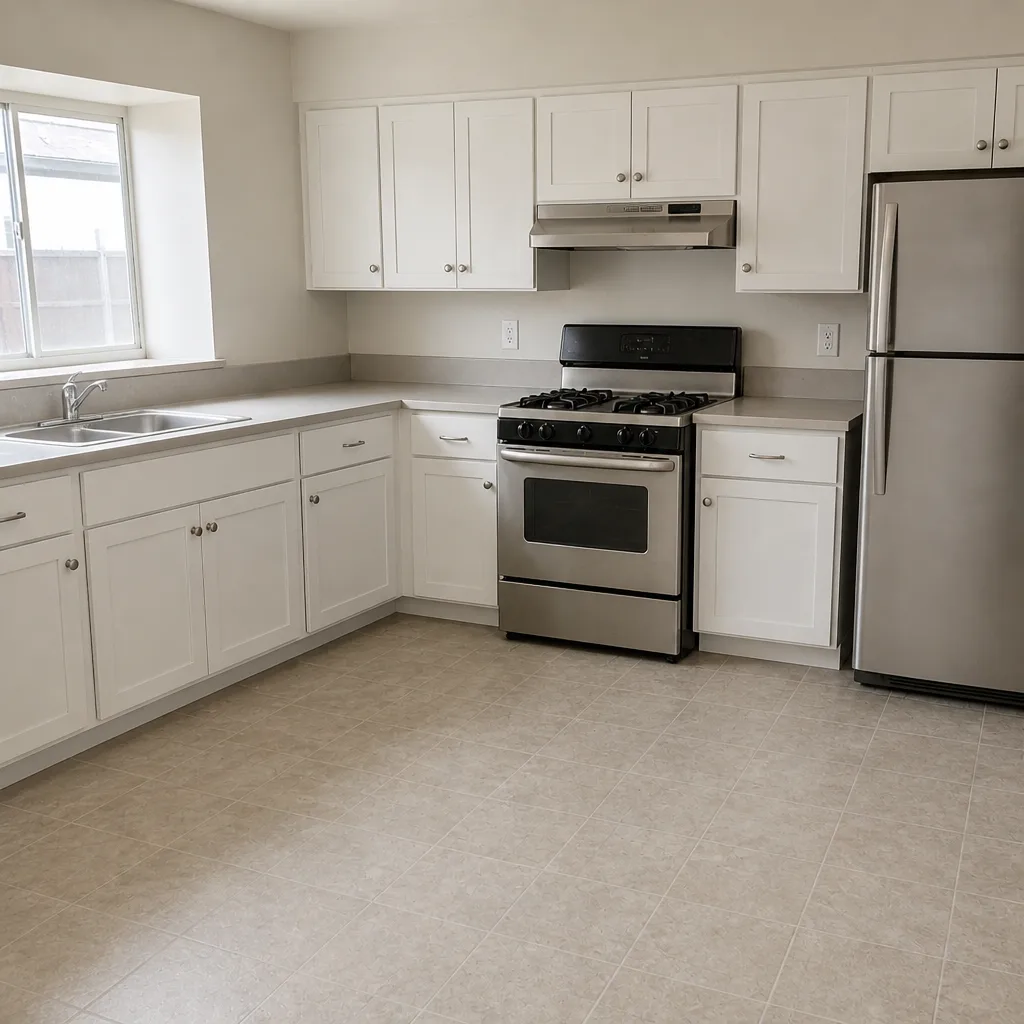 After
When to Call a Professional

Call a professional before you sign a proposal you don’t fully understand, not after. If you’re holding a bid with unnamed brands, an allowance line above 20% of the total, a 50% upfront payment, or a warranty that says “90 days labor only,” you’re looking at the exact red flags this guide described. The same is true for any question about permits on electrical panel upgrades, gas line moves, or wall removal in Summerlin – a contractor who hesitates on those questions is telling you something.
If you’re mid-project and the crew has opened walls and found something they’re not documenting in writing, that’s also a good reason to call. Independent eyes cost far less than a covered-up problem.
Elmstead Remodeling Summerlin offers free estimates in Summerlin. Call (844) 797-4877 to schedule yours. We’ll show you a line-item written price with named cabinet lines, countertop slabs, and fixture part numbers before any work begins. If you’d like to start with a home walkthrough, our Elmstead Remodeling Summerlin home page has what the first visit covers. If the project includes a bathroom in the same scope, our Bathroom Remodeling in Summerlin page explains how we sequence both jobs without doubling the disruption.
Frequently Asked Questions
The biggest red flag is a bid that doesn’t name specific brands for cabinets, countertops, and fixtures. A written price without named products is a placeholder – it will be filled in after you sign, and not necessarily at the price you expect. Ask for the exact KraftMaid or Wellborn cabinet line, the Cambria or Silestone slab name, and the Kohler or Grohe fixture part numbers. Call (844) 797-4877 for a written price that names every product.
Yes – permits are required in Summerlin for electrical panel upgrades, new circuits, gas line moves, and any load-bearing wall removal. A contractor who suggests skipping a permit is shifting inspection and liability risk to you. Permit work also gets inspected, which is your protection. Call (844) 797-4877 to ask how we handle permits on Summerlin kitchen projects.
No more than 30% of the total contract should be due before materials arrive, and a payment schedule should tie each installment to a completed phase. A request for 50% or more upfront is a warning sign, especially if the contract has named no specific products. Call (844) 797-4877 for a written payment schedule built around milestones, not lump sums.
A responsible contractor stops work, photographs the condition, and writes a change order with a specific price before addressing it. Undersized wiring, previous unpermitted work, or slow leaks inside wall cavities are all things that show up in older Summerlin homes. If your contractor pushes through without documentation, ask why. Call (844) 797-4877 if you want a second opinion on a change order before signing it.
A meaningful warranty runs at least twelve months on labor and installation, because cabinet settling and counter seam problems don’t reveal themselves in 90 days. The document should be signed, name what’s covered and what isn’t, and pass through the manufacturer warranties on Cambria, Silestone, Kohler, and Grohe products. Call (844) 797-4877 to see what our 365-Day Done Right Promise covers.
Every cabinet should be individually leveled and shimmed, doors should be hung after frames are aligned, and countertops should be templated before cutting. If the crew is setting bases against a wall without checking level on each one, you’ll see door and drawer problems within a year. Ask the crew leader how leveling was verified. Call (844) 797-4877 if you’d like a pre-installation checklist before your cabinets arrive.
The Bottom Line

Most kitchen remodeling problems aren’t random. They cluster at the proposal moment and the rough-in moment, and the homeowners who catch them are the ones who know what to look for. A real written price names brands, uses allowances sparingly, and is signed before work starts. A real permit plan covers electrical, gas, and structural work without shortcuts. A real warranty lasts a year and gets documented in writing. If your project has any of the warning signs above, call (844) 797-4877 before you sign anything else. We answer the phone with a live person, and every estimate starts with a line-item written price – because the only price that can’t change on you is one that was never vague.
Written by the team at Elmstead Remodeling Summerlin.