
Last updated November 18, 2026








Free written scope consultation - allowances, timeline, and change-order rules on paper before a single trade is scheduled
Home Remodeling Maintenance Schedule: What to Do and When
Most maintenance guides tell you to “inspect caulk annually.” But if you installed a Schluter tile system in your shower, the manufacturer’s threshold for re-sealing is different from a standard grout joint – and missing that window can void the product warranty, not just the contractor’s promise. A remodeled space doesn’t run on the same calendar as the original construction. New cabinets, new fixtures, and new surfaces each carry their own care requirements, and Summerlin’s 110°F summers and sub-20% humidity push those requirements harder than national averages. This guide gives you a room-by-room, month-by-month schedule built around what was actually installed in your home, so your remodel holds up for the long haul.
Quick Answer
Maintain your remodeled space on a seasonal cycle that follows the manufacturer’s warranty terms, not a generic homeowner checklist: inspect and refresh caulk and grout twice a year in Summerlin’s dry heat, service plumbing fixtures annually, touch up painted surfaces every 24 months, and keep a written log of every installed product (brand, model, finish) so you can pull spec sheets years later. The exact windows differ by product, which is why the schedule below is organized by trade and tied to the brands in your home.
Styles & brands we work with
- Kitchen remodeling
- Bathroom remodeling
- Home additions & ADU
- Roofing
- Windows & doors
- Driveway & pavers
- Fence
Table of Contents
- Why Summerlin’s Climate Changes Your Maintenance Calendar
- Product-Specific Maintenance Windows: What the Brands Require
- Contractor Walkthrough vs. Owner Calendar: Two Different Checklists
- How to Log What Was Installed (And Why It Saves You Money)
- The 12-Month Schedule by Trade
- Tile and Paint: The Two Surfaces Summerlin Punishes Most
- Cabinetry, Plumbing, and Electrical: Seasonal Care
- Common Mistakes to Avoid
Why Summerlin’s Climate Changes Your Maintenance Calendar
Summerlin sits at roughly 3,000 feet in the Mojave Desert, and that geography decides how fast your finishes age. Summer highs routinely cross 110°F. Relative humidity drops below 20% for much of the year, and the swing between a 110°F afternoon and a 65°F desert night works joints and seams constantly through expansion and contraction. National maintenance charts assume moderate humidity and a narrower temperature range. Applied to Summerlin, they under-schedule the two things that fail first here: caulk lines and grout.
What that means in practice:
- Caulk around tubs, sinks, and exterior window frames in Summerlin dries, shrinks, and pulls away faster than the “every 3-5 years” advice you’ll read online. Twice-yearly inspection is realistic here.
- Painted exterior surfaces – especially south- and west-facing walls – take UV load that fades and chalks finishes years sooner than the same paint would in a coastal climate.
- Dust is a real factor. Summerlin’s spring winds carry fine desert dust that settles into grout lines, cabinet hinges, and window tracks. Left alone, it acts like sandpaper on sliding hardware and dulls sealed stone.
- Low humidity pulls moisture from wood cabinet doors and trim, which can open hairline seams at mitered joints over a few summers.
If your remodel is recent, this is also the window to read your paperwork. Our Elmstead Remodeling Summerlin home page walks through how the Cedarwell Care Promise works after a project closes, including the 365-Day Done Right Promise – if it’s not done right, we make it right. That promise covers workmanship. It doesn’t cover the wear items below, which is exactly why an owner calendar matters.
Product-Specific Maintenance Windows: What the Brands Require
Here’s the part most homeowners never see. The brands installed in your remodel publish care and maintenance documentation, and those documents often set the terms that keep the warranty valid. Ignoring the care instructions can void a product warranty even when the installation was perfect. When we finish a Summerlin project, the brand list typically reads like this: cabinets from KraftMaid and Wellborn, countertops from Cambria and Silestone, fixtures from Kohler, Moen, and Grohe, tile systems from Schluter, and exteriors from James Hardie.
What their documentation actually asks of you:
- Kohler and Moen fixtures: Both publish finish-care guidance that warns against abrasive cleaners on brushed and matte finishes. Soft cloth, mild soap, rinse and dry. Following that keeps the finish warranty intact; scrubbing with an abrasive pad can void it.
- Grohe: Their faucet care guidance points to periodic cleaning of the aerator and, in hard-water areas, descaling. Summerlin’s water runs hard, so this is a twice-a-year task here, not the annual one you’ll see in generic guides.
- Cambria and Silestone quartz: Non-porous, so no sealing is needed – but heat tolerance has a limit. Setting a hot pan directly on quartz can scorch or crack it, and that damage isn’t a warranty item. Trivets aren’t optional.
- Schluter tile systems: The waterproofing membrane and drainage components are designed to work as a system. Grout and sealant joints at changes of plane are the maintenance point – and the sealant specified matters. Using the wrong sealant at a movement joint can compromise the assembly and the warranty behind it.
- James Hardie siding: Their published guidance calls for periodic cleaning and re-caulking at joints and penetrations, with paint touch-ups on a defined interval. In Summerlin’s UV load, plan for the shorter end of any range they give.
We can’t overstate this: when a Kochler or Moen finish fails and the homeowner used an abrasive cleaner, the brand can point to its own care sheet and decline the claim. Keep the documentation. Follow it.
Contractor Walkthrough vs. Owner Calendar: Two Different Checklists
When a project wraps, the walkthrough checklist you sign is a punch-list document. It confirms the work is complete and correct on the day the crew leaves. It is not a maintenance plan, and confusing the two is one of the most common reasons a remodeled room starts showing problems two or three years in with no record of what was installed.
Think of it as two separate lists:
- The walkthrough checklist (contractor-owned, one-time): doors that close flush, drawers that align, caulk lines that are clean and continuous, fixtures that run without drips, paint coverage at edges, and the clean-up photo confirming the home was left right. This is the 365-Day Done Right Promise territory – workmanship issues get fixed.
- The owner maintenance calendar (you, ongoing): the seasonal touch-ups, cleanings, sealant checks, and filter changes that keep finishes and warranties alive. No contractor covers these, and no contractor should be expected to.
In Summerlin we’ve watched homeowners treat the walkthrough as the finish line and skip the calendar entirely – then call us three summers later when a shower sealant joint has failed. That repair is a maintenance item, not a workmanship item, and the two carry different expectations. Build the calendar the week the project closes, while the brand list is still fresh.
How to Log What Was Installed (And Why It Saves You Money)
You will not remember the model number of your kitchen faucet in four years. You’ll need it. Maybe the finish fails and you want to make a warranty claim, maybe a cartridge needs replacing, maybe you’re selling the house and the buyer asks what’s in the kitchen. A simple log solves all three.
Build one document – a spreadsheet, a notes file, even a folder of photos of the spec sheets – and record the following for every installed product:
- Brand and model number (the exact string on the spec sheet)
- Finish or color name (brushed nickel, matte black, Calacatta gold – brand-specific names matter for warranty claims)
- Installation date and which room
- Warranty length and the document you filed it under
- A photo of the spec sheet or the sticker on the box, for anything hard to read later
When we hand off a finished Summerlin project, the brand list is on the paperwork. Photograph it. That single habit is what lets you call a manufacturer in year four with a model number instead of a guess. It also tells a future contractor exactly what they’re working on – which keeps future repairs accurate.
The 12-Month Schedule by Trade
Here’s the calendar, organized by trade. Adjust for your own home, but keep the summer and fall passes – those are the ones Summerlin’s climate makes non-negotiable.
- Spring (March-May): Inspect and refresh caulk at tubs, sinks, and exterior window frames. Clean window tracks and sliding hardware. Check cabinet hinges and drawer glides for dust buildup and tighten as needed. Flush and descale faucet aerators. Clean the range hood filter.
- Early summer (June): Walk every exterior wall. Look for paint chalking or fading, especially on south- and west-facing surfaces. Check James Hardie siding joints and penetrations for caulk gaps. Clean the dryer vent. Check GFCI outlets in kitchen and bath with the test button.
- Peak summer (July-August): Watch interior caulk at shower and tub for pulling. Run the exhaust fan during and after every shower to manage moisture in the dry heat. Check quartz countertops for any heat damage near the range. Dust cabinet exteriors and hardware.
- Fall (September-November): Re-inspect grout and sealant at tile joints – the temperature swings are working them. Touch up paint at high-traffic corners and door jambs. Lubricate cabinet hinges and drawer glides. Check under-sink supply lines and shut-off valves for weeping.
- Winter (December-February): Deep-clean tile grout with a pH-neutral cleaner. Test all smoke and carbon monoxide detectors. Check electrical outlet covers and plates for cracks. Review your log and note anything due for replacement.
That’s the shape of it. The specifics by trade follow.
Tile and Paint: The Two Surfaces Summerlin Punishes Most
Tile and paint take the worst of the desert climate, and both have defined product-level care that homeowners often ignore. If your bathroom was built on a Schluter system, the waterproofing layer is doing the heavy lifting – but the sealant joints at changes of plane (where wall meets floor, where wall meets wall) are what need attention. Those joints move. When they crack, water gets behind the tile, and that’s expensive. Inspect them twice a year here, not once. Clean grout with a pH-neutral cleaner rather than an acid, which can etch grout and stone over time.
Paint has its own schedule in Summerlin. Interior paint on walls holds reasonably well, but exterior paint – particularly James Hardie siding on sun-facing walls – will chalk and fade faster than the manufacturer’s own interval because of UV load. Plan to touch up exterior paint every few years rather than the longer intervals you’ll see in coastal-climate guidance. The small touches matter most: door jambs, corners, and areas near handles where hands wear the finish. If your remodel included a Bathroom Remodeling in Summerlin, the tile-and-paint pass is where most of your annual maintenance effort belongs. If your project was a Kitchen Remodeling in Summerlin, the same rules apply to backsplash tile and painted or glazed cabinet faces.
Cabinetry, Plumbing, and Electrical: Seasonal Care
Cabinets from KraftMaid and Wellborn are built for daily life, but the desert pulls on them. The dry air contracts wood slightly in winter and the summer heat expands it back, which can open hairline seams at mitered joints and door frames over a few seasons. Tighten hinge screws once a year, lubricate glides with a dry lubricant (not oil, which collects dust), and wipe cabinet faces with a damp cloth rather than a soaking one. For painted cabinetry, touch up chips at door edges promptly – those are where moisture and dust get in first.
Plumbing fixtures need a seasonal once-over. Check under-sink supply lines and shut-off valves for weeping or corrosion. Flush faucet aerators and descale in hard-water areas. Check the toilet for a slow leak by watching the water line after a flush. Kohler and Moen finishes hold up well when cleaned with mild soap and a soft cloth – but abrasive cleaners will dull them and can compromise the finish warranty.
Electrical is a light check, not a DIY job. Test GFCI outlets in kitchen and bath once a season using the test button. Check that outlet and switch cover plates are intact and secure. Check that the exhaust fan actually pulls air (hold a tissue near the grille – it should pull). If anything is warm to the touch, buzzing, or tripping repeatedly, that’s a call-a-professional moment. Electrical work belongs to a licensed electrician, and we’d rather you flag it than fix it yourself. Our General Contractor in Summerlin team can point you to the right trade if something comes up.
Common Mistakes to Avoid
- Following the national checklist. Generic guides assume moderate humidity. In Summerlin, caulk, grout, and exterior paint need attention more often than those guides say – and skipping that is how small problems become water damage.
- Using abrasive cleaners on branded fixtures. A Kohler or Moen finish is a warranty item. Scrub it with an abrasive pad and you can void the very warranty you’re relying on – and you won’t know until the finish fails.
- Letting the walkthrough stand in for maintenance. The punch-list confirms the job is done correctly on day one. It was never a plan for the next ten years. Confusing the two is how homeowners find out the hard way.
- Losing the brand list. No model numbers means no warranty claims, no accurate replacements, and no way for a future contractor to know what they’re working on. Log it the week the project closes.
- Ignoring the movement joints in a tile shower. A Schluter system handles waterproofing. The sealant joints are the maintenance point, and cracking there is how water gets behind tile in Summerlin’s temperature swings.
- Sealing quartz countertops. Cambria and Silestone are non-porous and don’t need sealing. Sealing them is wasted effort – and using a sealer meant for stone on quartz does nothing useful.
- Skipping the quiet-hours and clean-up check during the project. Before the crew leaves, confirm the drop cloths are down and the clean-up photo is taken. The Cedarwell Care Promise includes both – shoe covers and drop cloths are on every job, never an add-on, and a photo of the clean-up is taken before the crew leaves.
See the difference
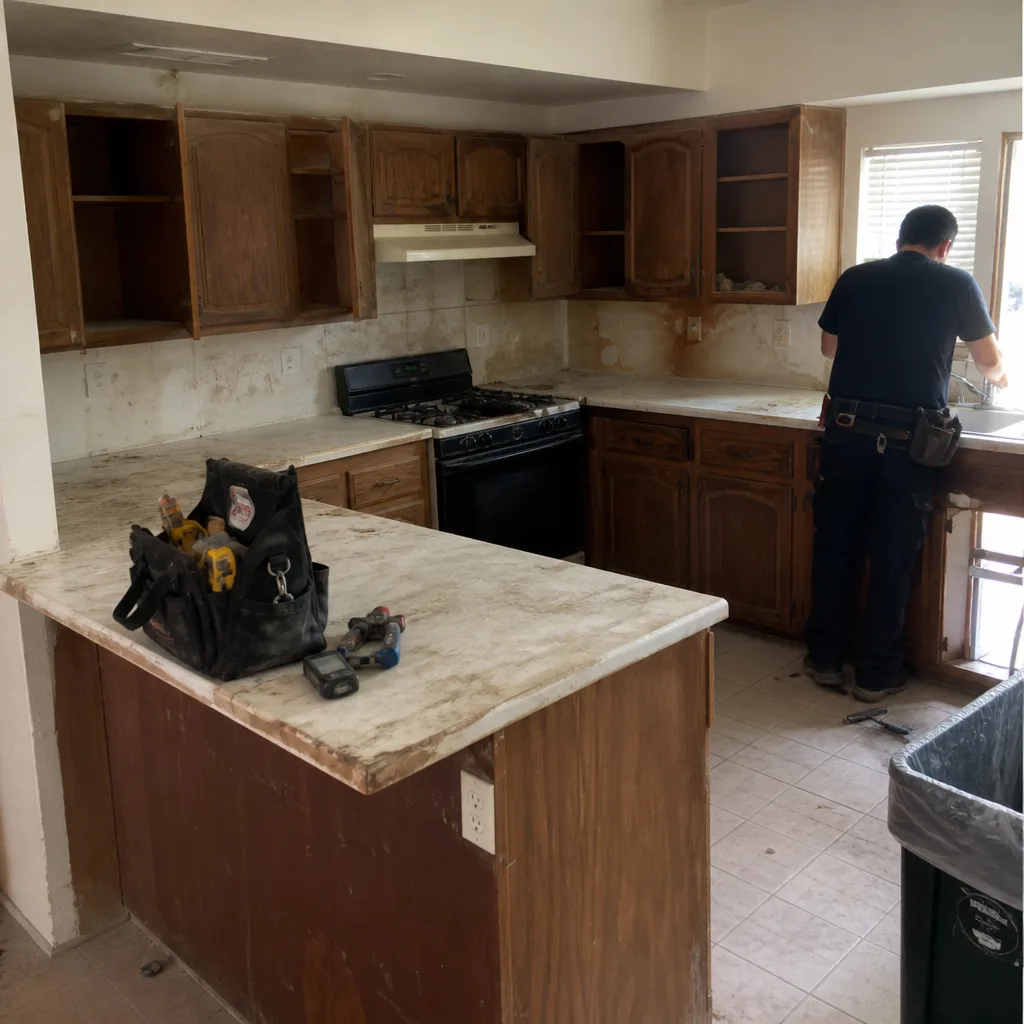 Before
 After
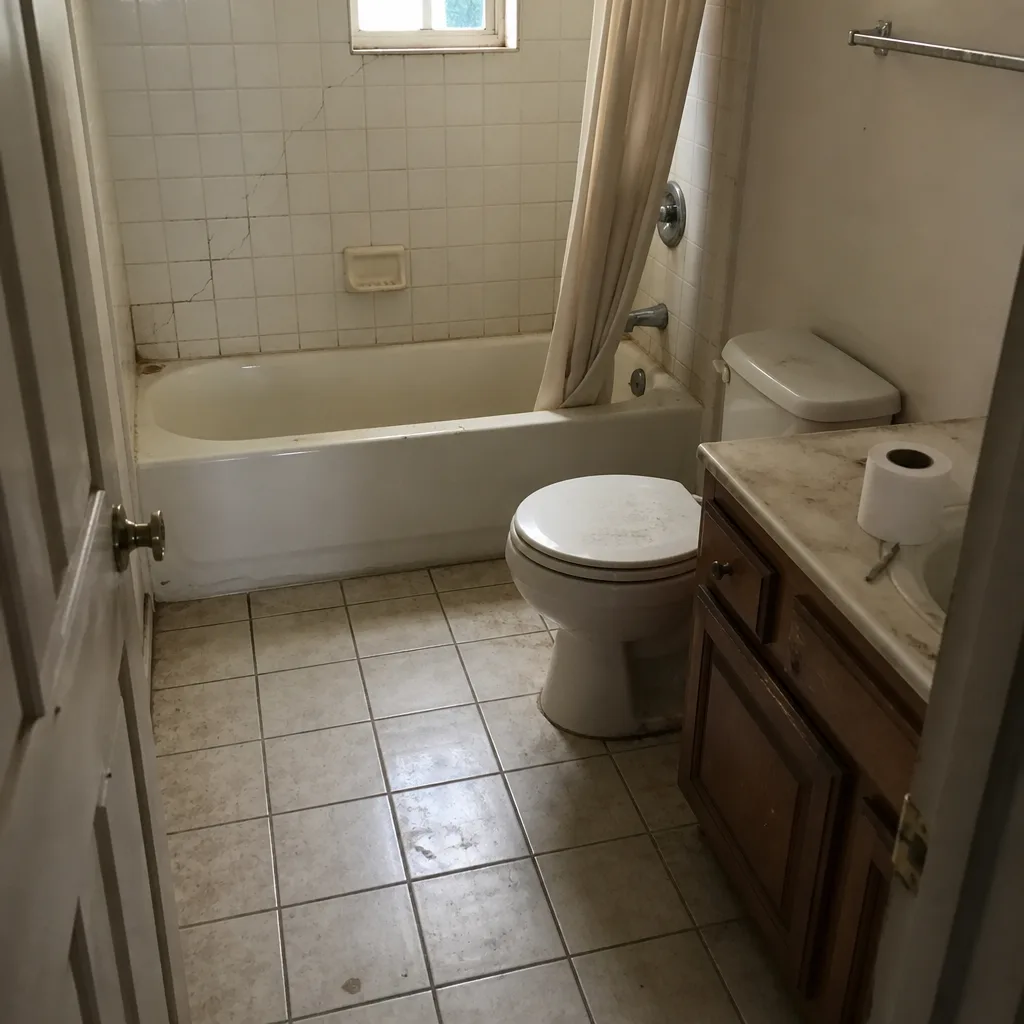 Before
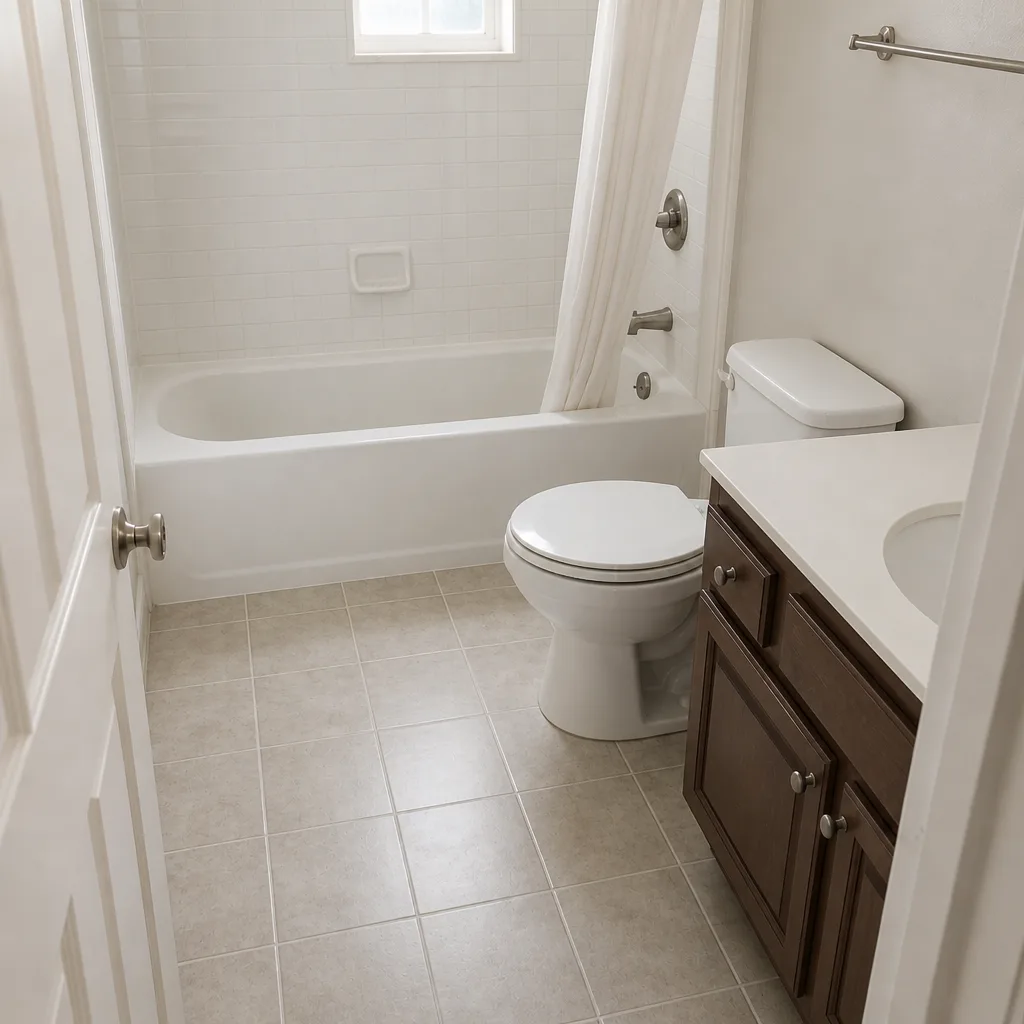 After
 Before
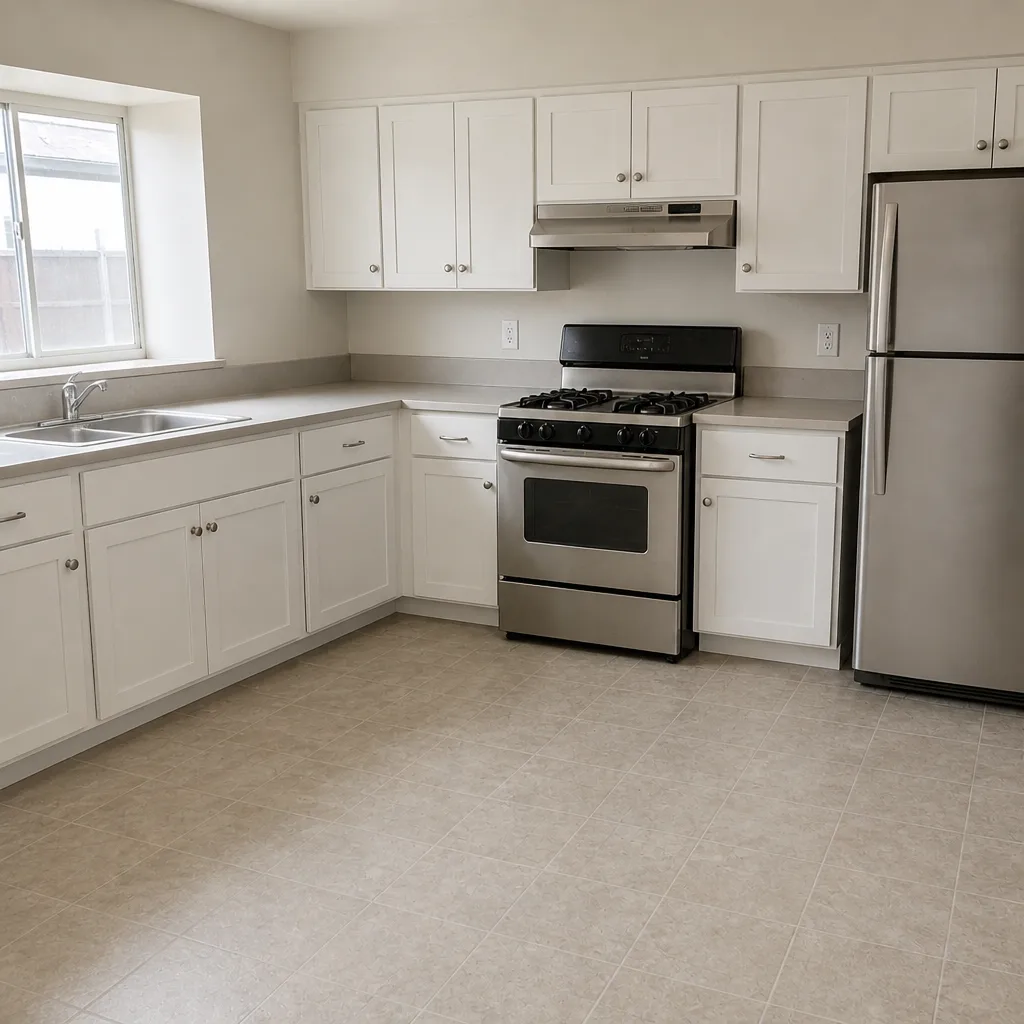 After
When to Call a Professional
Some maintenance is yours. Some should never be. Call a licensed professional if you see water staining at a ceiling below a bathroom, if a tile joint has failed and you suspect water is behind the wall, if grout is cracking in a growing pattern rather than a single line, or if an electrical outlet is warm, buzzing, or tripping. Any exhaust fan that no longer pulls air is a call – moisture in a shower without ventilation damages the whole assembly. If a faucet valve or shut-off valve won’t close fully, don’t force it. These are the signals that turn a small maintenance visit into a repair if ignored. Elmstead Remodeling Summerlin offers free estimates in Summerlin – call (844) 797-4877. Our technicians have up to 21 years of experience, and the written price comes before any work starts, every time.
Frequently Asked Questions
Inspect caulk at tubs, sinks, and exterior window frames every six months and re-caulk when you see pulling, cracking, or shrinking. Summerlin’s sub-20% humidity and 110°F summer highs dry and shrink caulk faster than national guidance assumes. Grout should be cleaned with a pH-neutral cleaner twice a year. If your shower was built on a Schluter system, the sealant joints at changes of plane need that same twice-yearly check. Call (844) 797-4877 for a free estimate if you’re unsure whether the joint has failed.
Yes, it can. Brands like Kohler, Moen, Grohe, Cambria, and Silestone publish care guidance that keeps their finishes and surfaces under warranty, and skipping that care – using abrasives on a brushed finish, for example – can void the claim. The 365-Day Done Right Promise covers our workmanship; it doesn’t cover wear items or owner care. Keep the product documentation and follow it. Call us for a free estimate if you want a walkthrough of what your specific materials require.
Stop using the shower and call a professional. Multiple cracking grout lines are usually a sign that movement has opened joints and water may be getting behind the tile. In Summerlin’s large day-night temperature swings, movement joints at changes of plane are the first thing to fail. This is not a DIY caulking job; a proper fix may mean redoing the sealant joints or investigating what’s behind them. Call (844) 797-4877 for a free estimate – we’ll tell you what’s going on before any work starts.
Yes – quartz from Cambria and Silestone is non-porous and doesn’t need sealing, so care is simple: wipe with mild soap and water, and always use a trivet under hot pans. Heat can scorch or crack quartz, and heat damage isn’t a warranty item. Skip abrasive cleaners on the surface. That care is the whole maintenance plan for quartz. Call us if you’re wondering what finish or model you have – a free estimate visit can help you identify it.
Because the products are different and they carry their own care requirements. Original construction used builder-grade materials with builder-grade expectations; a remodel uses named-brand products like KraftMaid cabinets, Cambria counters, and Schluter tile systems, each with its own documentation and warranty. That means the maintenance calendar follows the products, not a generic homeowner checklist. Bring us your paperwork and we’ll walk through what each product needs – call (844) 797-4877.
Yes, always. Every project from Elmstead Remodeling Summerlin comes with a written price before any work starts – no estimates that grow after the crew arrives. For a free estimate in Summerlin, call (844) 797-4877. Calls are answered by a live person 24/7, and the Cedarwell Care Promise means shoe covers, drop cloths, and a photo of the clean-up before the crew leaves, on every job. If something isn’t done right, the 365-Day Done Right Promise means we make it right.
The Bottom Line

A remodeled home needs its own calendar, built around the products installed and the climate they live in. In Summerlin, that means twice-yearly caulk and grout checks, seasonal fixture service, paint touch-ups paced to the desert sun, and a written log of every brand and model so warranties stay alive. The contractor’s walkthrough is a finish line; your maintenance calendar is the long haul. Keep the log, follow the manufacturer care sheets, and call a professional when something looks like more than maintenance. Elmstead Remodeling Summerlin is here when you need a free estimate – call (844) 797-4877.
Written by the team at Elmstead Remodeling Summerlin.