Last updated November 18, 2026








Free written scope consultation - allowances, timeline, and change-order rules on paper before a single trade is scheduled
DIY vs Professional General Contractor: What’s Safe to Do Yourself
Unpermitted work in Nevada has to be disclosed at resale under NRS 113.130. That single line changes the whole DIY conversation. A bathroom addition done without a permit doesn’t only risk a stop-work order today – it creates a disclosure liability that can kill a sale or knock thousands off an offer years from now, long after you’ve forgotten which weekend you framed that wall. In Summerlin, where homes turn over steadily and buyers arrive with inspectors in tow, that paper trail matters. This guide maps the legal and financial consequences of the DIY-versus-hire choice, separates what Clark County genuinely lets you do yourself from what it doesn’t, and shows you how to judge a project by its failure cost rather than its difficulty.
Quick Answer
In Clark County, cosmetic work like painting, swapping fixtures under existing rough-in, and hanging cabinet hardware is generally safe to do yourself, but anything structural, any new electrical circuit, and any plumbing rough-in legally requires a licensed contractor and a permit. The real dividing line isn’t your skill – it’s permit exposure, insurance gaps, and resale disclosure. If the work will be inspected, disclosed, or could fail catastrophically, hire a licensed professional.
Styles & brands we work with
- Kitchen remodeling
- Bathroom remodeling
- Home additions & ADU
- Roofing
- Windows & doors
- Driveway & pavers
- Fence
Table of Contents
- The Permit Question That Follows the House, Not the Person
- What Clark County Requires a Licensed Contractor For
- How the Nevada Homeowner-Exemption Permit Actually Works
- The Insurance Gap Almost No Homeowner Knows About
- Judge a DIY Project by Its Failure Cost, Not Its Difficulty
- What “Safe to Do Yourself” Looks Like in Practice
- How to Hire a Contractor Without Getting Burned
The Permit Question That Follows the House, Not the Person
Here’s the part most homeowners miss: a permit attaches to the property, not to whoever did the work. When you sell a house in Summerlin, NRS 113.130 requires you to disclose whether work was done without required permits, whether it was completed, and whether a permit was ever obtained. The buyer’s inspector finds the unpermitted subpanel. The disclosure form confirms it. Now you’re negotiating against your own past shortcut.
We’ve watched this play out in real transactions across the valley. A finished basement bedroom with no egress permit, a converted garage, a tiled shower built without a pan inspection – each one becomes a bargaining chip for the buyer and a liability for the seller. Lenders occasionally refuse to finance a home with certain unpermitted additions. Insurers can decline to cover the affected structure.
What makes Summerlin distinct is how tight the housing stock is and how savvy the buyers are. Neighborhoods like The Ridges, Red Rock Country Club, and The Trails attract buyers who bring their own inspectors and their own contractors to the walkthrough. A permit history that doesn’t match the finished product is a red flag they’ll price in. That’s why we treat the permit as part of the deliverable on general contractor work in Summerlin, not paperwork that trails behind it.
So before you pick up a hammer, ask one question: will this work ever be inspected, disclosed, or financed? If yes to any of those, the permit exposure outlives the project. That’s the first filter in the DIY-versus-hire decision, and it has nothing to do with whether you’re handy.
What Clark County Requires a Licensed Contractor For
Nevada law and Clark County building code draw clear lines. Some work legally requires a licensed contractor and a pulled permit. Other work doesn’t. Getting this wrong is the most common – and most expensive – mistake. Clark County’s building department and the Nevada State Contractors Board enforce these rules, and they don’t bend for enthusiasm.
Work that requires a licensed contractor in Clark County
- Structural work – load-bearing wall removal, framing changes, foundation repair, new beams or headers. This is non-negotiable. Even a small header swap behind drywall is a permit job with engineered drawings required in most cases.
- Electrical beyond a fixture swap – new circuits, panel changes, subpanel additions, anything that touches the service panel, and any wiring in wet locations. Nevada requires a licensed electrician for this.
- Plumbing rough-in – moving a drain, relocating a toilet, adding a sink where none existed, replacing a water heater in most jurisdictions. Replacing a faucet or shower head on existing rough-in is a different matter.
- Gas line work – any gas connection, extension, or appliance hookup. Always. The safety stakes are too high to entertain otherwise.
- HVAC replacement or major modification – new equipment with refrigerant handling or ductwork changes needs a licensed mechanical contractor.
- New additions, room conversions, pool and spa installs, and detached structures – all permit-class work in Summerlin.
Work that generally does not require a contractor
- Interior and exterior painting
- Cabinet hardware, shelf installation, and trim carpentry that doesn’t affect structure
- Replacing a faucet, shower head, toilet flapper, or light fixture on existing rough-in
- Tile backsplash over sound drywall or existing substrate
- Landscaping outside setback lines and away from utility easements
- Flooring replacement (though we’d note that improperly installed tile or plank over a failing subfloor is a fast route to a callback)
If your project bridges these two lists – say, a kitchen refresh that starts as cabinet hardware and paint but ends with a moved gas range – the gas work pulls the whole project into permit territory. That’s the moment to call in a licensed professional. In our Summerlin kitchen work, a range move or ventilation change is one of the most frequent triggers for an inspection schedule.
How the Nevada Homeowner-Exemption Permit Actually Works
Nevada does allow a homeowner to pull a permit on their own residence for work they intend to do themselves. This is called the owner-builder or homeowner exemption, and it’s a real option – not a loophole. But it comes with specific conditions, and most homeowners don’t understand what they’re signing up for.
Here’s how it typically works in Clark County:
- You must live in the home (or intend to occupy it) and be doing the work yourself, not paying someone else.
- You sign as the responsible party on the permit. That means the inspections, the corrections, and the liability land on you.
- The work still has to pass every inspection the same as a licensed contractor’s work. Rough framing, rough electrical, rough plumbing, insulation, drywall, final. Same schedule, same inspector, same red tags if it fails.
- The permit stays on the property record. If you sell before the final inspection, the buyer sees an open permit. That’s a disclosure item and often a financing snag.
- You can’t hand it off. If you realize halfway through that you’re in over your head, you can’t simply bring in a contractor to finish under your owner-builder permit in most cases. The contractor has to pull their own permit, and the city may require rework or reinspection from an earlier stage.
In Summerlin specifically, HOA architectural review adds another layer. Several Summerlin associations require their own approval before exterior work – patio covers, room additions, exterior color changes – and they don’t care that the county already approved your plan. We’ve seen homeowners pass county inspection and then get a violation letter from their HOA. That’s a lesson in reading the CC&Rs before the framing goes up.
The permit itself isn’t the hard part. The inspections – particularly the ones that require opening walls or leaving a shower pan exposed for a water test – are where owner-builder projects stall. We pulled a shower pan that had passed a homeowner’s visual inspection but never been water-tested. It was leaking into the subfloor. The $8,000 lesson below is not hypothetical.
The Insurance Gap Almost No Homeowner Knows About
Here’s a quiet problem that so many Summerlin homeowners only discover at claim time. Standard homeowner’s insurance policies frequently exclude damage caused by unpermitted work or owner-performed structural work. Read the exclusions on your policy. Most policies have language around “faulty workmanship” and “work performed without required permits” that lets the insurer deny a claim even though the water damage or fire damage looks like a covered peril on the surface.
Picture it: a shower you built leaks through the pan into the ceiling below. Water damage is normally covered. But the adjuster sees no permit, no inspection record, and an owner-installed pan. The claim gets denied or paid out pennies on the dollar, and you’re on the hook for the ceiling repair, the subfloor, and the mold remediation.
Two things homeowners can do to close this gap:
- Read your policy’s exclusions before you start – specifically the faulty workmanship and permit language. Call your agent with the specific project. Get the answer in writing if you can.
- Do the work under a permit and with a licensed contractor on anything that could cause water, fire, or structural damage. The permit history, the inspection record, and the contractor’s liability insurance move the risk off your policy and onto the trained professional’s.
Contractor insurance is the second half of the gap. A licensed general contractor carries general liability and workers’ compensation coverage. If a worker gets hurt on your property without that coverage, the injury can come back to your homeowner’s policy. In Summerlin we won’t start a project without verifying coverage, and we recommend every homeowner ask for a certificate of insurance before work begins – ours or anyone else’s. It’s the one document that protects both sides.
The same logic is why we keep a written price in front of you before any work starts. A number that changes after the crew arrives is its own kind of exposure. On our Summerlin home remodeling work, the written price and the verified insurance go on the table together.
Judge a DIY Project by Its Failure Cost, Not Its Difficulty
Here’s the reframe that changes how you should look at every project. Difficulty asks, “Can I do this?” Failure mode asks, “What happens if I get it wrong?” Those are different questions, and the second one is the one that costs real money.
A tiled kitchen backsplash is medium difficulty. If it fails – cracked grout, tiles slipping off the wall, uneven lippage – it costs roughly $400 to redo the affected section. That’s a tolerable mistake. You learn, you pay, you move on.
A shower pan is high difficulty for good reason. If it fails – poorly sloped, improperly waterproofed, a weep hole blocked with thinset – it can cost $8,000 or more to tear out the tile, replace the subfloor, remediate any mold, and rebuild. The failure isn’t in the visible tile. It’s hidden under it, and you don’t find it until the ceiling below stains.
Use this quick filter before every project:
- What’s the failure cost? Redoing a $400 backsplash is different from redoing an $8,000 shower.
- Is the failure visible or hidden? Hidden failures – behind walls, under floors, above ceilings – are the expensive ones.
- Does failure risk safety? Gas, electrical panels, structural, and shower pans all carry a safety or health component. Those are automatic no’s for DIY.
- Does failure void a warranty? Most shower systems, waterproofing membranes, and roofing products have manufacturer warranties that require a licensed installer. Installing it yourself can void the protection.
Cambria, Silestone, and Schluter systems, for example, carry warranties that depend on installation method. Install a foam shower system out of sequence and the warranty may not cover you. In Summerlin, where hard water and intense summer sun stress exterior surfaces, warranty coverage is worth more than the hour of labor you saved.
Once you use this filter, the safe-to-do list writes itself. And the hire-a-pro list writes itself alongside it.
What “Safe to Do Yourself” Looks Like in Practice
We’re not the contractor who tells you to hire out everything. Plenty of work is genuinely safe for a careful homeowner with a weekend and some patience. Here’s what we see work well in Summerlin homes.
- Painting. Interior and exterior. The main caveats: proper prep, the right primer for the substrate, and – for exteriors – working early in the morning in summer when surface temperatures stay below manufacturer limits. The Summerlin sun will cook latex paint that’s applied to a hot stucco wall. Start at dawn, stop by 10 a.m.
- Cabinet hardware and shelf installation. Drawer pulls, cabinet knobs, wall shelves. A drill, a level, and a pencil. If you’re swapping out cabinet fronts entirely, that’s when you want to talk to a pro about alignment and hinge spec.
- Fixture swaps under existing rough-in. Faucet, shower head, toilet seat, light fixture replacing a light fixture, exterior hose bib. No new lines, no new circuits. This is where most homeowners can safely spend a Saturday.
- Landscaping outside setback lines. Desert-appropriate planting, decorative rock, low retaining walls under the Clark County height threshold. Pavers are a good candidate for the ambitious weekend warrior – Cambridge Pavers and Techo-Bloc both publish installation guides and retain their installed warranties when installed to spec. Summerlin soil, though, is caliche-heavy; a pickaxe and patience beat a shovel and a bad mood.
- Tile backsplash. The classic “medium difficulty, low failure cost” project. Slow and careful, not fast. Install on a sound substrate, use the correct modified thinset, and don’t rush the grout cure.
What ties this list together: none of it hides behind a wall, none of it triggers an inspection, none of it exposes your insurance, and none of it has a failure mode above a few hundred dollars.
Now the honest other side. If you’re considering a bathroom or kitchen project that crosses into plumbing, electrical, or structural, that’s where bathroom remodeling in Summerlin and kitchen remodeling in Summerlin belong in a licensed contractor’s hands. Not because you can’t learn the skill, but because the failure mode isn’t a weekend lost – it’s a permit problem in your disclosure, an insurance gap in your policy, and a five-figure repair in your future.
How to Hire a Contractor Without Getting Burned
If the project belongs to a professional, hiring well is the next task. The Nevada State Contractors Board licenses contractors by trade and classification, so the first move is verifying that license number on the board’s own website rather than trusting a business card. Beyond that, ask the questions that separate a careful contractor from a fast one.
- Ask for the license number and verify it. One minute on the state board site tells you if the license is active and what work it covers.
- Ask for a certificate of insurance. General liability and workers’ comp. Both. Every time. No exceptions.
- Ask who pulls the permit. It should be the contractor. If they ask you to pull it as owner-builder, ask why – the answer tells you whether they’re licensed for that work and whether they’ll be on the hook when things go wrong.
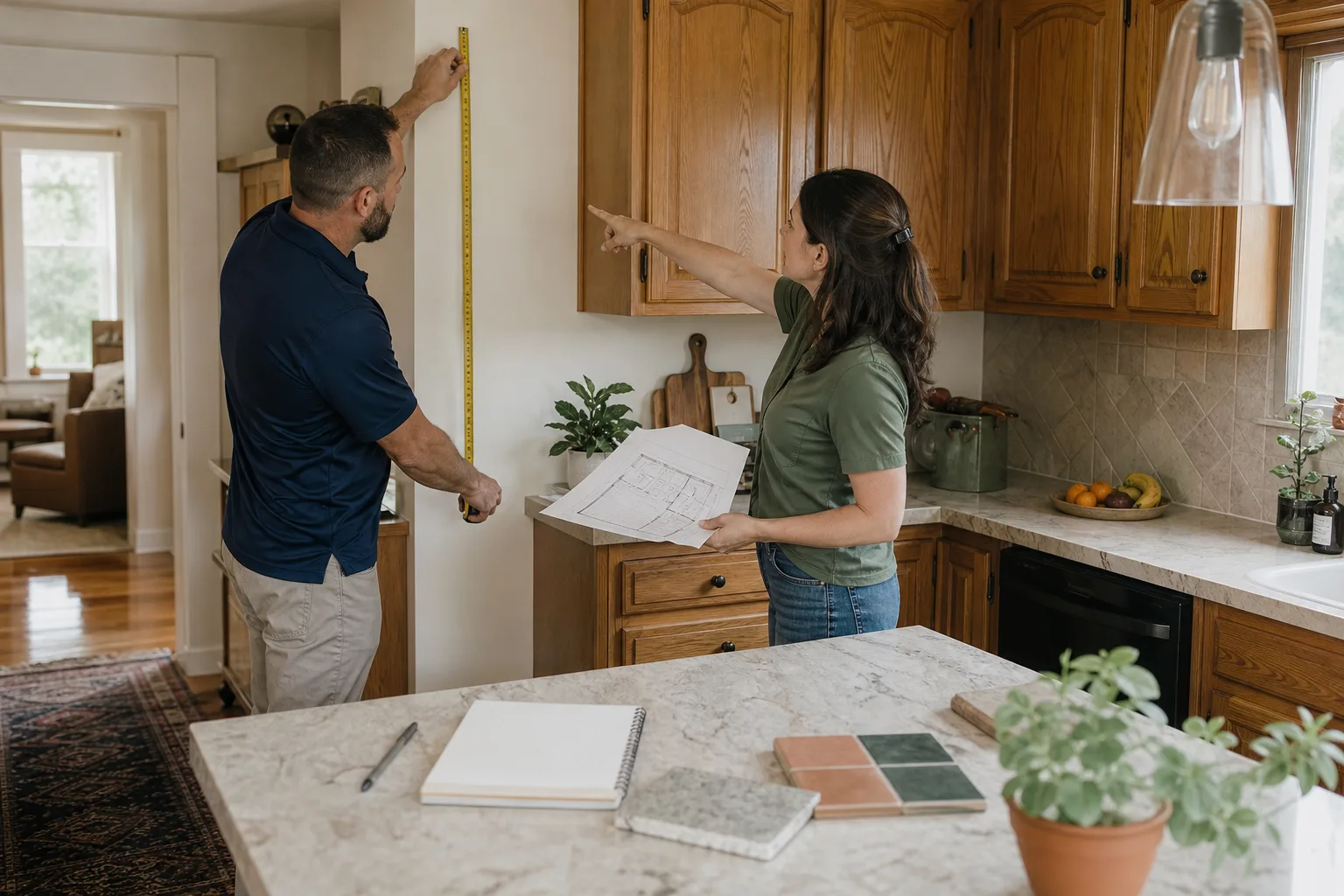
- Get a written price before any work starts. A number that changes after the crew arrives is not a price, it’s an opening bid. Walk through the line items together and understand what’s included.
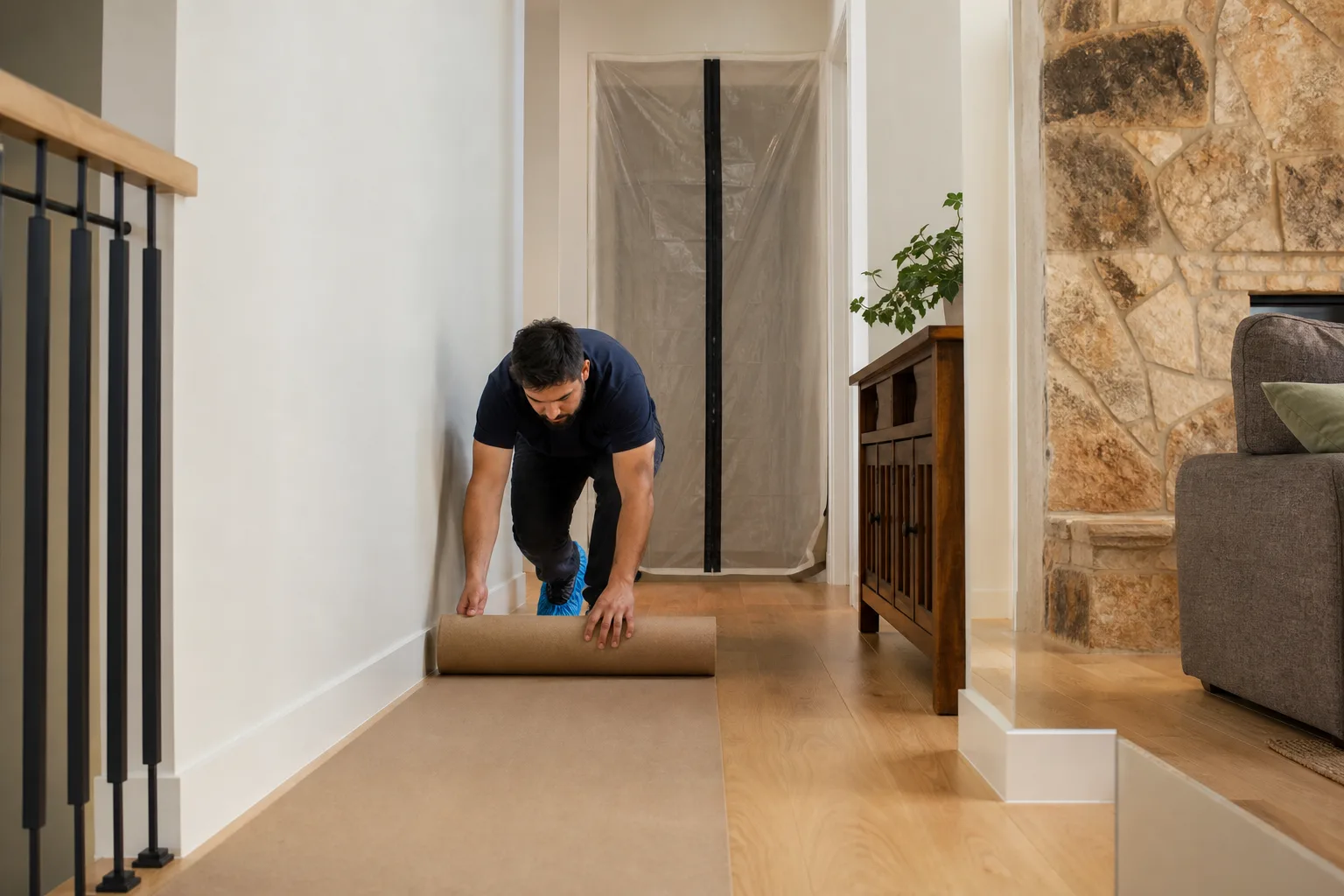
- Ask how the house gets protected and cleaned. Shoe covers, drop cloths, quiet hours during kids’ naps or pets’ routines, and a documented clean-up at the end. Any contractor who can’t describe this in specifics is going to improvise in your house.
- Ask what happens if something isn’t done right. The right answer is a written promise that extends after the job is finished. Ours is the 365-Day Done Right Promise – if it isn’t right after we finish, we make it right. Get any promise in writing.
Read reviews and ask for the addresses of recent projects in nearby Summerlin neighborhoods like Red Rock Country Club, The Ridges, or The Trails, and go see one. A homeowner standing on their own finished work is hard to fake.
Common Mistakes to Avoid
- Treating the owner-builder permit as a free pass. If you pull the permit in your name, you own every inspection, every correction, and every disclosure. That’s not the same as avoiding a permit; it’s adopting one.
- Believing “no permit required” is the same as “no permit problem.” Some work is legal without a permit but still has to be disclosed at resale if it was ever done unpermitted. The disclosure follows the house, not the person.
- Ignoring the HOA. Summerlin associations enforce their own architectural standards. Exterior changes can pass county inspection and still get a violation letter. Read the CC&Rs before framing.
- Moving gas without a licensed pro. A stove or grill hookup moved one foot is a permit job. Gas is never a casual swap, and the failure mode is a house fire.
- Calling a shower pan a weekend project. The failure costs $8,000+. Any plumbing that will be hidden behind tile belongs to a licensed professional with a written warranty.
- Skipping the certificate of insurance. A worker injured on your property without workers’ comp coverage routes back to your homeowner’s policy. Always ask.
- Underestimating the Summerlin sun. Exterior paint, caulk, and paving all behave differently in Clark County’s heat. Midday summer application is a recipe for a short-lived finish.
See the difference
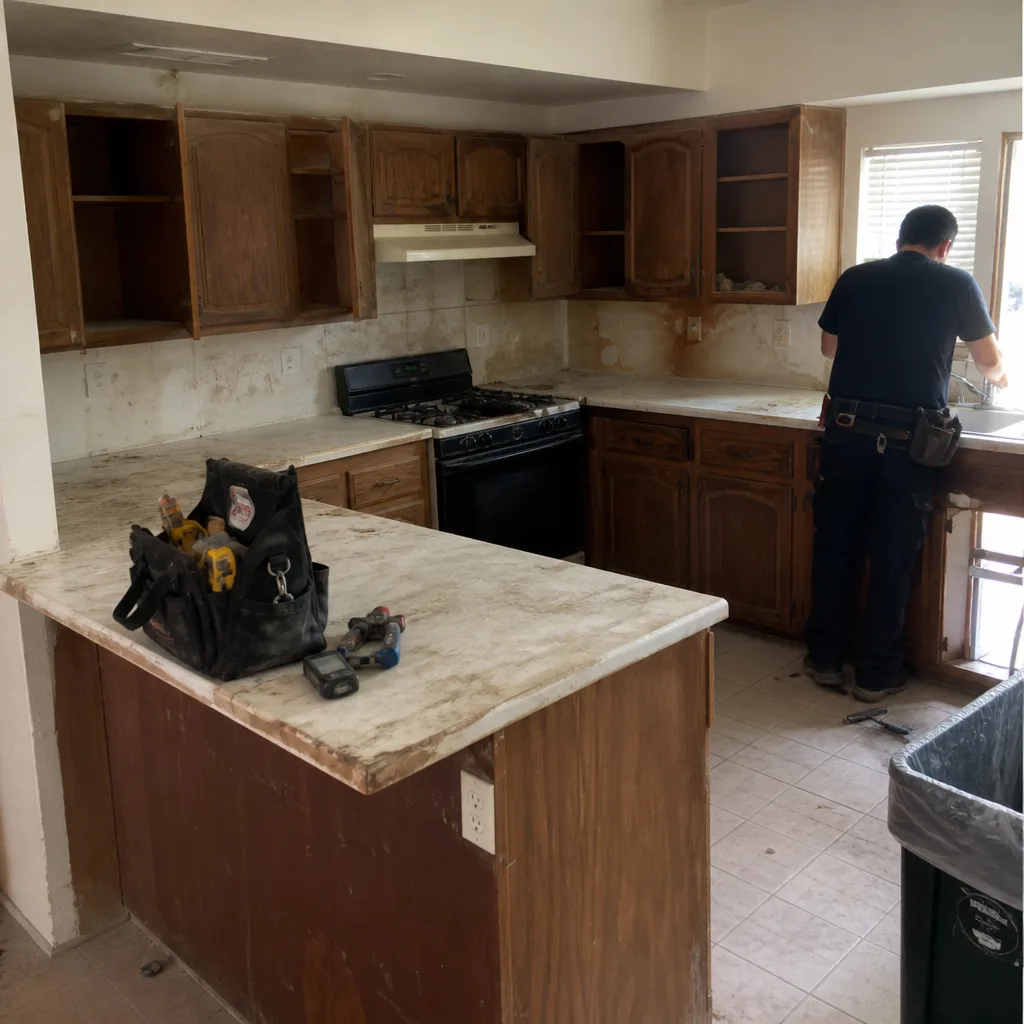 Before
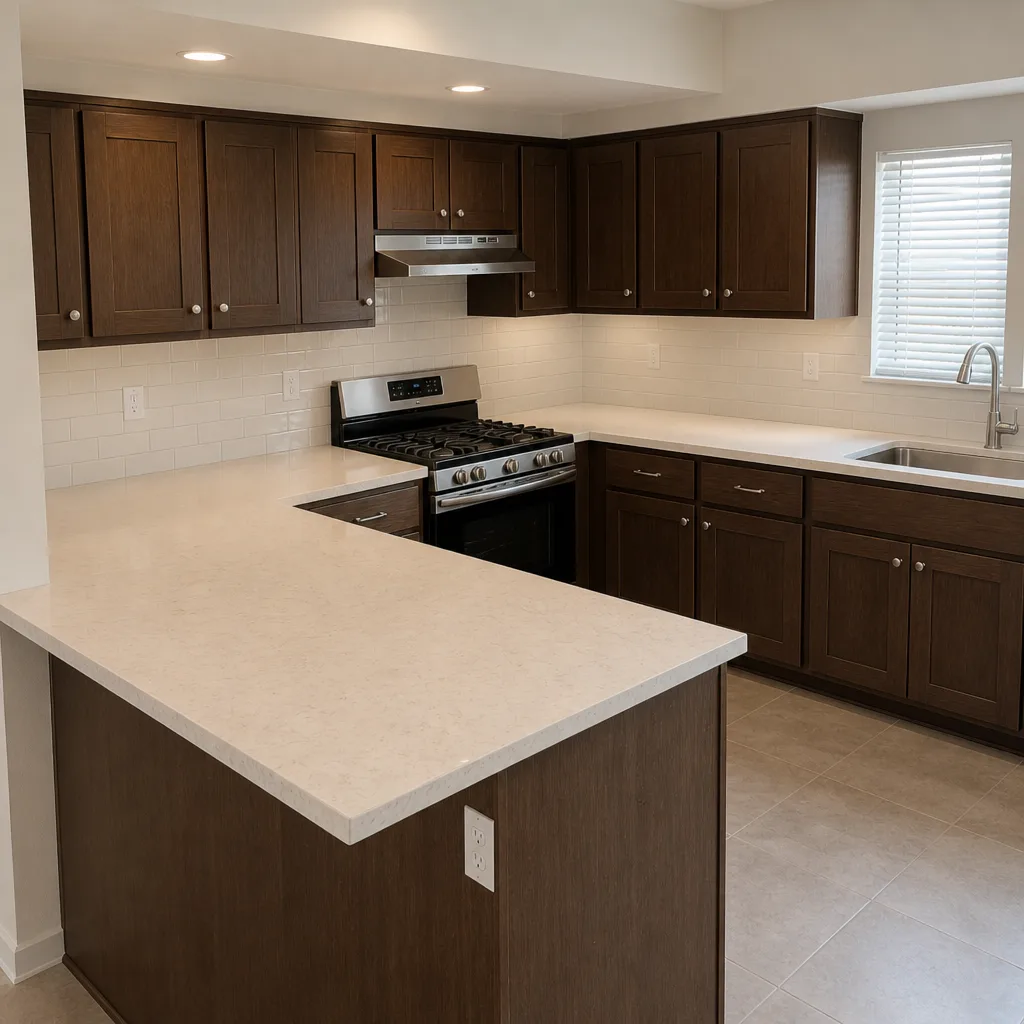 After
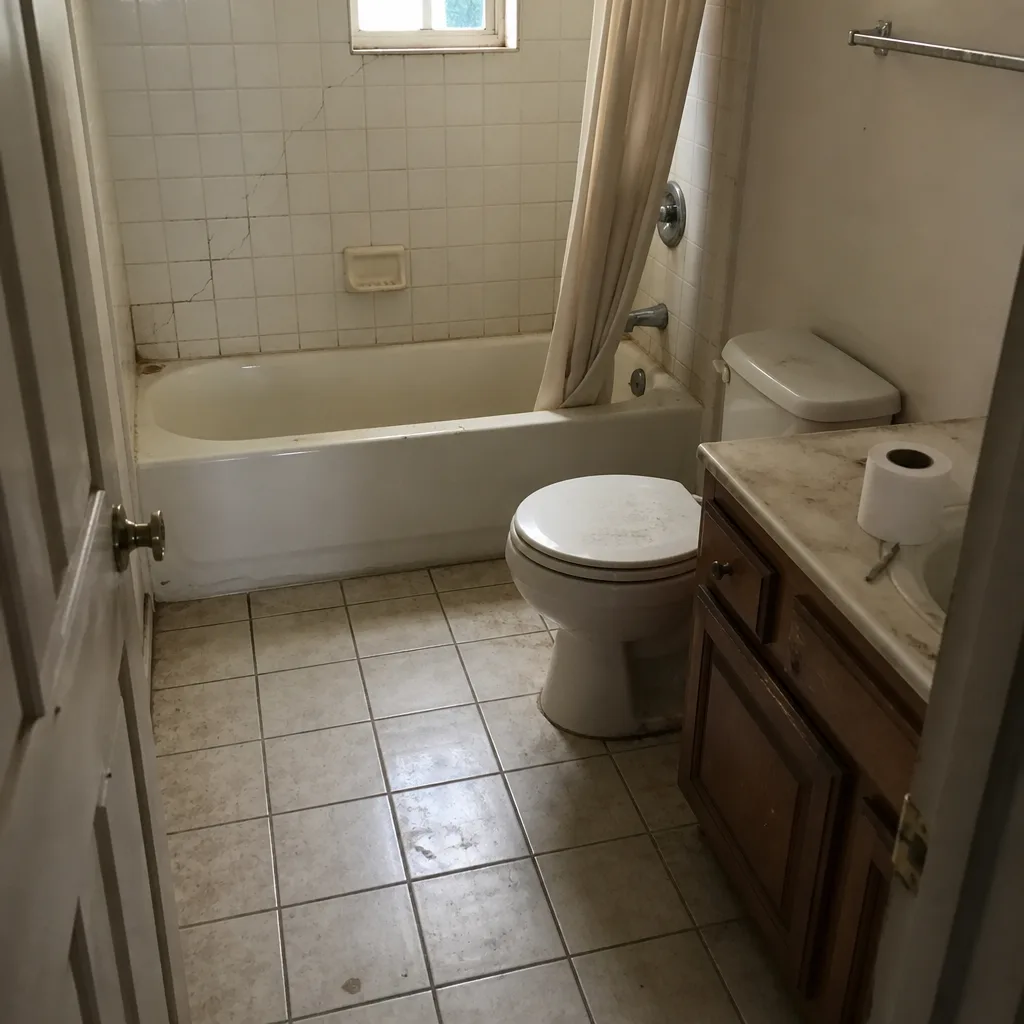 Before
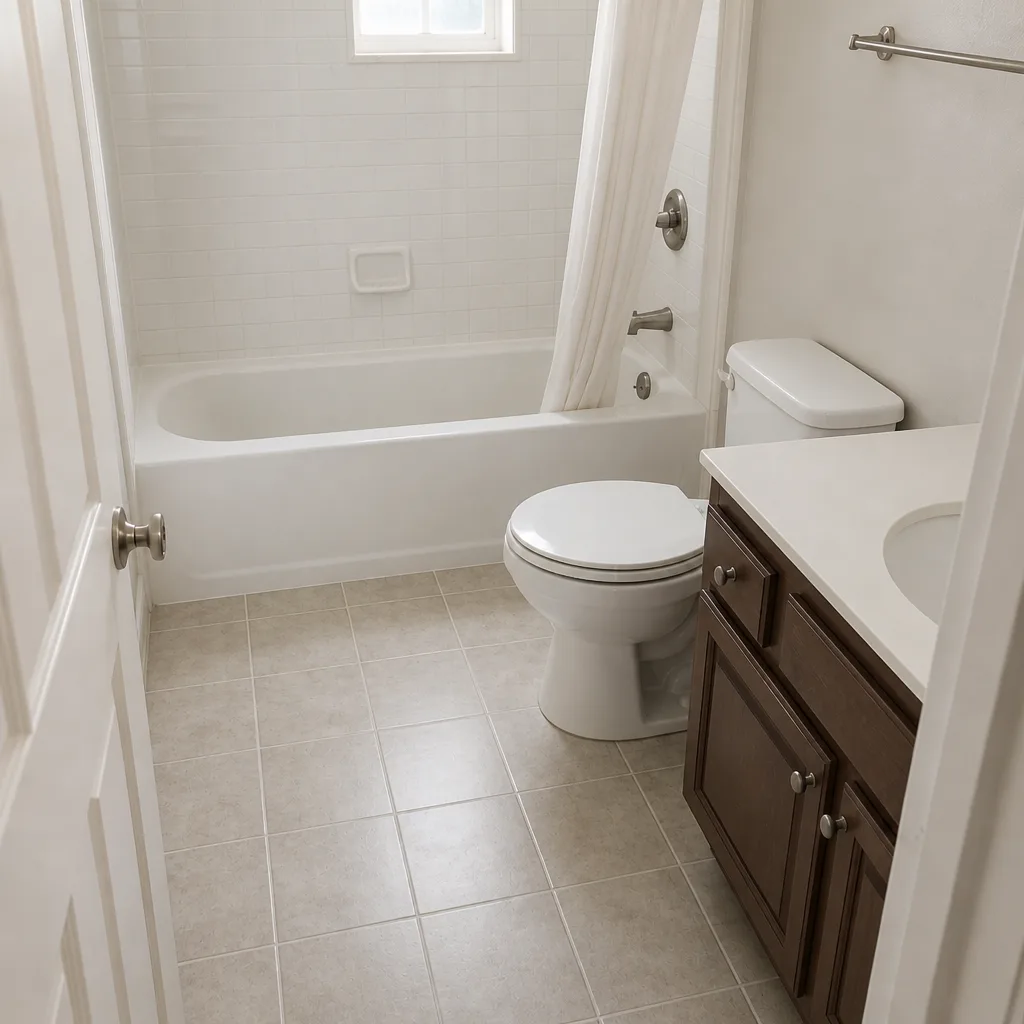 After
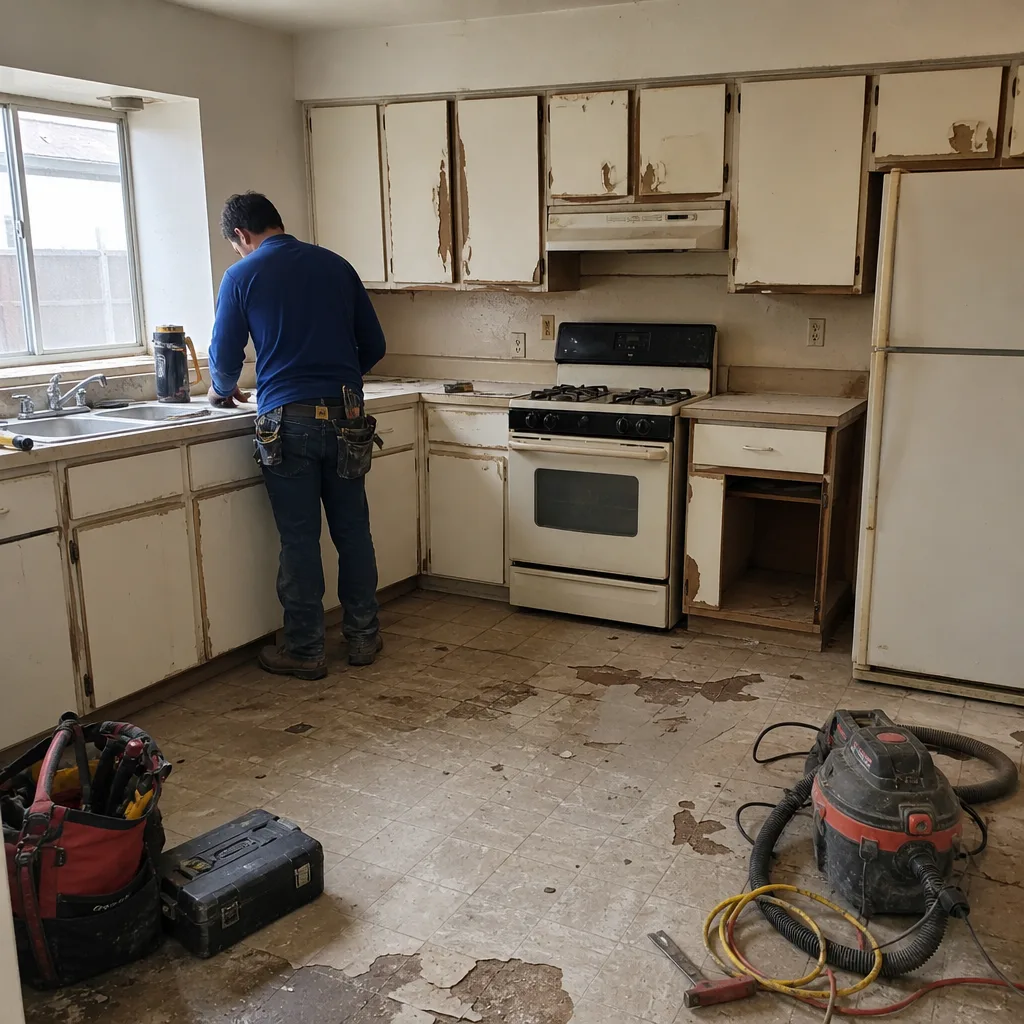 Before
 After
When to Call a Professional
Call a professional when the work triggers a permit, changes structure, touches gas or the electrical panel, moves plumbing rough-in, or hides behind a wall where a failure goes unseen. Also call when the fail cost climbs into the thousands – showers, roofs, and anything waterproofed. And call if you’re not certain the answer isn’t a professional one, because “I’ll figure it out” is not a plan when it comes to a permit that follows the house.
Elmstead Remodeling Summerlin offers free estimates in Summerlin – call (844) 797-4877. We pull the permits, pass the inspections, and put the price and the promise in writing before any work starts.
Frequently Asked Questions

In Summerlin and across Clark County, you can generally DIY painting, cabinet hardware, shelf installation, fixture swaps under existing rough-in (faucet, toilet seat, light fixture), tile backsplash, flooring on a sound subfloor, and landscaping outside setback lines. Anything structural, any new electrical circuit, any plumbing rough-in, and any gas work requires a licensed contractor. When in doubt, check with the Clark County building department before you start.
Yes. Nevada’s NRS 113.130 requires a seller to disclose whether work requiring a permit was done without one, whether it was completed, and whether a permit was obtained. Unpermitted work can reduce an offer, complicate a sale, or stop a lender from financing the home. Disclose accurately and disclose in writing.
Yes, under the homeowner exemption. You must live in or intend to occupy the home, and you must do the work yourself. The work still has to pass every inspection – rough framing, rough electrical, rough plumbing, insulation, final. If you sell before final inspection, the open permit shows up in the property record. Call (844) 797-4877 if you’d rather hand the permit and the inspections to a licensed contractor.
Often not. Most policies exclude damage caused by faulty workmanship or work done without required permits, even when the resulting damage looks like a covered peril. A shower pan that leaks into the ceiling below is the classic example. Read the exclusions, call your agent with the specific project, and do anything with a hidden failure mode under a permit with a licensed contractor.
No. A shower pan failure typically costs $8,000 or more to correct once the subfloor and framing are affected, and the failure hides under the tile until water shows up in the ceiling below. Summerlin’s hard water and intense sun stress exterior surfaces too, but the shower pan is the one to leave to a licensed tile and plumbing professional. Estimates are free – call (844) 797-4877.
General contractor pricing in Summerlin typically runs 10% to 20% of project cost for project management on larger remodels, with labor line items separate. Small projects like a single bathroom refresh usually price out between $18,000 and $45,000 depending on finish level; kitchens between $35,000 and $95,000. We put a written price in front of you before any work starts, not an estimate that grows. Call (844) 797-4877 for a free estimate on your specific project.
The Bottom Line
The decision isn’t “am I skilled enough for this?” It’s “if this goes wrong, what does it follow, and what does it cost?” Painting, fixture swaps, cabinet hardware, tile backsplash, and careful landscaping belong on the DIY list – low failure cost, no permit exposure, no insurance gap. Structural work, electrical beyond a fixture, plumbing rough-in, gas, and anything hidden behind a wall belong to a licensed contractor, because the permit and the disclosure follow the house you sell and the claim you file. In Summerlin, that means reading your CC&Rs, pulling the right permit, and verifying the insurance before work starts.
Call (844) 797-4877 for a free estimate. We’ll walk the project, tell you honestly what’s safe to do yourself, and put a written price in front of you before any work starts.
Written by the team at Elmstead Remodeling Summerlin.